
When you're giving a tablet for children, a solid dosage form designed specifically for young patients, often with flavoring, scoring, or smaller sizes to improve swallowability. Also known as pediatric tablets, it's not just a mini version of an adult pill—it's a carefully engineered solution to ensure accurate dosing and reduce choking risks. Many parents assume if a pill is scored or comes in a child-friendly flavor, it's automatically safe. But the real issue isn’t just size—it’s whether the active ingredient is appropriate for a child’s weight, metabolism, and developmental stage.
Not all medications approved for adults can be safely given to kids, even in reduced amounts. For example, generic drugs for kids, lower-cost versions of brand-name medications used in pediatric populations, often contain the same active ingredient as adult versions but may differ in inactive ingredients like dyes, preservatives, or fillers. These can trigger allergies or affect absorption in children. A study from the FDA found that over 30% of pediatric prescriptions involve off-label use, meaning the drug wasn’t originally tested or approved for children. That’s why pediatric exclusivity, a regulatory incentive that encourages drugmakers to test medications specifically in children, granting them extra market protection matters—it pushes companies to create safer, properly studied options instead of just crushing adult pills.
When a tablet isn’t suitable, alternatives like liquid suspensions, chewables, or dissolvable films often work better. But even these have pitfalls. Some liquids contain sugar or alcohol; chewables might have artificial colors linked to behavioral issues in sensitive kids. And let’s not forget the problem of splitting pills—just because a tablet is scored doesn’t mean it splits evenly. A 50mg tablet split in half might deliver 42mg or 58mg, which can be dangerous for a small child. That’s why pharmacists now use precision compounding for many pediatric doses instead of relying on splitting.
Parents often don’t realize that tablet for children isn’t just about what’s inside—it’s about how it’s made, stored, and given. Temperature, humidity, and even the container can affect stability. Some medications lose potency if left in a hot car or bathroom cabinet. And if your child spits out a tablet or vomits shortly after taking it, do you give another dose? The answer depends on the drug, the time passed, and the child’s weight—there’s no universal rule.
The posts below cover real-world cases: how to handle missed doses, why some kids react differently to generics, what hidden animal ingredients might be in pills for vegan families, and how to talk to doctors about switching from tablets to liquids. You’ll find practical advice on avoiding common mistakes, recognizing dangerous interactions, and knowing when to ask for a different formulation. No guesswork. No fluff. Just what works when your child needs medicine.
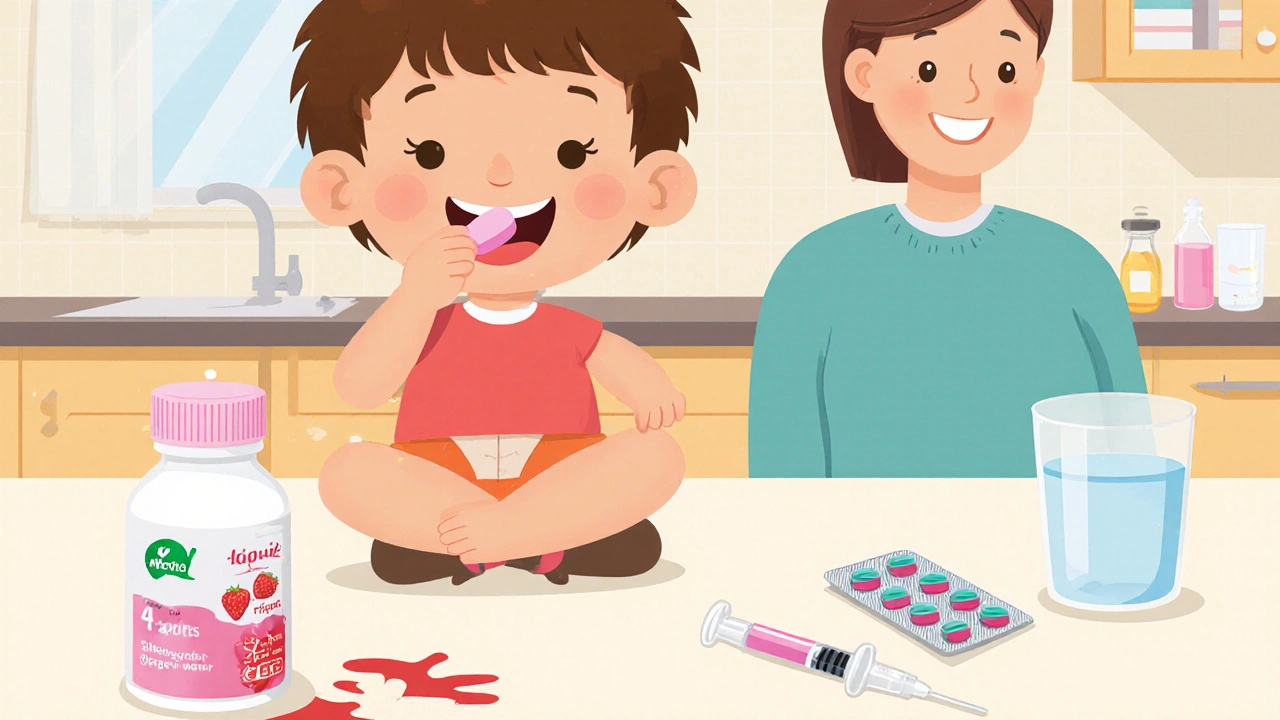
Choosing between liquid and tablet medications for children isn't just about preference-it's about safety, accuracy, and long-term adherence. Discover when tablets are better, how to train your child to swallow them, and why outdated assumptions are changing pediatric care.
Read More