
Every time you pick up a prescription, there’s a label on that bottle. It looks simple - name, dosage, refill info. But hidden in that text are critical warnings that could save your life. Drug interactions happen when two or more medications, supplements, or even foods change how a drug works in your body. Sometimes, they make one drug stronger. Other times, they cancel it out. In the worst cases, they cause bleeding, heart problems, or even death. According to the FDA, preventable drug interactions lead to over 100,000 hospitalizations every year in the U.S. And most of these could have been avoided if people knew how to read their prescription labels properly.
What’s Actually on the Label? The Two Sections That Matter
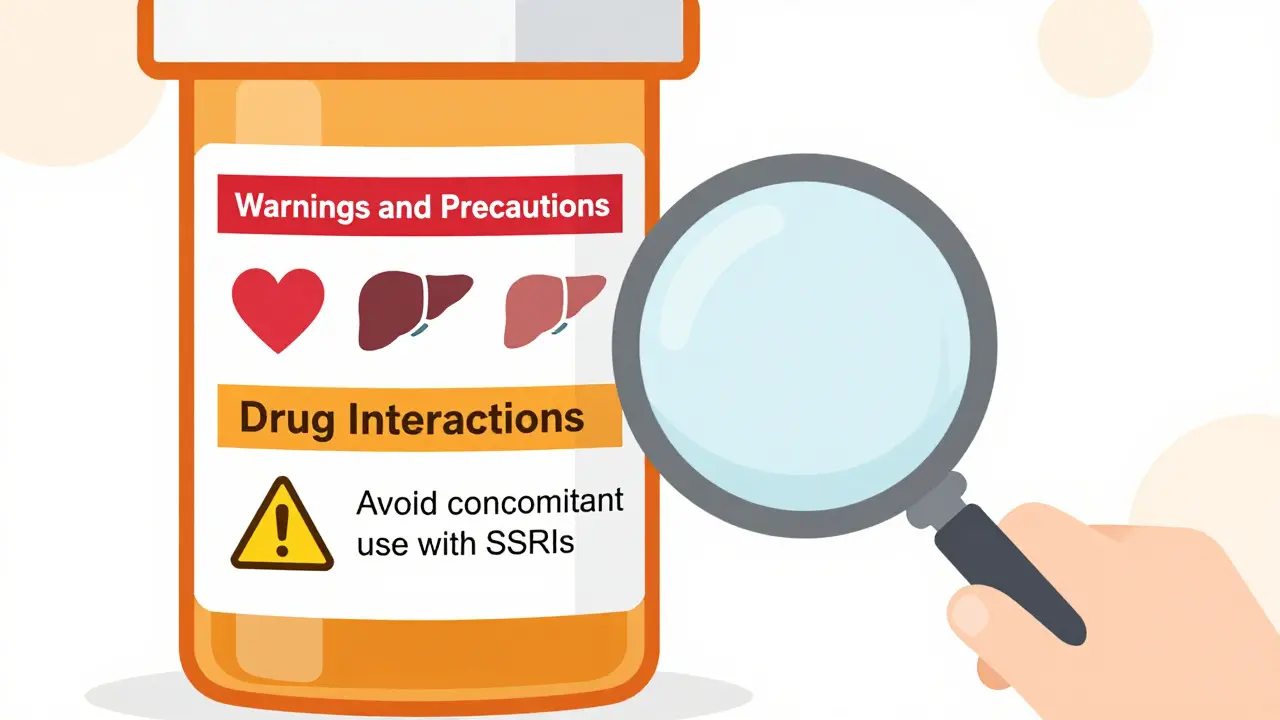
Your prescription label isn’t just a random pile of text. The FDA requires drug manufacturers to organize it in a specific way. Two sections are most important for preventing interactions: Warnings and Precautions (Section 5) and Drug Interactions (Section 7). These aren’t optional. They’re legally required.
The Warnings and Precautions section is where you’ll find the most serious risks. This is where the label says things like: Avoid concomitant use of this drug with warfarin or May cause life-threatening serotonin syndrome when taken with SSRIs. These are not suggestions. These are red flags. If your doctor prescribes you a painkiller and you’re already on an antidepressant, this section will tell you if mixing them could send you to the ER.
The Drug Interactions section is more detailed. It lists every known interaction - even minor ones. But here’s the trick: it doesn’t just say “may interact”. The FDA’s 2024 guidance requires labels to answer three clear questions: Is there a problem? How bad is it? What do you do about it? You’ll see phrases like:
- Reduce dose by 50% when used with grapefruit juice
- Monitor for increased bleeding risk when used with aspirin
- Avoid concomitant use - alternative therapy recommended
If you see any of these, don’t skip over them. Write them down. Show them to your pharmacist. This is where real prevention happens.
Don’t Forget Over-the-Counter Drugs and Supplements
Many people think drug interactions only happen with prescriptions. That’s a dangerous myth. Over-the-counter (OTC) medicines like ibuprofen, cold remedies, and even antacids can cause serious interactions. The BeMedWise Foundation found that 98% of OTC products contain interaction warnings - but only 57% of people actually read them.
And supplements? They’re the silent killers. A 2023 Harvard Health study tracked 147 cases where patients on blood thinners like warfarin ended up in the hospital after taking herbal supplements like ginkgo biloba, garlic, or St. John’s wort. These products don’t need FDA approval before sale. Their labels? Often blank on interactions. But your prescription label might mention them. Look for phrases like: “Interactions with herbal supplements have been reported”.
Here’s a hard truth: if you’re taking five or more medications - including supplements - you’re at much higher risk. A CDC survey found that 68% of people on five or more drugs couldn’t identify potential interactions from their labels alone. That’s why you need a complete list of everything you take.
Create a Medication List - And Keep It Updated
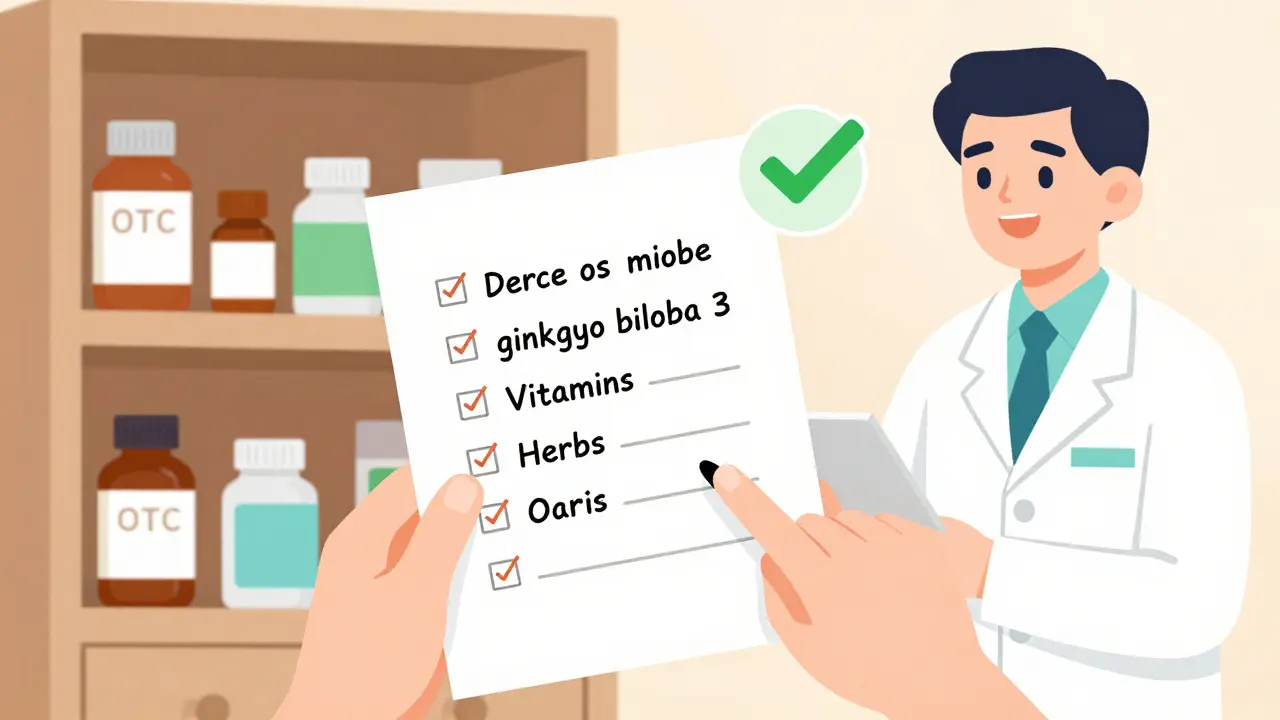
One of the most effective ways to prevent interactions is to make a list - not just of your prescriptions, but of every pill, patch, vitamin, herb, and supplement. Include the name, dose, and why you take it. For example:
- Metformin 500mg - for diabetes
- Atorvastatin 20mg - for cholesterol
- Omega-3 fish oil 1000mg - for heart health
- Benadryl 25mg - for allergies
- Ginkgo biloba 120mg - for memory
Do this every time you get a new prescription. Update it after every doctor visit. Carry it with you. When you go to the pharmacy, bring your pills - not just the list. Pharmacists can spot duplicates, conflicting doses, or hidden interactions you didn’t know about. A 2023 study of 10,000 pharmacy consultations found that 22% of patients had at least one interaction that wasn’t caught until the pharmacist reviewed their actual bottles.
How to Read the Label - Step by Step
Here’s how to read your prescription label like a pro:
- Start with the Warnings section. Look for bold text or phrases like “avoid,” “do not use,” or “risk of serious reaction.” These are the top alerts.
- Find the Drug Interactions section. It’s usually Section 7. Scan for words like “concomitant use,” “increase risk,” or “monitor for.”
- Check for dosage changes. If it says “reduce dose” or “increase monitoring,” that’s not optional. Adjusting your dose can prevent harm.
- Look for food or drink warnings. Grapefruit juice, alcohol, and even dairy can interfere with medications. These are often buried in fine print.
- Verify the active ingredient. Many OTC cold medicines contain the same painkiller as your prescription. Taking both can overdose you. Always check the active ingredient - not just the brand name.
Pro tip: If the label says “consult your doctor” without clear instructions, don’t guess. Call your pharmacist. They’re trained to explain this stuff.
What to Do When You’re Confused
Let’s be honest - prescription labels are hard to read. Words like “concomitant use” or “pharmacokinetic interaction” aren’t meant for everyday people. A 2024 Reddit thread with over 1,200 comments from patients showed that 78% of users didn’t understand common label language. And 42% admitted they ignored warnings because they were too confusing.
Here’s what to do:
- Ask your pharmacist. When you pick up your prescription, ask: “Are there any foods, supplements, or other drugs I should avoid with this?” Most pharmacies offer free consultations.
- Use Drugs.com Drug Interactions Checker. It’s free, fast, and 89% accurate. Enter every medication you take - including supplements. But remember: it’s a tool, not a replacement for professional advice.
- Bring your list to every doctor visit. Many doctors don’t have time to review your full list. But if you hand them a written list, they’re 3x more likely to catch a dangerous interaction.
Also, if you’re over 65, taking five or more drugs, or have kidney or liver issues - you’re at higher risk. Talk to your doctor about whether any of your medications can be reduced or replaced.
The Future: Better Labels Are Coming
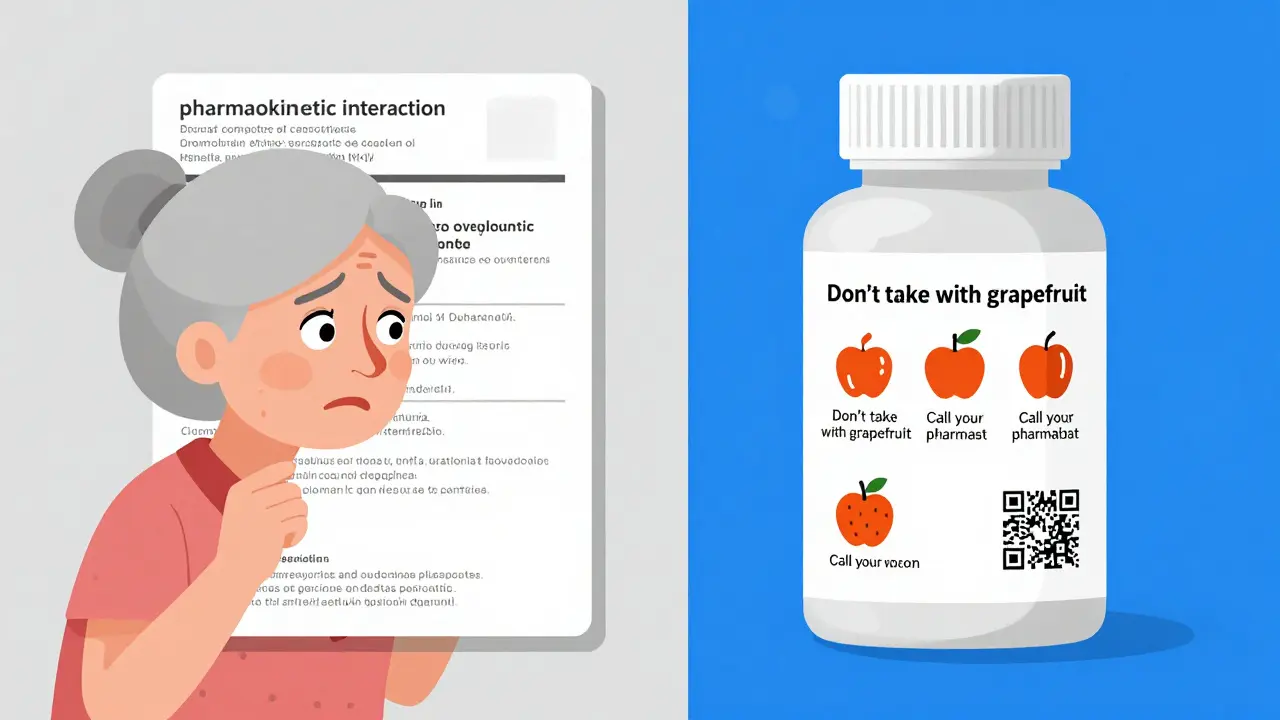
The FDA isn’t ignoring this problem. In June 2024, they updated labeling rules to make warnings clearer. By Q3 2025, all new prescriptions must highlight critical interactions in bold. They’re also testing QR codes on bottles that link to updated, easy-to-read interaction guides.
By 2026, electronic health records will automatically pull FDA interaction data into your doctor’s system. That means your doctor will see your full medication list - including supplements - and get real-time alerts about possible conflicts.
But until then, you’re your own best defense. Don’t wait for technology to fix this. Learn how to read your label. Ask questions. Keep your list updated. These small steps cut your risk of a dangerous interaction by nearly half.
Real-Life Example: What Happens When You Ignore the Label
Meet Maria, 72, from Sydney. She takes blood pressure meds, a cholesterol drug, and a daily aspirin for heart health. She also takes ginkgo biloba because she read it helps memory. Her prescription label for the cholesterol drug warned: “May increase bleeding risk when used with anticoagulants or herbal supplements.” She didn’t read it. One morning, she woke up with bruising all over her arms. Her doctor found her INR (a blood clotting test) was dangerously high. She had to stop the ginkgo and was hospitalized for two days. Maria’s story isn’t rare. It’s common. And it’s preventable.
What should I do if my prescription label doesn’t mention my supplement?
Even if your prescription label doesn’t list your supplement, that doesn’t mean it’s safe. Herbal products like ginkgo, garlic, or St. John’s wort are rarely tested for interactions with prescription drugs. The FDA doesn’t require supplement manufacturers to prove safety before selling them. Always tell your doctor or pharmacist about every supplement you take - even if you think it’s harmless.
Can I trust drug interaction apps more than my prescription label?
No. Apps like Drugs.com are useful tools - but they’re not complete. They cover about 92% of prescription drugs, while your prescription label covers 100%. More importantly, the label includes manufacturer-approved, FDA-reviewed data with specific dosage adjustments. Apps don’t know your medical history. The label does. Use apps as a second check, not a replacement.
Why do some labels use confusing terms like “concomitant use”?
“Concomitant use” just means “taking at the same time.” The FDA allows this language because it’s standard in medical science. But the 2024 update requires manufacturers to also include plain-language warnings nearby. If you see “avoid concomitant use,” translate it in your head: “Don’t take this with that.” If you’re still unsure, ask your pharmacist to explain it in simple terms.
Is it safe to skip a dose if I’m taking another drug that might interact?
Never skip or change your dose without talking to your doctor. Skipping a dose can cause withdrawal, rebound effects, or make your condition worse. If there’s a risk of interaction, your doctor or pharmacist will tell you how to adjust - maybe by changing the time you take each drug, reducing one dose, or switching to a safer alternative. Never guess.
How often should I update my medication list?
Update it every time you start, stop, or change a medication - even if it’s a one-time antibiotic or a new vitamin. Also update it every 3 months, even if nothing changed. Medications change. Your body changes. Your risks change. Keeping your list current is the single most effective way to prevent dangerous interactions.


Post A Comment