
Side Effect Trade-Off Calculator
How This Tool Works
This tool helps you understand how medication side effects might impact your daily life. Rate each side effect on a scale of 1-5 (1 = no problem, 5 = completely unacceptable), then see how it affects your treatment decision.
Rate Your Side Effects
Daily Life Impact
Your ratings translate to how this might affect your daily life:
Fatigue: No problem
Nausea: No problem
Dizziness: No problem
Weight Gain: No problem
Your Treatment Burden Score
This score shows how much burden the side effects would create in your life. The higher the number, the more challenging it would be to stick with the treatment.
Your treatment burden is very low. This means you likely could manage this medication without major lifestyle changes.
What to Discuss With Your Doctor
Based on your ratings, here are specific questions to ask:
- Ask your doctor: "What's the real chance of this side effect? Can you tell me using numbers like '1 in 10' instead of 'common' or 'rare'?
- Ask: "If this side effect happens, what can we do to manage it without stopping the treatment?"
- Say: "I need to know which side effects would make me stop this medication."
Why Talking About Side Effects Matters More Than You Think
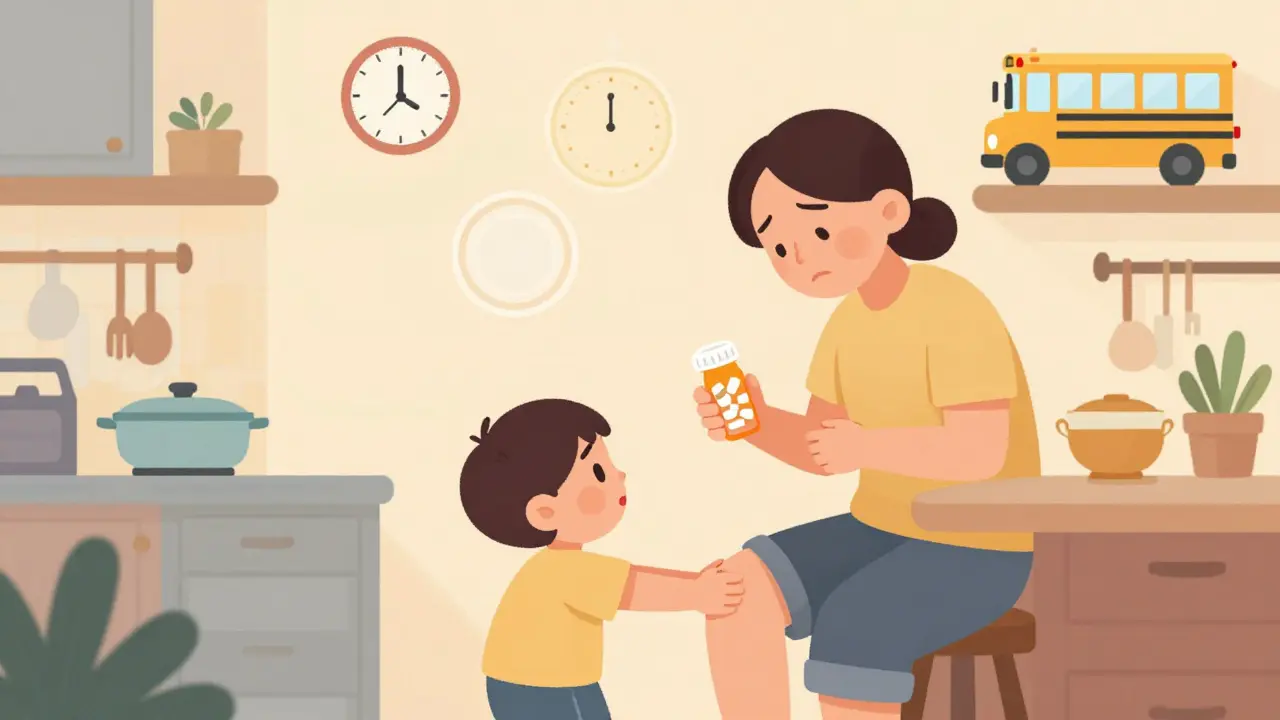
Imagine you’re prescribed a medication that could stop your headaches-but it might also make you so tired you can’t pick up your kids from school. Or maybe it causes nausea so bad you skip meals for weeks. You take it anyway because your doctor said it’s "the best option." A month later, you quit. Not because it didn’t work, but because you didn’t know what you were signing up for.
This isn’t rare. In fact, shared decision-making is the missing link between clinical guidelines and real-life adherence. When doctors skip detailed conversations about side effects, patients don’t just stop taking meds-they lose trust. Studies show that 86% of people on statins and 78% on anticoagulants worry more about side effects than the disease itself. Yet most consultations last less than 10 minutes. That’s not enough time to weigh risks that could change your daily life.
But here’s the good news: there’s a better way. Structured scripts don’t make conversations robotic-they make them real. They help patients understand what matters most to them, not just what’s statistically likely.
What Shared Decision-Making Actually Looks Like
Shared decision-making isn’t just "telling patients about risks." It’s a back-and-forth process where both the clinician and patient bring something essential: the doctor brings medical facts, and the patient brings their life. The goal? A choice that fits their values, not just their lab results.
The Agency for Healthcare Research and Quality (AHRQ) built a clear five-step model called SHARE:
- Seek opportunities to involve the patient in decisions.
- Help them compare options-what works, what doesn’t, what’s optional.
- Assess what matters to them: sleep? Work? Being able to play with grandkids?
- Reach a decision together.
- Evaluate how they feel about it later.
This isn’t theory. In 47 U.S. health systems, using this approach cut decisional conflict by 23%. That means fewer second-guessing, fewer regrets, fewer calls to the clinic saying, "I didn’t know it would do this."
How to Talk About Side Effects Without Scaring People
Doctors used to say things like, "There’s a small chance of dizziness." Or, "Some people get nausea." But "small" means different things to different people. One person thinks "small" means 1 in 100. Another thinks it’s 1 in 10.
That’s why the three-talk model works better. It forces clarity:
- Option talk: "This drug reduces your stroke risk by 30%. But 1 in 10 people get nausea. That means 9 out of 10 don’t."
- Decision talk: "Which side effect would make you stop taking it?"
- Choice talk: "So if nausea is your deal-breaker, we can try a different option. If fatigue is worse, maybe we stick with this one and adjust the dose."
Using absolute numbers-"15% chance of nausea"-not relative ones like "50% reduction in nausea"-improves understanding by 37%. People don’t need to be statisticians. They just need to know what’s likely to happen to them.
What Side Effects Really Mean in Daily Life
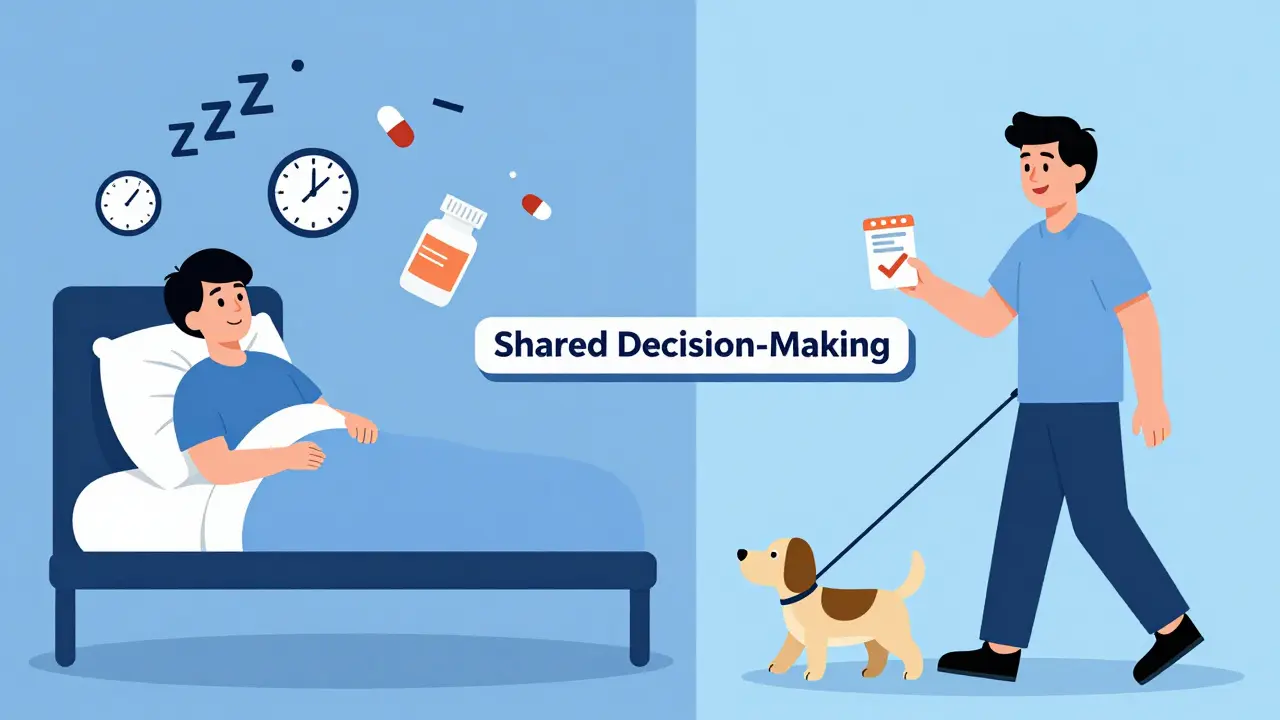
It’s not just about nausea or dizziness. It’s about whether you can get out of bed. Drive safely. Hold a conversation. Sleep through the night. Work your shift. Take care of your pet.
Researchers call this "treatment burden." And it’s a bigger factor in whether people stick with meds than side effect frequency. One study found that 42% of patients who quit their medication did so because the treatment disrupted their life-not because the side effect was severe, but because it was constant.
Think about it: If a pill makes you dizzy for two hours every morning, you might skip it. But if it makes you sleepy all day, you might miss work, forget to pay bills, or feel like you’re losing control. That’s not a side effect-it’s a lifestyle change.
Ask: "What would make this treatment too much to handle?" Then listen. Not to fix it. Not to argue. Just to understand.
What Works in Real Clinics
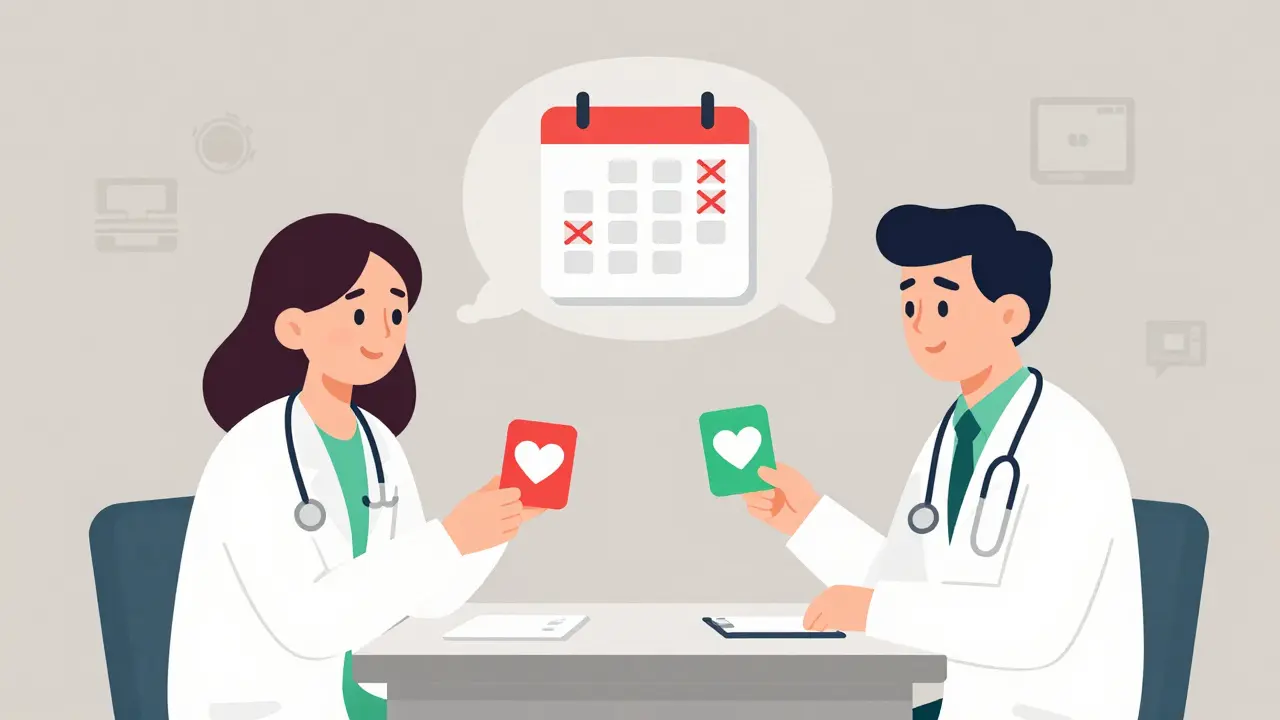
At Scripps Health, doctors started using color-coded risk charts during visits. One chart showed side effects as colored bars: red for serious, yellow for annoying, green for rare. Patients could point to what scared them most. Satisfaction jumped 41%.
Kaiser Permanente rolled out pre-visit videos explaining statin side effects. Patients watched them at home. Then, in the office, the doctor didn’t explain what a statin was-they talked about their concerns. Result? Statin discontinuation dropped by 33%.
And it’s not just big systems. Even in busy clinics, simple changes help:
- Start with: "What are you most worried about with this medicine?"
- Use: "Some people are okay with [side effect] if it means [benefit]. Others can’t handle it. Where do you stand?"
- End with: "If we start this and you feel worse in two weeks, we’ll stop. No guilt. No judgment."
These aren’t scripts to read. They’re prompts to listen.
When Shared Decision-Making Falls Short
Not every situation needs a 15-minute conversation. In emergencies-heart attack, stroke, severe infection-there’s no time. That’s fine. But for chronic conditions? For medications you’ll take for years? This isn’t optional.
The biggest problem? Time. Primary care doctors say 72% don’t have enough time to do this right. And yes, it adds about 7 minutes per visit. But here’s the trade-off: those extra minutes cut follow-up visits by 22%. Fewer calls about side effects. Fewer prescriptions switched. Fewer patients quitting because they felt unheard.
Another pitfall? Reading from a script like a robot. Patients notice. A 2022 survey found 63% of people felt frustrated when doctors sounded like they were reciting lines. The key isn’t perfection-it’s presence.
Don’t memorize phrases. Memorize the intent: "I want to know what matters to you so we can find a path that works for your life."
What’s Changing Now-and Why It Matters
This isn’t just a nice idea anymore. It’s becoming standard.
In 2023, Medicare Advantage plans were required to document shared decision-making for high-risk drugs. That means doctors now get paid for these conversations. CPT codes 96170-96171 reimburse $45-$65 per session. That’s a big shift.
Electronic health records like Epic now have built-in SDM modules. When a doctor prescribes a statin, the system suggests a side effect script. It doesn’t replace the conversation-it supports it.
And AI is coming. The NIH just funded research to build tools that listen to patient-clinician talks and flag when a concern goes unaddressed. Imagine a system that says, "The patient mentioned fatigue three times but the doctor didn’t respond. Suggest a follow-up question."
What You Can Do Today
If you’re a patient:
- Before your appointment, write down: "What side effect would make me stop this?"
- Ask: "Can you tell me the chance of this side effect in numbers?"
- Say: "I’m not sure I can live with this. Is there another option?"
If you’re a clinician:
- Start every medication talk with: "What’s your biggest worry about this treatment?"
- Use absolute numbers. Never say "rare" or "common." Say "1 in 10" or "15%."
- Give patients permission to change their mind. Say: "This isn’t a forever decision. We can adjust."
It’s not about being perfect. It’s about being present.
Why This Is Here to Stay
The Institute of Medicine said it in 2001: care must be "respectful of and responsive to individual patient preferences." Now, 87% of U.S. medical schools teach this. By 2026, 92% of major health systems will have formal SDM programs.
This isn’t a trend. It’s the new standard. Because medicine isn’t just about fixing what’s broken. It’s about helping people live the way they want to.
Side effects aren’t just numbers on a chart. They’re missed birthdays, canceled plans, sleepless nights. When we talk about them honestly, we don’t just improve adherence-we rebuild trust. And that’s worth every extra minute.


Post A Comment