
Keeping your prescription labels and medication leaflets organized isn’t just a good idea-it can save your life. Every time you fill a new prescription, you get a small piece of paper with critical details: your name, the drug, the dose, when to take it, and warnings about interactions. But most people toss those labels into a drawer or throw them away after the bottle is empty. That’s a risky habit. Without these records, you risk taking the wrong dose, missing dangerous interactions, or being unable to explain your medication history during an emergency.
Studies show that medication errors cause about 7,000 deaths each year in the U.S. alone. A big part of that? Missing or unclear records. When you’re admitted to the hospital, doctors need to know exactly what you’re taking. If you can’t tell them, they might order tests, prescribe something that clashes with your meds, or even give you a duplicate drug. Keeping your prescription labels and leaflets properly stored cuts those risks dramatically. In fact, one 2022 study found that patients who kept organized records reduced adverse drug events by 55%.
Why Prescription Labels Matter More Than You Think
The label on your pill bottle isn’t just a sticker. It’s your official medication record. The FDA requires every prescription container to include eight key pieces of information: your full name, the drug name, dosage strength, directions for use, prescriber’s name, pharmacy name and phone number, fill date, and expiration date. That’s a lot of critical data packed into a small space.
But here’s what most people miss: the leaflet inside the box is even more important. It’s usually 8 to 12 pages long and includes side effects, drug interactions, what to do if you miss a dose, storage instructions, and warnings for pregnancy or liver problems. If you’re taking multiple medications, missing even one interaction could be dangerous. For example, mixing blood thinners with certain antibiotics or herbal supplements can cause serious bleeding. That info is only in the leaflet.
And it’s not just about current meds. Long-term users-especially those over 65-often take five or more prescriptions. The CDC says 45% of adults in that group do. Over 10 years, that’s 280+ prescriptions. If you don’t keep track, you can’t prove you’ve been on the same dose for years. One Reddit user shared how throwing out old bottles led to $1,200 in unnecessary tests because his new doctor couldn’t verify his history.
Physical Storage: The Reliable Backup
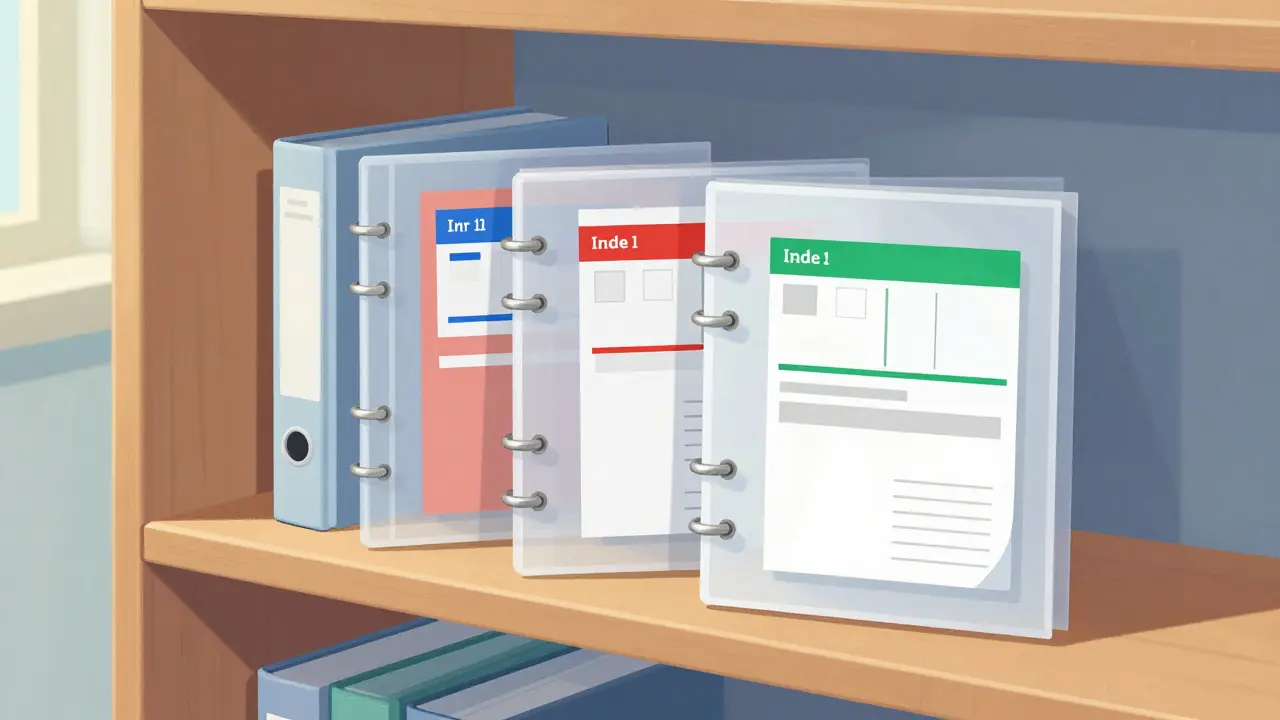
For many, the simplest solution is still the best: a binder. You don’t need fancy gear. A three-ring binder with clear plastic sleeves works perfectly. Here’s how to set it up:
- Get a sturdy binder with at least 1.5 inches of capacity.
- Buy acid-free, pH-neutral sleeves (available at office supply stores or online). These prevent yellowing and tearing over time.
- Sort your labels alphabetically by drug name. Use color-coded tabs: blue for antibiotics, red for heart meds, green for painkillers, etc.
- Place each label and its matching leaflet into a sleeve. Fold the leaflet neatly to fit.
- Add a small index page at the front listing each medication, dose, and reason for use.
Store the binder in a cool, dry place-not the bathroom, not the kitchen counter, not near a window. The ideal temperature is 68-77°F (20-25°C), and humidity should stay under 60%. That’s the same range recommended for storing most medications. Exposure to heat or moisture can make paper brittle or cause ink to fade. A bedroom closet or home office drawer works fine.
Updating it takes just 2-3 minutes per new prescription. When you get a refill, remove the old label, add the new one, and slide in the new leaflet. Done. This system lasts for decades. One 80-year-old woman in Sydney has been using this method since 2010. Her binder now has over 400 entries and was crucial when she was hospitalized last year.
Digital Storage: The Smart Companion
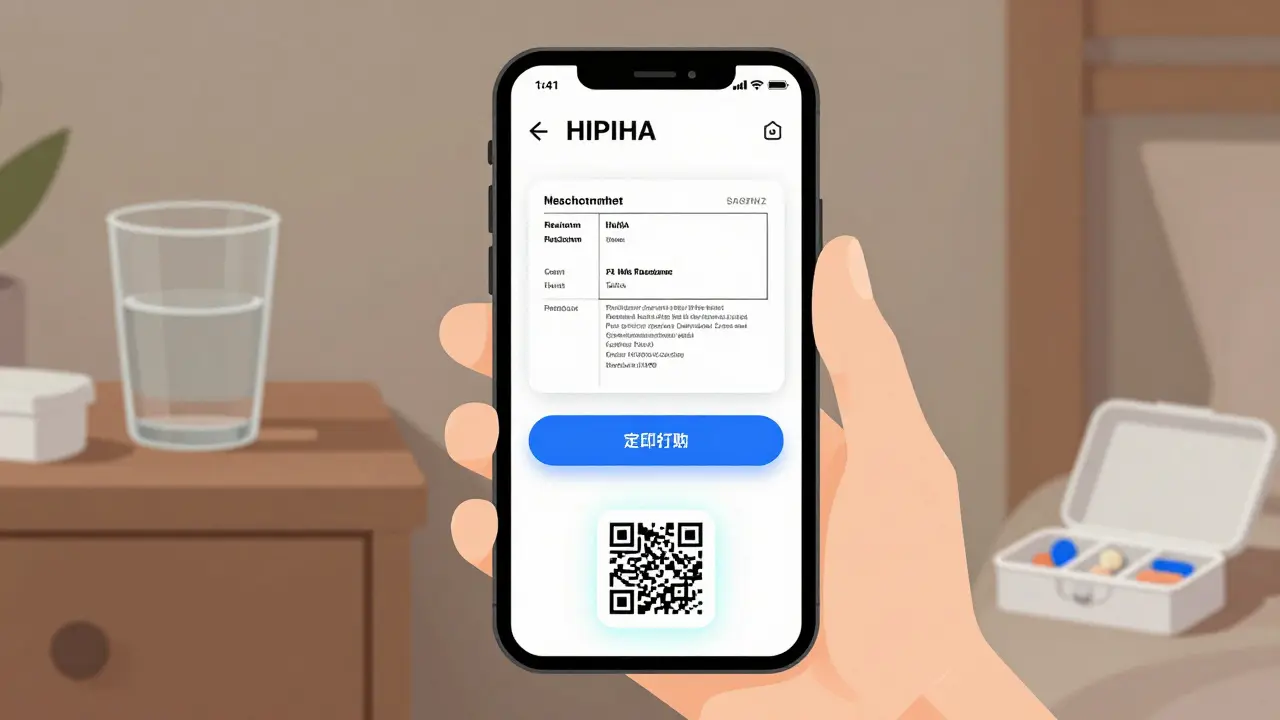
If you’re comfortable using your phone, digital storage is a powerful tool. The key is using a HIPAA-compliant app. These apps encrypt your data, so it’s protected like a bank account. Popular options include MyMedSchedule (version 3.2.1), Medisafe, and Medisys. They let you scan or take photos of your labels and leaflets, set reminders, and even share records with family or doctors.
Here’s how to use it:
- Download a trusted app from your phone’s app store.
- Use the camera feature to scan each label. Make sure the text is clear-FDA rules require 18-point bold font, so most labels scan well.
- Upload the leaflet as a PDF. Most apps let you attach files. If your pharmacy gives digital leaflets, download those instead.
- Set alerts for refill dates and expiration dates.
- Enable cloud backup so your data isn’t lost if your phone breaks.
One advantage? You can search instantly. Need to know if your blood pressure med interacts with ibuprofen? Type the name into the app, and it flags the risk. The FDA even started requiring QR codes on labels in May 2024. Scanning one takes you directly to the official drug info page-no leaflet needed.
But digital isn’t perfect. Only 42% of adults over 65 feel confident using these apps. And if your phone dies or the app crashes, you’re stuck. That’s why combining digital with physical is the smartest move.
Hybrid System: The Best of Both Worlds
The top-performing method among healthcare professionals is a hybrid approach:
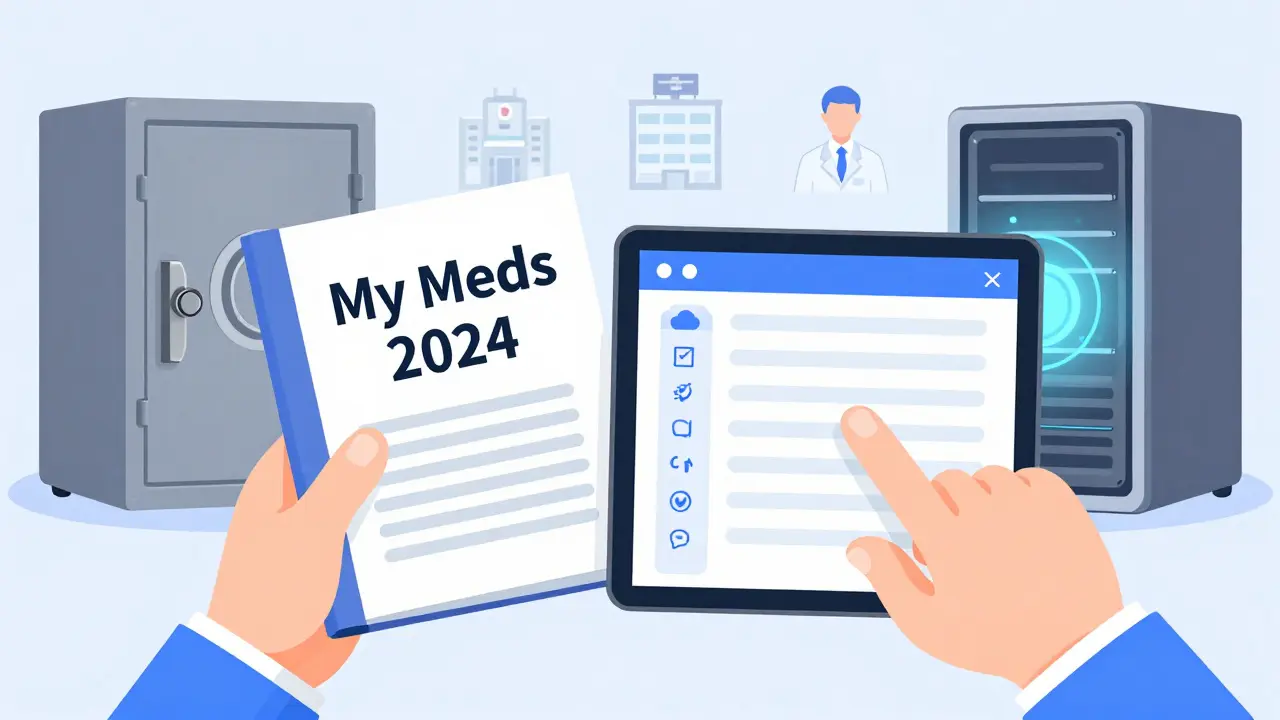
- Keep your current medications in a physical binder. This is your go-to during power outages, ER visits, or when you’re away from home.
- Scan older prescriptions and store them digitally. After a medication has been discontinued for more than 6 months, move its records to the cloud.
- Use the binder as your primary reference and the app as your backup and search tool.
This system handles space limits (a 10-year binder for 280 prescriptions takes about 1.2 linear feet) while giving you digital search power. It’s also resilient. If the binder gets damaged by water or fire, your digital copy is safe. If your phone dies, you still have the physical record.
Dr. Jerry H. Gurwitz, a leading geriatrician, says this hybrid method reduces polypharmacy risks in older adults by 32%. That’s not a small number-it means fewer hospitalizations, fewer falls, and fewer dangerous drug reactions.
Pitfalls to Avoid
Even with good intentions, people make mistakes. Here are the most common ones:
- Throwing away old bottles. That’s how you lose proof of long-term use. Keep labels for at least 10 years.
- Storing in humid areas. Bathrooms and kitchens ruin paper. Use a dry, cool spot.
- Using sticky notes or random notebooks. These get lost. Use a dedicated system.
- Only using digital apps without backups. If you rely solely on your phone, you’re one drop away from disaster.
- Ignoring leaflets. The label tells you what to take. The leaflet tells you what could go wrong.
A 2021 study found that 37% of physical records degrade beyond readability within five years if stored poorly. That’s why proper storage isn’t optional-it’s a health necessity.
What to Do When You Change Doctors or Go to the Hospital
Always bring your binder. If you use an app, have it open on your phone. Don’t rely on memory. Even if your doctor has your records, hospitals often don’t share systems. Medicare and private insurers are pushing for patients to bring their own records because EHRs only keep data for 7-10 years before archiving. After that? It’s gone.
During a hospital admission, nurses will ask: “What medications are you taking?” If you can answer that accurately, you’re ahead of 60% of patients. And if you can hand them your binder? You’re ahead of 95%.
Future Trends and Regulations
Medication record-keeping is becoming mandatory. The Office of the National Coordinator for Health IT launched the “MyMedicationHistory” initiative in March 2024, aiming to let patients upload their personal records directly into hospital systems by 2026. The National Council for Prescription Drug Programs is also developing a standard format for digital records, expected by late 2024.
By 2028, Medicare Part D beneficiaries may be required to maintain organized records to qualify for coverage. Why? Because users who do reduce adverse drug events by 28%. That’s a huge cost saver for the system-and a life saver for you.
Privacy is a concern. The Electronic Frontier Foundation warns that prescription data is 40 times more valuable than credit card info on the black market. That’s why only use HIPAA-compliant apps. Never store sensitive records on Google Drive, iCloud, or personal email unless encrypted.
Getting Started Today
You don’t need to do it all at once. Start with your top three medications. Grab a binder, find the labels and leaflets, and put them in sleeves. Do one per day. In a week, you’ll have your most important meds organized.
Then, set a reminder on your phone: “Every time I get a new prescription, add it to my binder and scan it.” That’s it. No apps, no gadgets, no complexity. Just a simple habit that keeps you safe.
And if you’re still unsure? Call the CDC’s Medication Safety Helpline: 1-800-232-0233. They handled over 14,000 calls about record-keeping last year. They’ll walk you through it. No judgment. Just help.


Post A Comment