
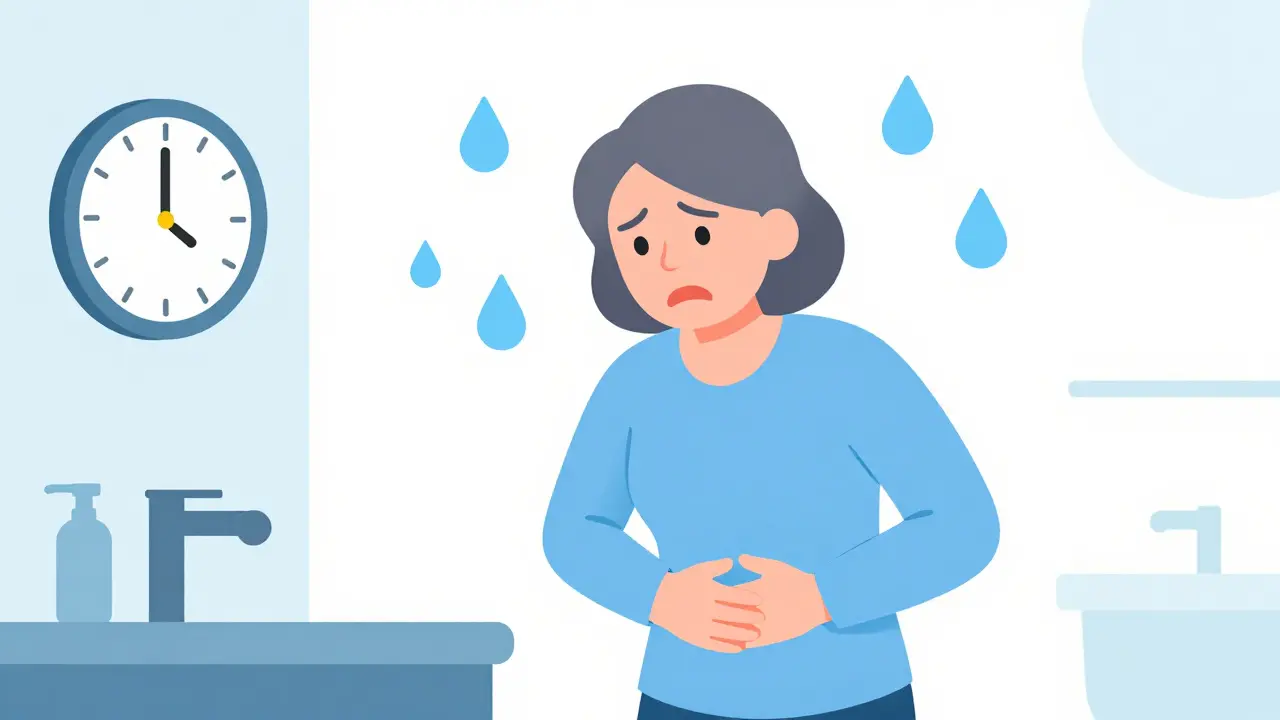
Imagine waking up and spending half your day in the bathroom, dealing with constant, watery diarrhea that doesn't stop even at night. For many, this isn't just a stomach bug; it's a frustrating condition called Microscopic Colitis is an inflammatory bowel disease where the colon looks completely normal during a colonoscopy but shows significant inflammation under a microscope. Because it's invisible to the naked eye, people often suffer for months or even years before getting a real answer. If you're dealing with this, the road to recovery usually leads to a specific medication called budesonide, which has become the gold standard for getting your life back.
What Exactly is Microscopic Colitis?
Unlike more well-known conditions like Crohn's or ulcerative colitis, where a doctor can see ulcers or bleeding during a procedure, microscopic colitis is a "hidden" disease. It primarily hits older adults, often appearing in their 50s or 60s, and is significantly more common in women. The core problem is that the colon can't absorb water properly, leading to frequent, non-bloody, watery stools-often 5 to 10 times a day.
Doctors split the condition into two main types based on what they see in a biopsy:
- Collagenous Colitis (CC): This version is marked by a thickened band of collagen (at least 10 micrometers) just below the lining of the colon. It's often associated with more weight loss.
- Lymphocytic Colitis (LC): This is characterized by a high number of lymphocytes (white blood cells) inside the epithelial cells of the colon lining.
Because the symptoms-like abdominal pain, fecal incontinence, and urgent midnight bathroom trips-overlap with so many other issues, the average person waits about 11 months after symptoms start before they are correctly diagnosed. The only way to be sure is through a colonoscopy with multiple biopsies.
The Role of Budesonide Therapy
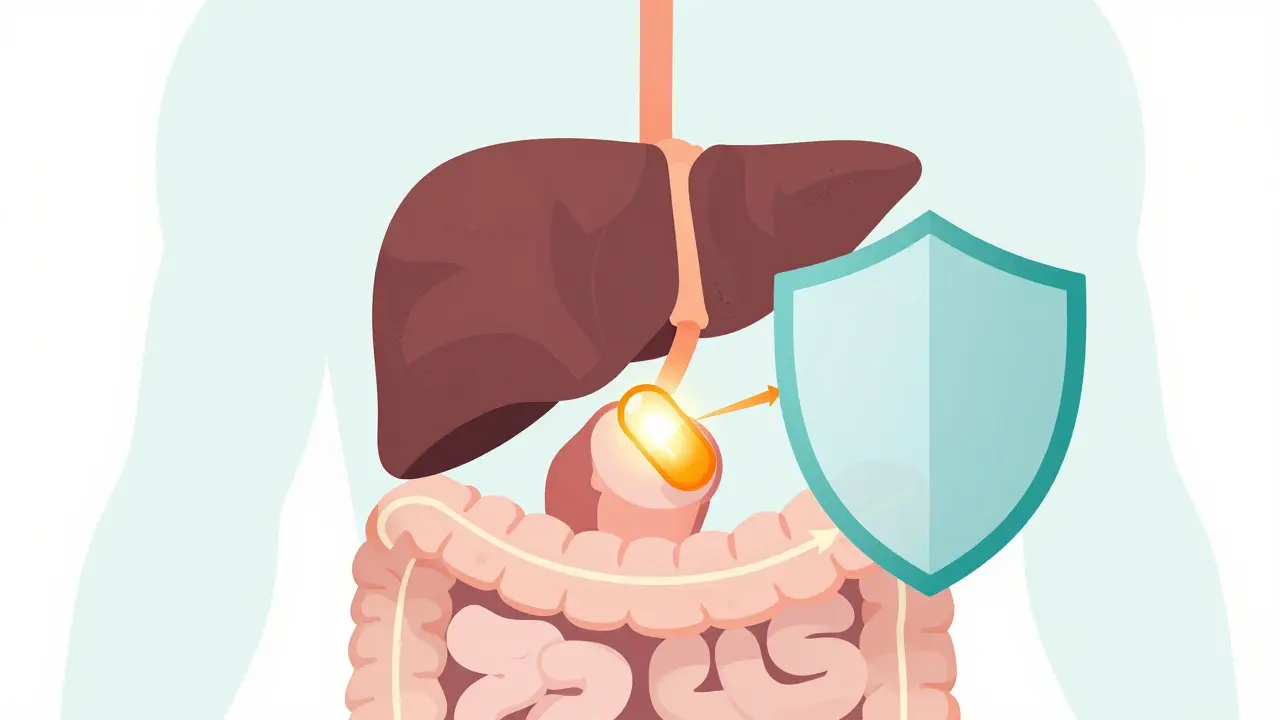
When symptoms become moderate to severe, doctors usually reach for Budesonide, which is a locally acting corticosteroid designed to reduce inflammation specifically in the bowel. While the word "steroid" can be scary, budesonide is very different from the traditional steroids like prednisone.
The magic of budesonide is in its "first-pass metabolism." About 90% of the drug is broken down by the liver before it ever hits your general bloodstream. This means you get the powerful anti-inflammatory effects right where you need them in the gut, but you avoid many of the systemic side effects-like extreme weight gain or severe mood swings-that come with systemic steroids. Only about 10-15% of the drug actually reaches your general circulation.
For most, the standard starting dose is 9mg daily for 6 to 8 weeks. The results are often striking; about 70-80% of patients feel a significant improvement by the fourth week. Some people report going from ten bathroom trips a day down to just two within a matter of days.
Comparing Treatment Options
Budesonide isn't the only option, but it is usually the most effective. Other treatments exist, though they often act more as "band-aids" than cures for the inflammation. For example, some people use bile acid sequestrants like cholestyramine, which can help manage the diarrhea but doesn't treat the underlying colitis. Others might try mesalamine or bismuth subsalicylate, but these have much lower remission rates.
| Treatment | Remission Rate | Main Advantage | Key Downside |
|---|---|---|---|
| Budesonide | 75-85% | High efficacy, low systemic impact | High relapse rate after stopping |
| Prednisone | 75-80% | Fast acting | High side effects (insomnia, bone loss) |
| Mesalamine | 40-50% | Generally safe for long-term | Less effective than budesonide |
| Cholestyramine | 60-70% (Symptom relief) | Controls watery stools quickly | Doesn't treat the inflammation |
| Anti-TNF Agents | 20-30% | Option for refractory cases | Very expensive, risk of infection |

The Challenge of Relapse and Maintenance
The hardest part of budesonide therapy isn't starting the medicine-it's stopping it. Microscopic colitis is often a relapsing-remitting disease. This means that while you might feel completely healthy after two months of medication, the symptoms can come roaring back once the drug leaves your system. Between 50% and 75% of patients experience a relapse after their initial course.
To fight this, doctors often use a tapering strategy. Instead of stopping the 9mg dose abruptly, they might reduce it by 3mg every few weeks. In some cases, a long-term maintenance dose of 6mg daily is required to keep the disease in check. This is where the conversation shifts from "curing" the condition to "managing" it.
If you're on long-term maintenance, your doctor will likely want to keep an eye on your bone density and blood sugar, especially if you're over 50. While budesonide is safer than prednisone, any long-term steroid use carries a small risk of adrenal suppression or thinning bones.
What to Expect and Practical Tips
If you've just been prescribed budesonide, don't expect a miracle overnight, but do expect a shift. Most people notice a change within 14 days. However, be aware of a few common hurdles. Some users report insomnia or acne-classic steroid side effects-though they are much milder here than with other drugs.
Another real-world hurdle is the cost. Branded versions like Entocort EC can be incredibly expensive. Thankfully, generic versions of 8mg and 9mg capsules are now available, which can cut the cost by more than half. If you're struggling with the price, ask your pharmacist about the generic equivalent.
For those who don't respond to budesonide-the "refractory" cases-new options are emerging. Biologics like vedolizumab are being used more often, offering a different way to block the inflammation in the gut. Combining budesonide with a bile acid sequestrant is also a common "pro tip" from patients who found that one drug alone wasn't enough to stop the urgency.
How is microscopic colitis diagnosed if the colon looks normal?
Because the inflammation is only visible under a microscope, a standard visual check during a colonoscopy isn't enough. The doctor must take multiple tissue samples (biopsies) from different parts of the colon. A pathologist then examines these under high magnification to look for the specific markers of collagenous or lymphocytic colitis.
Is budesonide a permanent medication?
Not necessarily. For many, it's a short-term induction therapy to stop an active flare. However, because the relapse rate is high (50-75%), about 30-40% of patients require a low-dose maintenance therapy to prevent symptoms from returning.
What are the most common side effects of budesonide?
Most people tolerate it well, but some experience insomnia, acne, or mild mood changes. Because it has high first-pass metabolism in the liver, it causes far fewer systemic issues than prednisone, but long-term users should still monitor bone density and blood pressure.
Can diet help manage microscopic colitis?
While budesonide treats the inflammation, diet can help manage symptoms. Many patients find that reducing caffeine or avoiding certain triggers helps reduce the frequency of watery stools, though diet alone typically cannot induce clinical remission.
What happens if budesonide doesn't work?
If you're in the 15-25% who don't respond to budesonide, doctors may try other medications like mesalamine, or move to biologics such as vedolizumab. In some cases, combining a steroid with a bile acid sequestrant provides the necessary relief.