
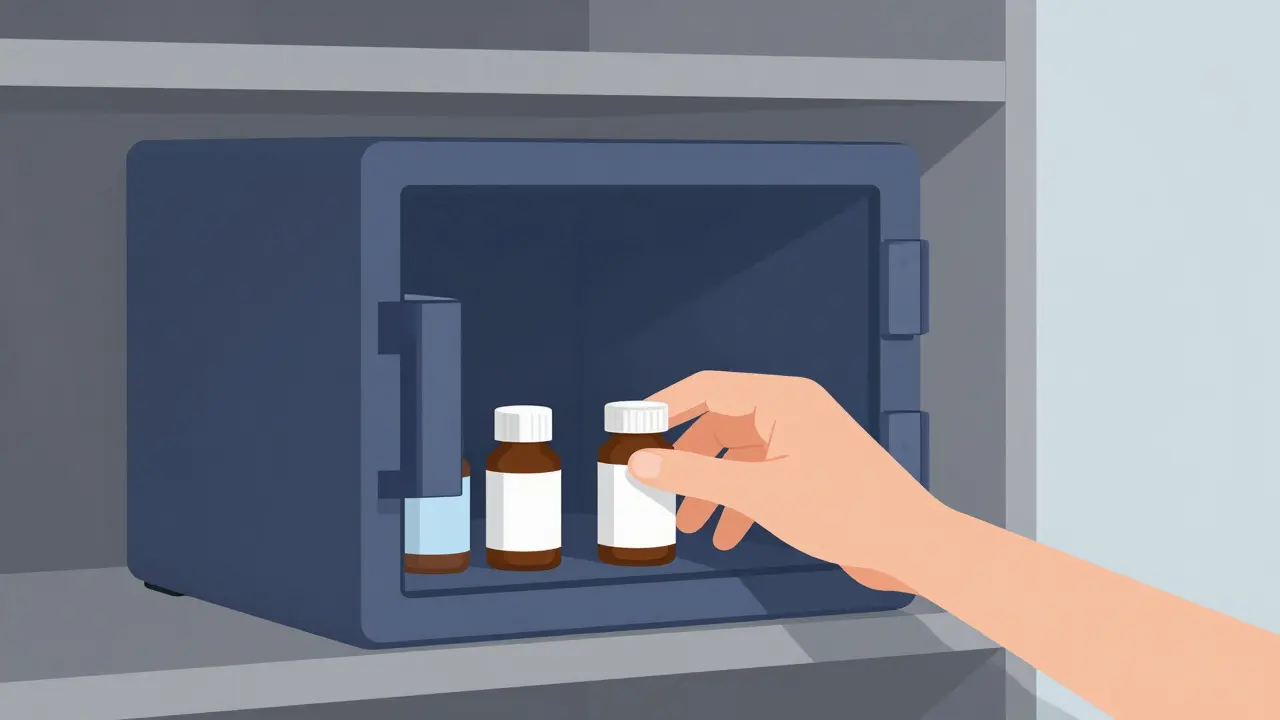
The goal is simple: keep your meds safe from theft and accidents while making sure you can actually get to them when you need them. You'll need a strategy that combines the hotel's gear with your own portable security, especially if you're carrying controlled substances that could land you in hot water with local authorities if they go missing or are found in the wrong packaging.
The Hotel Safe: Your First Line of Defense
Most people just throw their passport and a few bucks in the room safe and call it a day. But if you're storing medication, you need to be more methodical. While Hotel Room Safes are a standard feature in 92% of U.S. hotels, they aren't foolproof. According to OmniLert, nearly 19% of these safes malfunction due to dead batteries or electronic glitches.
Don't wait until you're checking out to find out your safe is jammed. Test the lock and the interior light within 15 minutes of entering your room. If it doesn't work, call the front desk immediately. To prevent accidental ingestion by children-a huge risk since thousands of kids end up in the ER every year due to unsupervised meds-store your medications at least five feet off the ground. A high shelf inside the safe is far safer than a low drawer.
Hostel Survival: Managing Meds in Shared Spaces
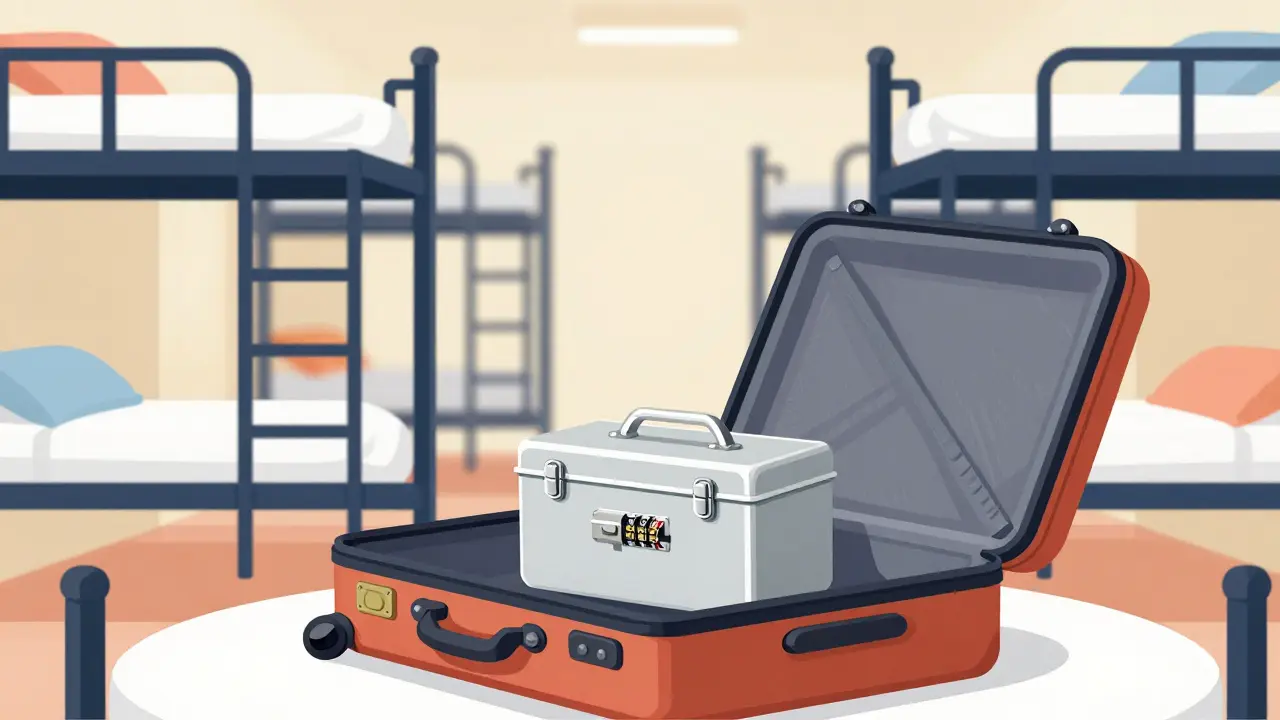
Hostels are a different beast entirely. In a dorm setting, the risk of theft or tampering is significantly higher-about 14.3 incidents per 1,000 stays. If you're staying in a hostel, your best bet is to request a private room with an individual safe. If that's not an option, you're dealing with shared lockers that are often easily picked or bypassed.
Since you can't rely on the building's infrastructure, you need to bring your own. This is where a portable lock box comes in. A Medication Lock Box, like the Med-ico Secure Rx, provides a physical barrier that a simple locker doesn't. While a hotel safe is harder to crack (taking about 27 minutes on average), a high-quality portable box is still better than leaving your pills in a backpack. If your hostel uses a digital key system like Cloudbeds Security Suite, you're in a safer spot, but don't let that make you complacent.
| Storage Method | Security Level | Access Speed | Best For... |
|---|---|---|---|
| Electronic Hotel Safe | High | Slow (~47 sec) | Long-term daily meds |
| Portable Lock Box | Medium | Medium (~15 sec) | Hostels and Airbnbs |
| Original Pharmacy Bottle | Low (Physical) | Fast | Legal compliance/Customs |
| Bedside Table | None | Instant | Emergency meds only |
Legal Safety and the "Original Container" Rule
It's tempting to dump all your pills into a plastic weekly organizer to save space. Don't do it. Beyond the safety risk-since organizers aren't child-resistant-there's a major legal risk. The DEA (Drug Enforcement Administration) and the Controlled Substances Act require medications to stay in their original pharmacy containers with the labels intact.
If you're stopped at a border or your room is searched, a bottle with your name and the doctor's info on it is your legal shield. Without it, you could face fines up to $15,000 or, worse, be accused of drug trafficking. This is especially true in countries with strict medication laws where improper storage can lead to immediate confiscation.
Handling Emergencies: Accessibility vs. Security
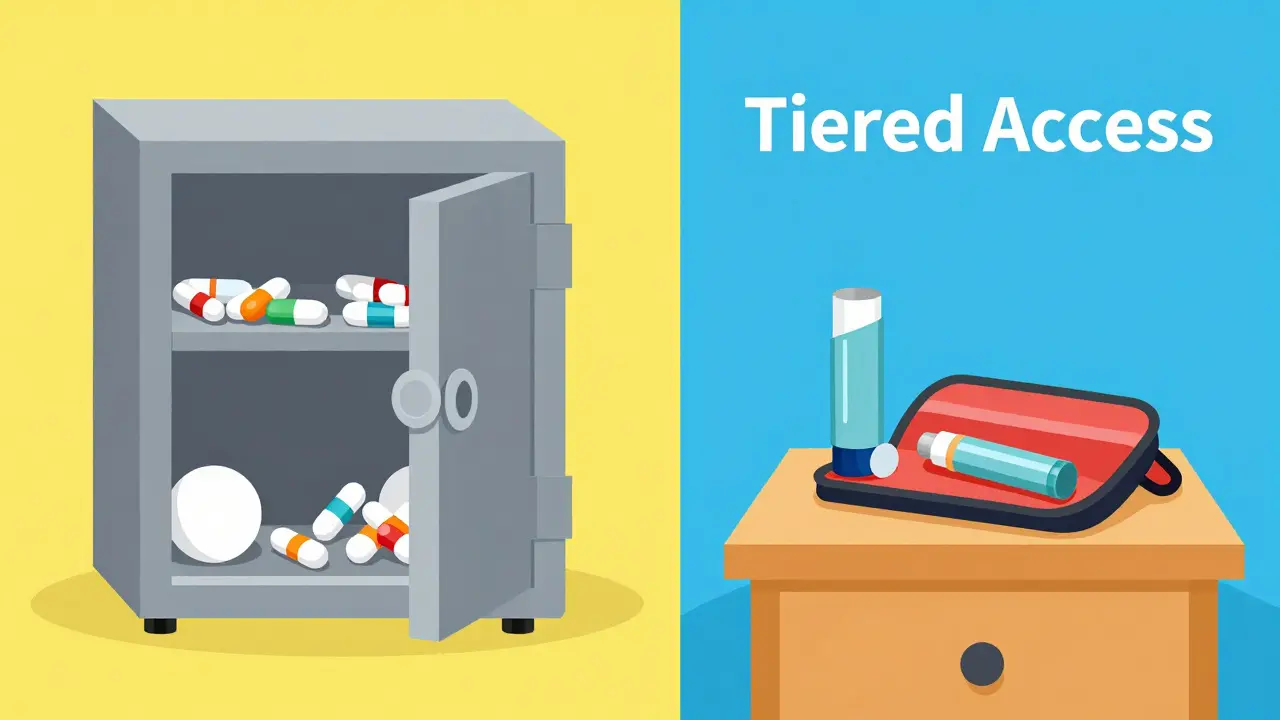
Here is the paradox: you want your meds locked up, but if you have a medical crisis, you can't spend 47 seconds fumbling with a safe code. This is where the "Tiered Access" strategy comes in. Divide your medications into two categories: Routine and Emergency.
- Routine Meds: Vitamins, blood pressure pills, or daily maintenance drugs go in the safe or lock box.
- Emergency Meds: Epinephrine auto-injectors, nitroglycerin, or asthma inhalers should stay on your person or in a designated, easily accessible spot. Research shows 63% of travel medical emergencies require immediate access, making a locked safe a liability in these moments.
For those with temperature-sensitive meds, like insulin, a biometric portable cooler is a lifesaver. It keeps the medicine at the right temperature and prevents theft, even during power outages which are common in budget hostels.
Daily Habits to Prevent Loss
The most effective security measure isn't a lock-it's your own attention. Implement a daily inventory check. It takes thirty seconds to count your pills every morning and night. Travelers who do this reduce their medication discrepancies by 94%. It allows you to notice if a few pills are missing immediately, rather than discovering a theft on the final day of your trip when it's too late to report it.
Also, keep a written or digital medication log. Note the starting balance of your pills and track every dose. This isn't just for your health; it's a requirement for certain controlled substances under DEA Form 106 guidelines and provides a paper trail if you need to file a police report for theft.
Is it safe to use a pill organizer while traveling?
Generally, no. While convenient, organizers lack child-resistant features and, more importantly, they don't have pharmacy labels. This can cause significant legal issues at customs or if you are questioned by authorities about the nature of the medication.
What should I do if my hotel safe doesn't work?
Notify the hotel staff immediately to have it repaired or request a room change. In the meantime, use a TSA-approved portable lock box and keep that box hidden inside a locked suitcase or a high cupboard to add a layer of "security through obscurity."
How do I store medications in a hostel dorm?
Avoid using shared lockers as your only security. Use a personal medication lock box with a high pull-resistance rating. Store the box inside your luggage and use a sturdy padlock on your bag. If possible, keep the most critical medications on your person in a secure pocket.
Do I need a doctor's note for my meds when traveling?
Yes, especially for controlled substances. A signed letter from your physician detailing the medical necessity and the dosage, combined with the original pharmacy labeling, is the best way to avoid confiscation by international customs.
What is the safest way to transport insulin in a hostel?
Use a portable biometric cooler. This prevents spoilage during power failures and provides a secure, locked environment that prevents others from tampering with your medication.
Next Steps for Your Trip
If you're planning a trip soon, start by auditing your gear. Check if you have a portable lock box and ensure your prescriptions are in their original bottles. If you're heading to a budget hostel, don't rely on the facility's lockers; invest in a personal security kit. Finally, double-check the local laws of your destination regarding the specific medications you're carrying, as some common over-the-counter drugs in the US are illegal in other countries.