
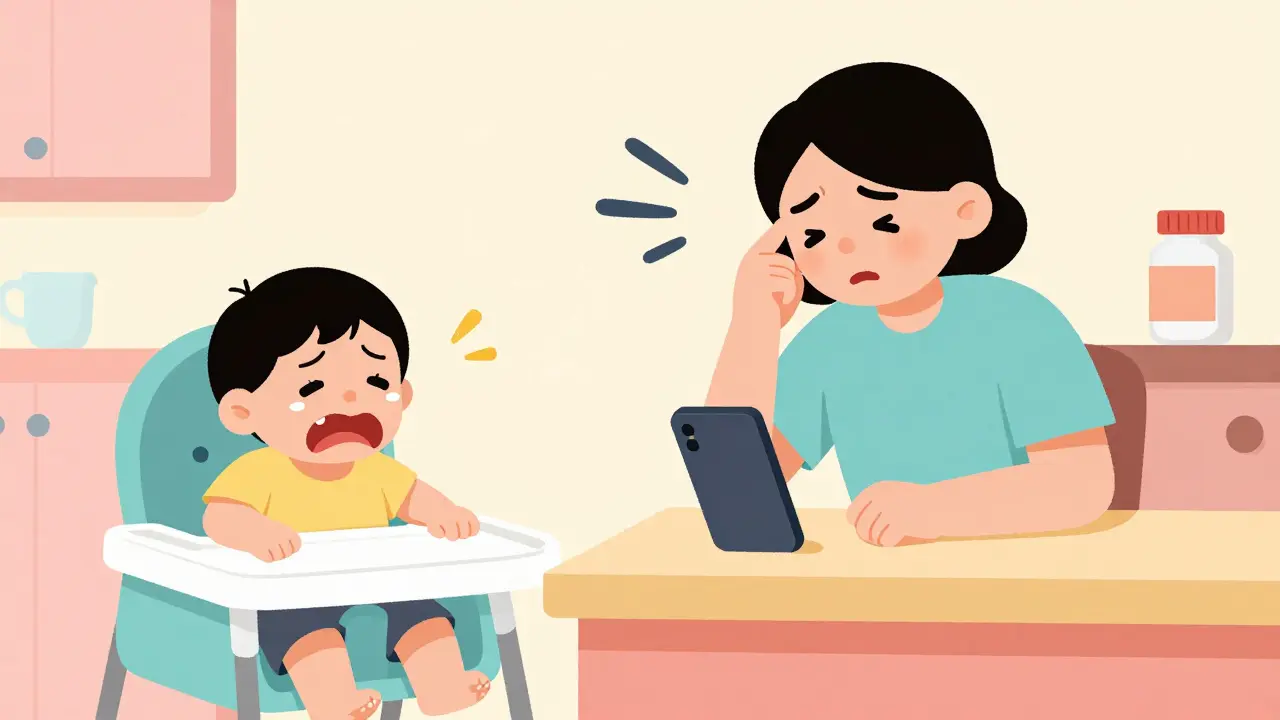
Missing a dose of medicine isn't usually about being lazy or forgetful. For most of us, it's just that life gets in the way. In fact, research from the American Medical Association shows that 60-70% of missed doses are unintentional. You didn't choose to skip your pill; you just got distracted by a phone call or a crying toddler. This is where medication adherence is the extent to which a patient takes their medications exactly as prescribed by their healthcare provider becomes a challenge. The good news is that you don't need a fancy app or a PhD in psychology to fix it. You just need to hitch your meds to things you already do without thinking.
The Secret Sauce: Habit Pairing
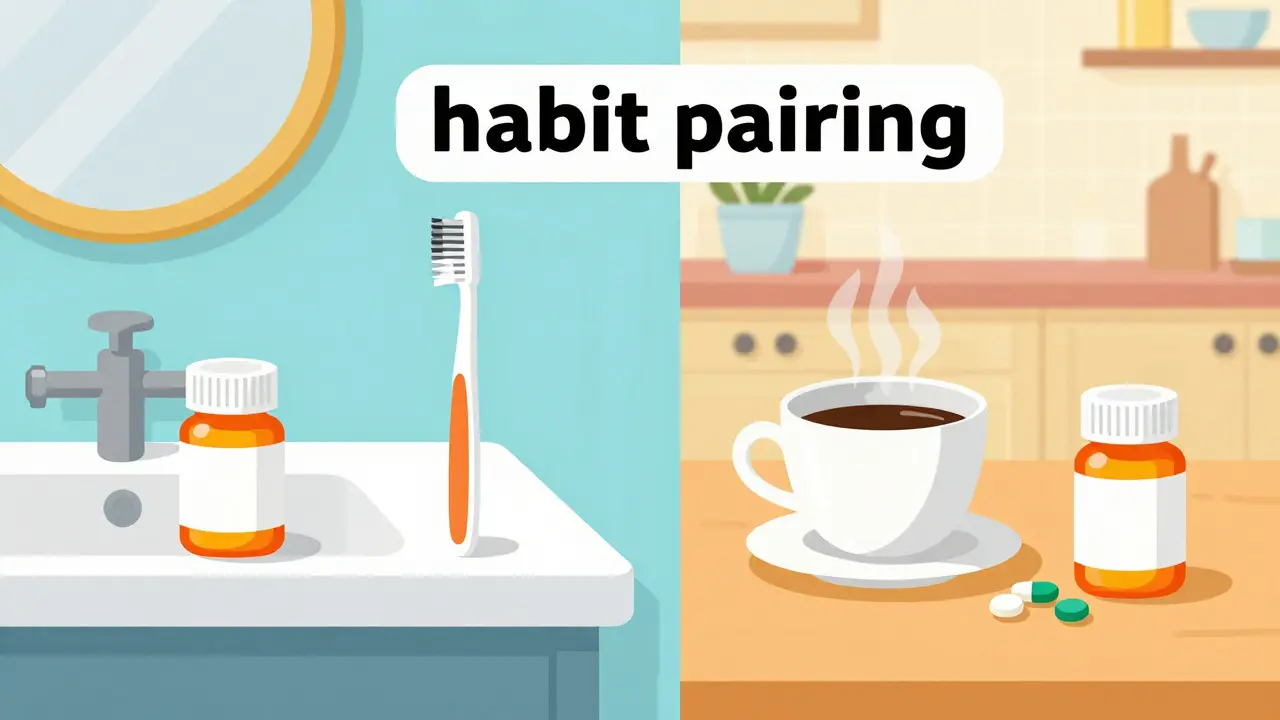
Have you ever noticed how you can walk into the kitchen and start making coffee without even remembering you decided to do it? That's automaticity. Habit Pairing is a strategy where you link a new behavior-like taking a pill-to an existing, rock-solid routine. By doing this, you stop relying on your memory and start relying on your environment.
According to a National Institutes of Health study, this simple switch can reduce missed doses by 30-50%. It's far more effective than a standalone alarm. While apps are great, they have a massive abandonment rate-nearly 68% of people stop using them after three months. Habit pairing, on the other hand, sticks. Once the neural pathway is carved, you don't need a notification to tell you it's time; the act of brushing your teeth or boiling the kettle becomes the notification itself.
Best Habits to Pair with Your Meds
Not every habit is a good anchor. You want something you do every single day, at the same time, without fail. If you only check the mail three times a week, that's a bad anchor. If you brush your teeth every single night, that's a goldmine.
Here are the most effective anchors based on clinical data:
- The Toothbrushing Anchor: This is the heavyweight champion of adherence. Dr. Jennifer L. Smith from the University of Michigan notes that pairing meds with toothbrushing can boost adherence by 43%. It's a physical act that happens in a specific location, making it hard to overlook.
- The Breakfast Ritual: Ideal for morning doses. The American Heart Association suggests a window between 7:00 and 8:30 AM. Pairing your blood pressure meds with your first cup of coffee or your toast makes the medicine part of the "wake up" process.
- The Mealtime Link: Some medications must be taken with food to prevent stomach upset or improve absorption. Pairing these with lunch or dinner is a natural fit and is highly recommended by the American Diabetes Association for glucose-related meds.
- The Evening Wind-down: For medications that cause drowsiness or need to be taken at night (like certain statins), pairing them with setting your alarm for the next day or putting on your pajamas works best.
| Strategy | Improvement Rate | Long-term Retention | Best For... |
|---|---|---|---|
| Habit Pairing | 41% (combined with organizers) | High (12% dropout) | Stable daily routines |
| Pill Organizers | 28% | Moderate | Multiple daily doses |
| Reminder Apps | 32% | Low (68% dropout) | Tech-savvy users |
Your 4-Step Implementation Guide
You can't just decide to pair a habit and expect it to work tomorrow. It takes a bit of setup. Use this protocol to make the process automatic.
- Audit Your Day: Spend a week tracking your activities. What do you actually do every day? Do you always feed the dog at 7 AM? Do you always charge your phone at 10 PM? Find 2-3 non-negotiable activities.
- Match the Med to the Moment: Check your prescriptions. If a med says "take on an empty stomach," don't pair it with breakfast; pair it with waking up or your first glass of water. Match the timing requirement to the habit.
- Place Visual Cues: Don't hide your meds in a drawer if you're trying to pair them with coffee. Put the bottle right next to the coffee maker. Stanford Medicine found that keeping meds in high-traffic areas can increase effectiveness by 28%.
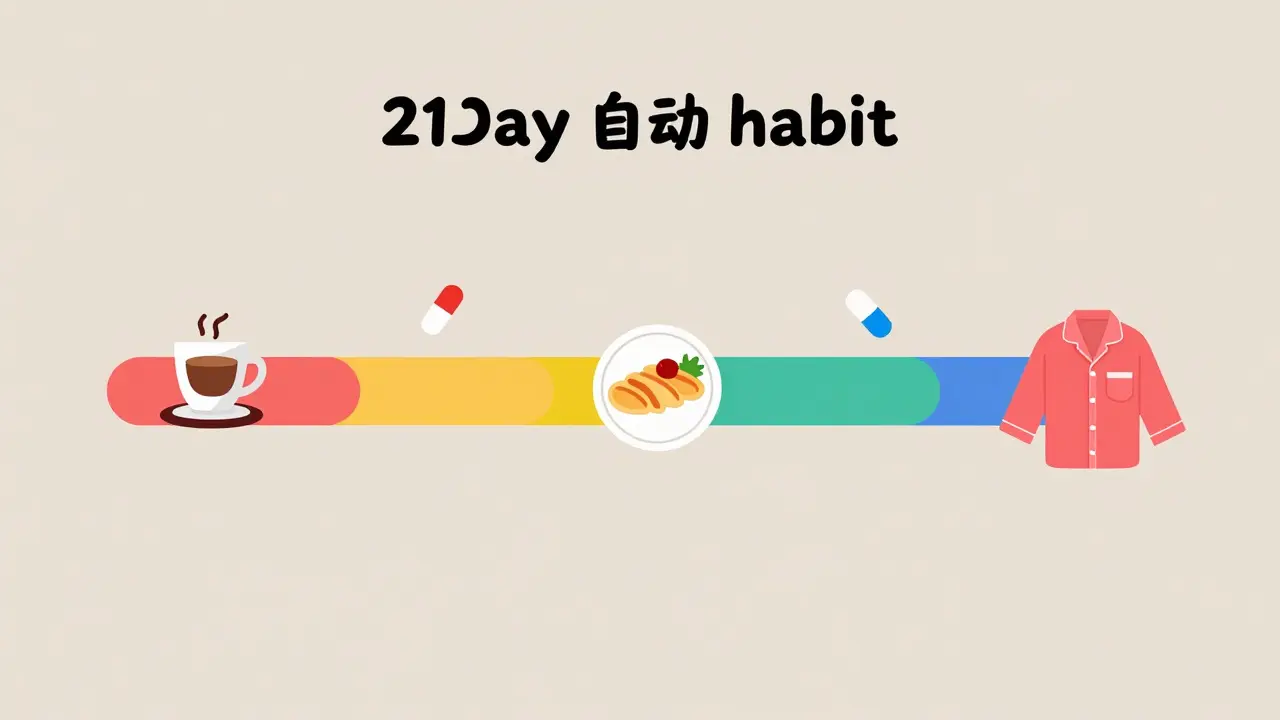
- The 21-Day Push: Habit formation doesn't happen overnight. Research suggests it takes anywhere from 21 to 66 days to make a behavior automatic. Track your success for at least three weeks. If you miss a day, don't scrap the system-just restart the count.
Dealing with Real-World Hurdles
Life isn't a laboratory, and routines break. If you're a shift worker or have a chaotic schedule, a single anchor might not be enough. Nurses and emergency responders often find that habit pairing alone fails because their "morning" might be 8 PM on a Tuesday.
In these cases, use Backup Anchors. If you usually take your meds when you get home from work, but your shift ends at different times, pair them with something that happens regardless of the hour, like the first time you sit down to eat a meal or the moment you take off your shoes. For those with highly variable schedules, combining habit pairing with a pill organizer and a phone alarm provides the most reliable safety net.
It's also worth noting that this system isn't a cure-all. Some people struggle with "intentional nonadherence," which is when you consciously skip a dose because of side effects or the cost of the drug. If your meds make you feel sick, no amount of habit pairing will make you want to take them. In that case, the only solution is a conversation with your doctor to adjust the dosage or switch medications.
The Bottom Line on Consistency
Consistency is the goal. Data from Oak Street Health shows that staying within a 30-minute window of your target time daily increases adherence by 37%. It’s not about being perfect; it’s about being predictable. When you turn your medication into a "reflex" rather than a "task," the mental burden of managing your health disappears.
How long does it take for medication pairing to become a habit?
Most people find that the behavior becomes automatic within 21 to 66 days. This varies depending on how complex your medication schedule is and how strong the existing habit (the anchor) is.
What is the most effective habit for morning medications?
Clinical evidence suggests that brushing your teeth or your morning coffee ritual are the most effective anchors, with the toothbrushing anchor specifically linked to a 43% increase in adherence.
Can I use habit pairing if I take multiple medications at different times?
Yes. The best approach is to group your medications into "windows." For example, pair all morning meds with breakfast and all evening meds with your nighttime skincare or bedtime routine. Grouping doses within 1-hour windows can improve adherence by 27%.
Do medication reminder apps work better than habit pairing?
While apps provide a helpful initial boost (about 32% improvement), they have high abandonment rates. Habit pairing is generally superior for long-term adherence because it creates a neural pathway in the brain, making the action automatic rather than dependent on a device.
What should I do if my daily schedule is completely unpredictable?
If you work rotating shifts or have an unstable routine, use a combination of a pill organizer and flexible anchors (like the first meal of your day) and supplement this with a digital alarm. Medication synchronization services from your pharmacy can also help.