
If you have irritable bowel syndrome (IBS), you’ve probably tried everything: elimination diets, probiotics, prescription meds, stress management. But what if one of the most effective options is something simple, natural, and backed by solid science? Peppermint oil isn’t just for minty breath or candy canes. For millions with IBS, enteric-coated peppermint oil capsules have become a game-changer.
How Peppermint Oil Actually Works for IBS
Peppermint oil doesn’t just soothe your stomach-it actively calms it. The key ingredient is L-menthol, which makes up 30-55% of the oil. This compound blocks calcium channels in the smooth muscle of your intestines, reducing the spasms that cause cramping, bloating, and pain. It also activates TRPM8 receptors, which help lower your gut’s sensitivity to pain. Think of it like turning down the volume on your gut’s alarm system.
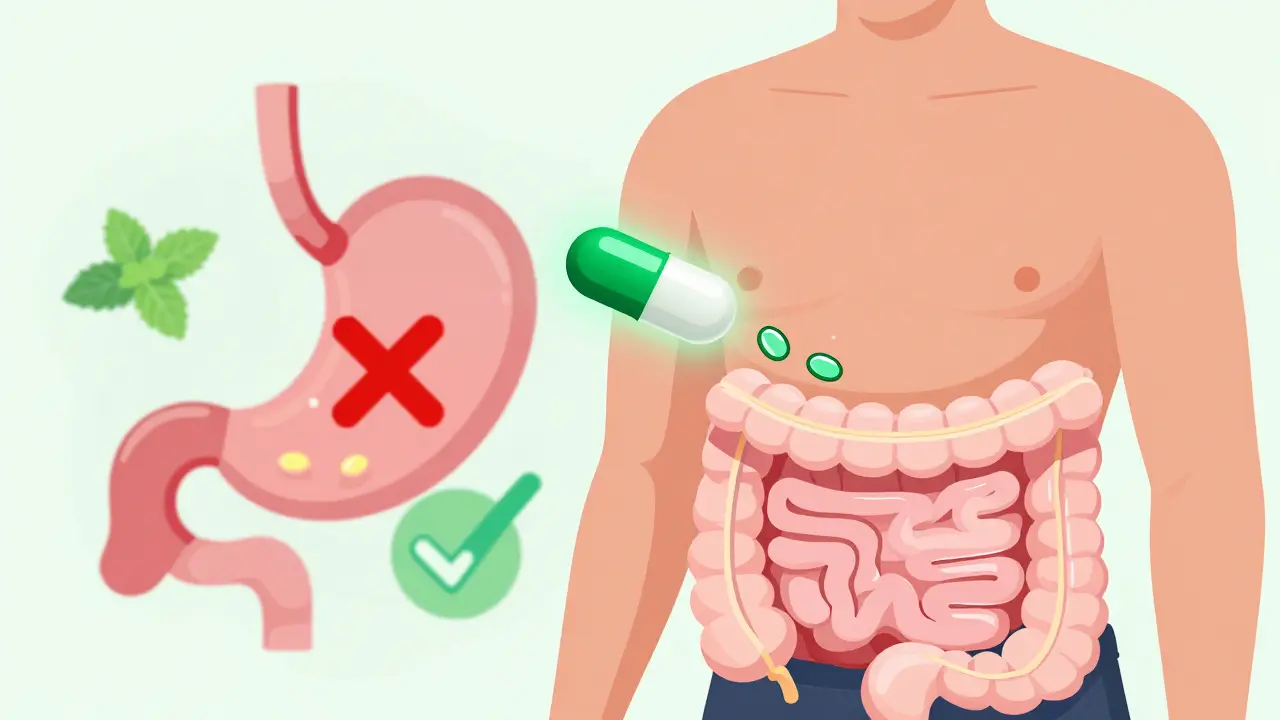
But here’s the catch: regular peppermint oil won’t cut it. If you swallow a capsule that isn’t enteric-coated, the oil releases in your stomach. That’s when you get heartburn, nausea, or even a burning sensation in your throat. Enteric coating is the difference between relief and discomfort. It keeps the oil intact until it reaches your small intestine, where it’s needed most.
The Evidence: More Than Just Anecdotes
A 2014 meta-analysis in the Journal of Clinical Gastroenterology reviewed five clinical trials with nearly 400 patients. The results? People taking enteric-coated peppermint oil were more than twice as likely to see overall IBS symptom improvement compared to placebo. That’s not a small effect-it’s comparable to many prescription antispasmodics.
Since then, the evidence has only grown stronger. The American College of Gastroenterology’s 2022 guidelines conditionally recommend peppermint oil as a first-line treatment for global IBS symptoms. The European Medicines Agency approved it for IBS back in 2014. Twelve randomized trials involving over 800 patients have consistently shown benefit, especially for abdominal pain and bloating.
One standout study looked at IBgard®, a triple-coated formulation that targets the small intestine. After 4 weeks, users saw a 40% drop in total IBS symptoms-nearly double the 24.3% improvement seen with placebo. The difference wasn’t subtle. Patients reported feeling better within 30 minutes of taking the capsule.
Who Benefits Most? (And Who Should Avoid It)
Peppermint oil isn’t a one-size-fits-all solution. It works best for people with IBS-C (constipation-predominant) and IBS-M (mixed symptoms). Studies show 68% of these users get meaningful relief. But for IBS-D (diarrhea-predominant), results are mixed. In some cases, the oil’s muscle-relaxing effect can make loose stools worse.
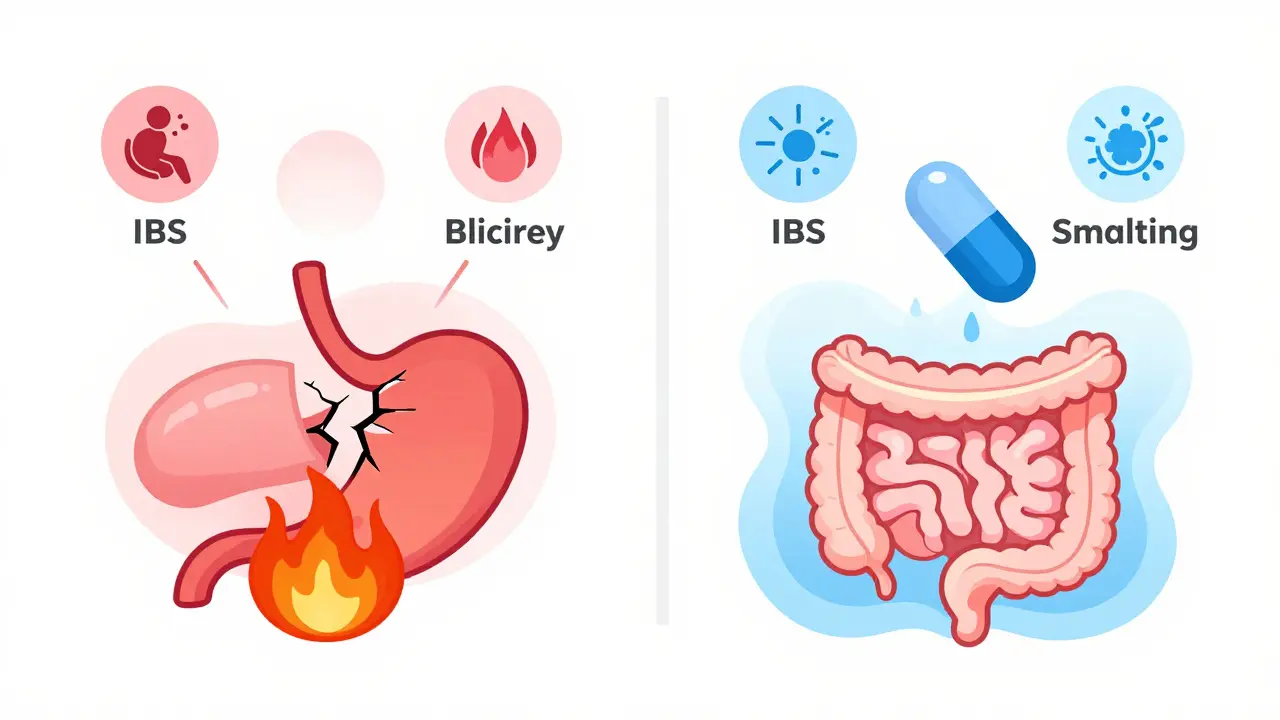
It’s also not ideal for people with GERD or hiatal hernias. Even with enteric coating, some users still report heartburn-about 7.3% in clinical trials. If you’ve had acid reflux before, start slow. Talk to your doctor if you’re on proton pump inhibitors (PPIs) like omeprazole. Those drugs raise stomach pH and can break down the enteric coating early, cutting the oil’s effectiveness by 37%.
What Products Actually Work?
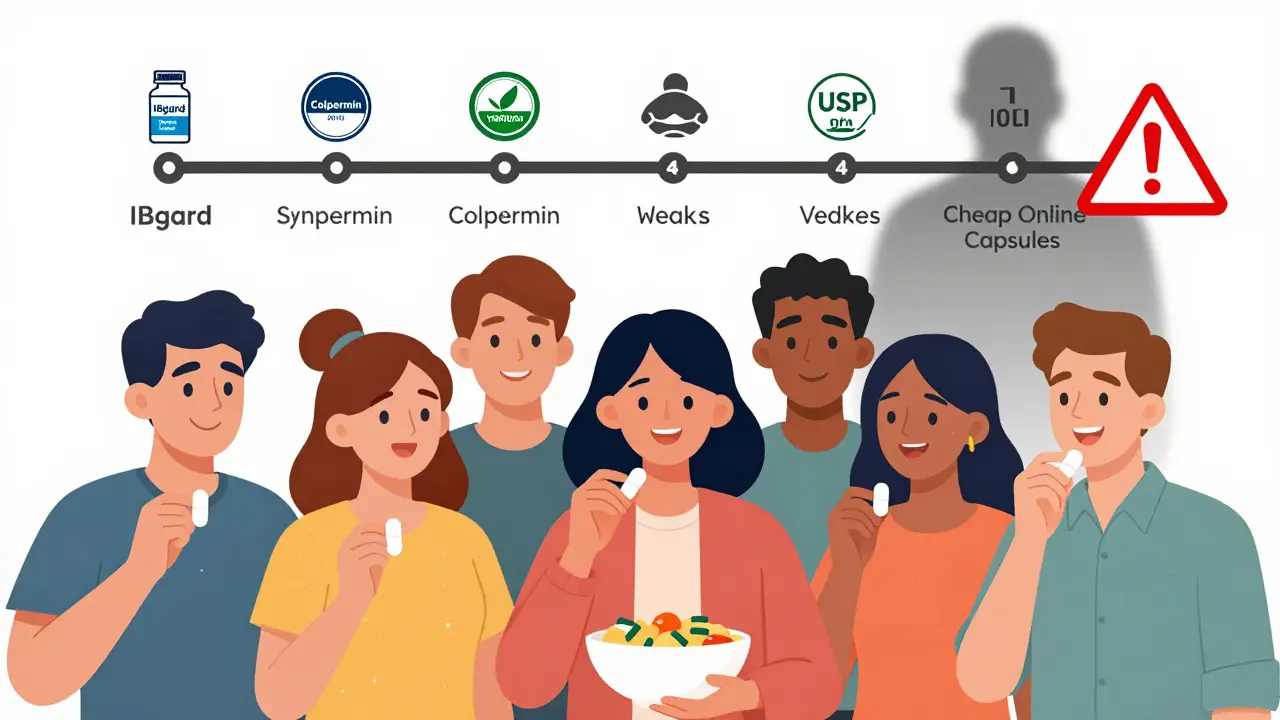
Not all peppermint oil capsules are created equal. The market is flooded with cheap, unregulated products. Some don’t even contain real peppermint oil. Others have too little menthol or are missing the enteric coating entirely.
Stick to trusted brands that meet USP Verified standards. These are independently tested for purity, potency, and delivery. The most studied formulations include:
- IBgard® - Triple-coated microspheres that release in the small intestine. Each capsule contains 180mg of peppermint oil with 50-65% menthol.
- Colpermin® - Available in Europe since 1986. Also enteric-coated, with standardized menthol content.
- Generic enteric-coated capsules - Look for labels that specify “enteric-coated,” “delayed-release,” and “50-65% menthol.” Avoid anything labeled “oil” without coating details.
ConsumerLab tested over 50 products in 2022. Only 62% passed quality checks. Many contained pesticides or inconsistent menthol levels. The FDA issued a warning in 2020 about non-standardized products-so don’t buy from random online sellers.
How to Take It: Timing, Dosage, and Duration
There’s a science to taking peppermint oil. Just popping a capsule with your lunch won’t cut it.
Standard dosage: 180-200mg of enteric-coated peppermint oil, taken three times a day-30 to 60 minutes before meals. Why before? Because the oil needs to reach the small intestine before food triggers spasms. A patient-led study on CureTogether found that 84% of users who took it before meals saw improvement, compared to just 52% who took it with food.
Start low. If you’re new to this, try one capsule daily for a week. Some people get mild heartburn at first, but it usually fades after a few days. If it doesn’t, stop and talk to your doctor.
Give it time. Most studies show symptom improvement after 2-4 weeks. You won’t feel magic on day one. The goal is consistent relief over 4-8 weeks. After that, many people switch to maintenance dosing-once or twice daily-especially during stressful periods.
Side Effects and Safety
Peppermint oil is generally safe. In clinical trials, only 11.4% of users reported side effects versus 5.1% in the placebo group. The most common? Mild heartburn (7.3%), nausea (2.1%), and a burning sensation around the anus (1.8%).
Long-term safety data is still limited. The longest trial followed patients for 12 weeks. But real-world data from the IBS Safety Registry (n=12,450) shows no serious adverse events over two years of use. That’s reassuring.
Don’t use it if you’re pregnant, breastfeeding, or under 12 years old-unless directed by a doctor. There’s not enough data on safety in these groups. Also, avoid combining it with other antispasmodics unless you’re under medical supervision.
How It Stacks Up Against Other Treatments
Peppermint oil doesn’t replace everything-but it holds its own.
- vs. Hyoscine butylbromide (Buscopan): Comparable effectiveness. Peppermint oil is just as good for cramping.
- vs. Loperamide (Imodium): Better for pain, worse for diarrhea. Peppermint oil doesn’t stop loose stools-it calms the gut.
- vs. Trimebutine: Slightly less effective. But trimebutine isn’t available in the U.S.
- vs. Eluxadoline (Viberzi): Not as strong for diarrhea-predominant IBS. But eluxadoline costs over $300/month and has serious side effects.
Cost-wise, peppermint oil wins. A month’s supply of IBgard® runs about $30-$40. That’s less than half the price of most prescription IBS drugs. A 2021 cost-effectiveness study found peppermint oil had an 89% chance of being worth the cost at standard healthcare thresholds.
Real People, Real Results
On Drugs.com, 62% of 247 users rated peppermint oil as “positive.” Comments like “Finally found relief after three failed prescriptions” and “Crumbs gone in 20 minutes” are common. Reddit threads from IBS communities are full of people thanking each other for the tip.
But it’s not perfect. Over 20% say it didn’t work for them. Others report inconsistent results: “Works great one week, useless the next.” That’s likely tied to stress, diet, or timing. The most successful users stick to the schedule: capsules 30-60 minutes before meals, every day.
A 2022 UK survey of over 1,000 IBS patients found that 67% kept using peppermint oil after three months because it helped. The 33% who stopped mostly cited side effects or no change.
What’s Next? The Future of Peppermint Oil for IBS
Research is moving fast. A new NIH-funded trial (NCT05799053) is testing peppermint oil in children as young as 5. Right now, almost no data exists for pediatric IBS.
Companies are developing next-gen formulas. One, called PO-101, is a modified menthol derivative designed to cut heartburn risk by 70%. Phase 3 trials are underway.
Scientists are also exploring how gut bacteria affect response. Early data suggests your “enterotype”-your unique gut microbiome profile-might predict whether peppermint oil works for you. That could lead to personalized treatment in the next few years.
For now, the evidence is clear: enteric-coated peppermint oil is one of the most reliable, affordable, and well-studied options for IBS. It’s not a cure-but for many, it’s the closest thing to one.


Post A Comment