
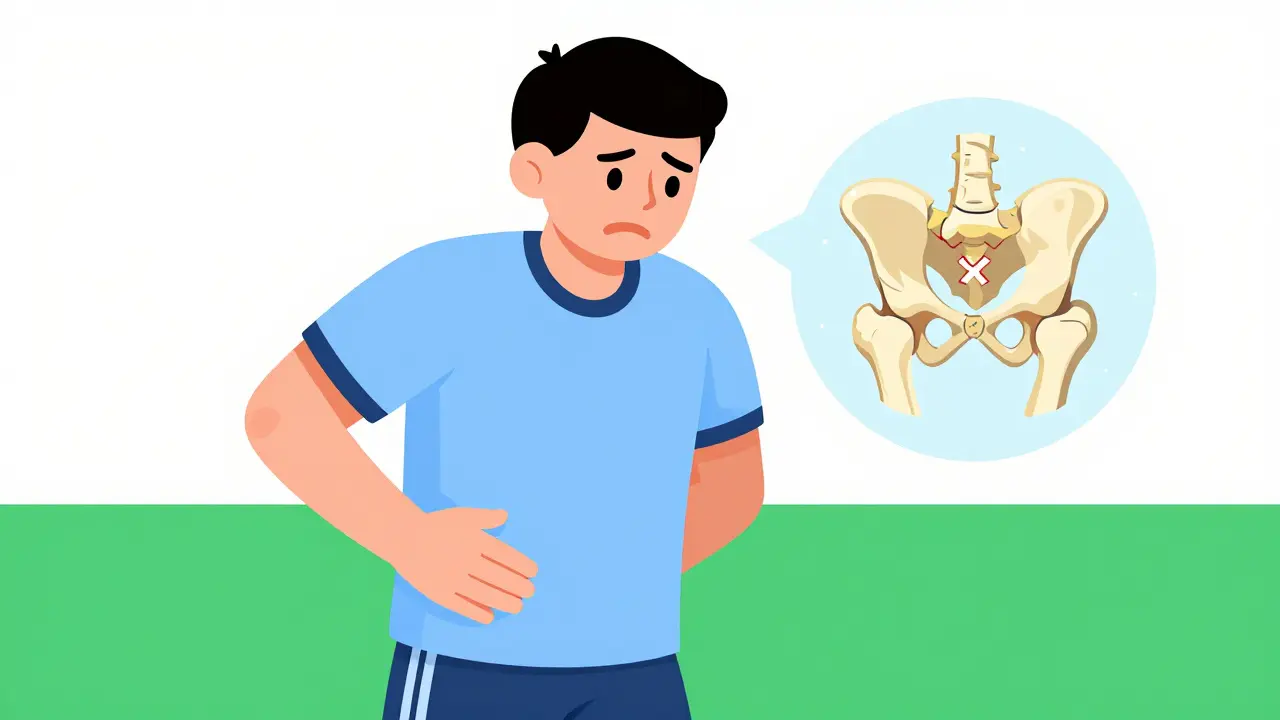
Imagine playing your best season of soccer or basketball, only to be sidelined by a deep, aching pain in your groin that feels like it's coming from inside the joint. For many athletes, this isn't just a simple strain; it's often a hip labral tear is damage to the fibrocartilaginous rim that lines and protects the acetabular socket of the hip joint. If you've noticed a clicking sensation or a sharp catch when you pivot, you might be dealing with a structural issue that doesn't just go away with a few days of rest. Getting back to your sport depends on whether you can distinguish between a temporary inflammation and a tear that requires surgical intervention to prevent long-term joint decay.
Key Takeaways for Athletes
- MRA is the gold standard for imaging, far outperforming standard MRIs in detecting partial tears.
- Femoroacetabular Impingement (FAI) is the most common cause of these tears.
- Conservative treatment works for about 65% of patients, but surgical repair is necessary for those with hip dysplasia.
- Return-to-sport timelines range from 3 months (debridement) to 6 months (full repair).
Why Athletes Are Prone to Labral Tears
The hip joint is built for stability, but sports like hockey, ballet, and gymnastics push that stability to the limit. The labrum acts like a rubber seal, deepening the socket and keeping the femoral head centered. When you perform repetitive high-velocity rotations or extreme ranges of motion, that seal can rip.
A major culprit here is Femoroacetabular Impingement, or FAI, a condition where the bones of the hip joint are irregularly shaped, causing them to rub together. Think of it like a door that doesn't swing open fully because a piece of wood is sticking out; eventually, the repeated hitting damages the labrum. Research shows that between 22% and 55% of athletic hip pain cases involve this kind of pathology, with the highest risk found in competitive athletes under 40.
Cracking the Code: Imaging and Diagnosis
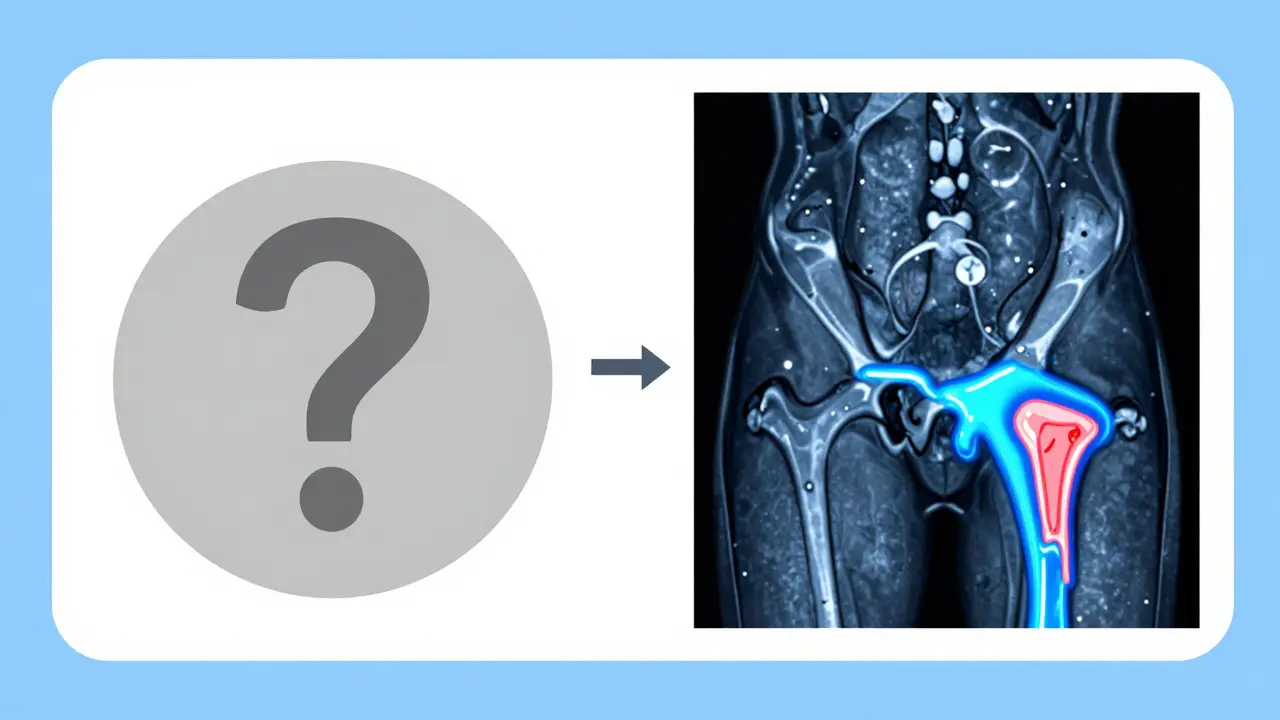
If you go to a general practitioner, they might start with a standard MRI. However, standard imaging often misses the mark. In fact, conventional MRIs only show a 35-60% sensitivity for these tears. If you're an athlete whose career depends on a precise diagnosis, you need to look for Magnetic Resonance Arthrography (MRA). Unlike a regular scan, an MRA involves injecting a contrast dye into the joint, which pushes the fluid into the tear, making it visible. This bumps the diagnostic accuracy up to 90-95%.
Before you get to the scanner, your doctor will likely use two specific physical tests. The FADIR test (flexion, adduction, and internal rotation) and the FABER test (flexion, abduction, and external rotation) are designed to pinch the joint and provoke the pain. About 78% of people with confirmed tears will feel a characteristic "catch" or pain during these maneuvers.
| Imaging Type | Sensitivity | Best Use Case | Common Limitation |
|---|---|---|---|
| X-Ray (Radiographs) | Low | Checking for bone dysplasia/FAI | Cannot see soft tissue (labrum) |
| Standard MRI | 35-60% | General screening | Misses 30% of partial tears |
| MRA (Arthrography) | 90-95% | Pre-operative planning | Invasive (requires injection) |
| Arthroscopy | 98% | Definitive diagnosis & treatment | Surgical procedure |
Conservative Management: Can You Avoid Surgery?
Not every tear needs a scalpel. For many, a multimodal approach is the best first step. This usually starts with 4-6 weeks of relative rest-meaning you stop the activity that causes the pain-and the use of NSAIDs like ibuprofen or naproxen to bring down inflammation.
Physical therapy is the cornerstone of non-surgical recovery. While some older studies suggest only a minority find success, more recent data from specialized sports clinics shows that up to 65% of athletes can manage their symptoms without surgery. If the pain persists, corticosteroid injections can offer a window of relief for 3 to 6 months, often allowing an athlete to finish a season before scheduling a procedure.
However, there is a red flag: Hip Dysplasia. This is when the socket is too shallow to hold the hip ball securely. If you have dysplasia and a labral tear, conservative treatment is rarely enough. In these cases, isolated labrum repair fails about 65% of the time because the underlying structural instability causes the new repair to rip again. You have to fix the socket to save the labrum.
The Surgical Route: Hip Arthroscopy
When you've tried PT for 3 to 6 months and still can't pivot without pain, Hip Arthroscopy is the gold standard. This is a minimally invasive procedure where a surgeon inserts a camera and small tools into the joint. Depending on the damage, they will do one of two things: debridement or repair.
Debridement is essentially "cleaning up" the frayed edges of the labrum. It's a faster recovery, but it's less stable. Labral repair, on the other hand, involves using suture anchors-essentially tiny screws with threads-to stitch the labrum back onto the bone. Recent advancements have introduced bioabsorbable anchors, like the BioX system, which the body eventually absorbs, reducing the long-term risk of hardware irritation. Data shows these bioabsorbable options have nearly a 90% success rate.
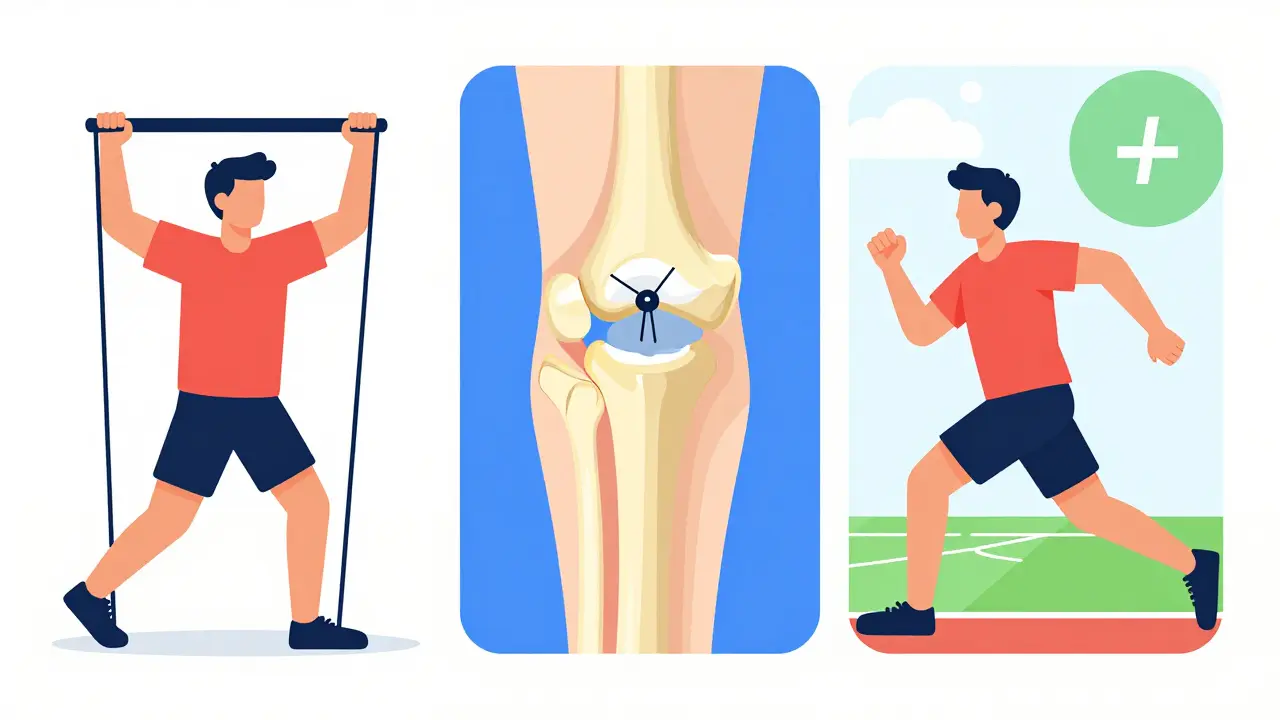
Recovery isn't a sprint; it's a marathon. A typical rehab protocol lasts about 6 months and is broken into phases:
- Protection (Weeks 1-6): Focus on gentle mobility and protecting the repair.
- Strengthening (Weeks 7-12): Progressive load-bearing and core stability.
- Sport-Specific (Weeks 13-20): Agile movements, cutting, and jumping.
- Full Return (Weeks 21-26): Returning to competitive play once you hit 90% quadriceps strength symmetry.
Recovery Timelines and Real-World Outcomes
The timeline for getting back on the field depends heavily on the type of surgery. If you had a simple debridement, you might be back in 3 to 4 months. If you had a full repair, expect 5 to 6 months. For example, NHL players often follow a strict 5.5-month window to return to the ice after a labral repair.
The success rate for competitive athletes returning to their pre-injury level is impressive, hovering around 85-90%. However, this dips to about 70-75% for athletes over 35, largely because older joints are more prone to concurrent Osteoarthritis, a degenerative joint disease where the protective cartilage wears down. Ignoring a tear doesn't just mean playing in pain; it increases your risk of developing hip OA by 4.5 times within a decade.
What is the difference between a labral tear and a hip strain?
A hip strain is a muscle or tendon injury, usually felt as a dull ache in the thigh or groin that improves with rest. A labral tear is a structural rip in the joint cartilage, often characterized by mechanical symptoms like clicking, popping, or a "locking" sensation inside the joint during rotation.
Why is a standard MRI not enough for a diagnosis?
Standard MRIs often lack the contrast needed to see small, partial-thickness tears. MRA uses a contrast agent injected into the joint, which fills the tear and makes it significantly more visible, increasing sensitivity from roughly 50% to over 90%.
Can I ever go back to high-impact sports after surgery?
Yes, the vast majority of competitive athletes (85-90%) return to their sport. However, those in extreme-motion sports like gymnastics or ballet have slightly higher complication rates and may require more specialized physical therapy to maintain a full range of motion.
How do I know if I need surgery or PT?
Generally, surgeons recommend a trial of 3-6 months of conservative management (PT and activity modification). If you still experience mechanical locking or pain that limits your daily function after this period, surgery is usually the next step. If hip dysplasia is present, surgery is typically prioritized.
What are the risks of hip arthroscopy?
While generally safe, complications can include persistent pain (15-20%), heterotopic ossification (bone growing in soft tissue, 5-10%), or rare nerve injuries (1-2%). Choosing a surgeon with a high volume of hip-specific cases is key to minimizing these risks.
Next Steps for Your Recovery
If you suspect a labral tear, your first move should be to secure a referral to a sports medicine specialist rather than a general orthopedist. Because the learning curve for hip arthroscopy is steep-requiring 50-100 cases to reach competency-experience matters. Request a consultation that includes a physical exam with FADIR/FABER tests and ask specifically about the possibility of an MRA if a standard MRI comes back "clear" but your symptoms persist.
For those currently in rehab, focus on the quadriceps symmetry. Don't rush back to the field just because the pain is gone; wait until you have the strength to support the joint, or you risk a re-tear that could lead to permanent cartilage loss.