
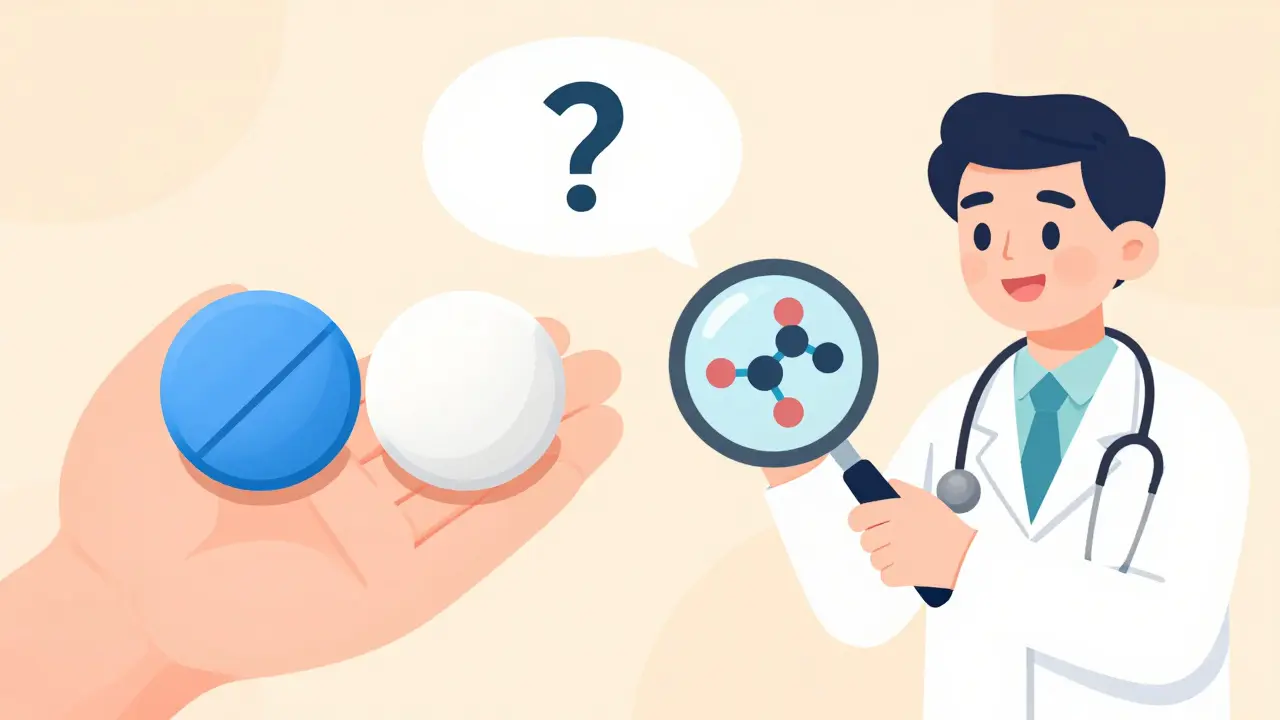
When a patient picks up a prescription and sees a pill that looks completely different from what they’ve been taking, their first thought isn’t usually about cost savings. It’s: "Is this really the same thing?" That moment-when the bottle changes color, shape, or size-is where the real work begins. As a provider, your job isn’t just to prescribe. It’s to explain. And when it comes to generic medications, how you explain makes all the difference.
Why Patients Worry About Generics
Most people don’t know that 90% of prescriptions filled in the U.S. are for generic drugs. They do know that their brand-name pill was blue and oval, and now it’s white and round. That change triggers doubt. A 2023 survey found that 28% of patients are nervous about switching from brand to generic. Some worry the generic won’t work as well. Others think it’s "inferior" because it costs less. A few even blame side effects on the switch-even when the inactive ingredients (like dyes or fillers) are harmless.
The truth? The FDA requires generics to match brand-name drugs in active ingredient, strength, dosage form, and how the body absorbs them. Bioequivalence studies must prove the generic delivers the same amount of medicine into the bloodstream within the same time frame-within 80% to 125% of the brand. That’s not a guess. It’s science. And it’s backed by 47 studies involving over 9,000 patients, which found no meaningful difference in effectiveness for heart medications, diabetes drugs, or antidepressants.
What Generics Actually Are (And Aren’t)
Generics aren’t knockoffs. They’re not cheaper because they’re lower quality. They’re cheaper because they don’t repeat the $2.6 billion clinical trials brand-name companies run to get approval. Once a patent expires, any manufacturer can apply to make the same drug using the existing safety data. The FDA still inspects their factories. They still test every batch. The label is nearly identical-except for the brand name.
The only differences? Inactive ingredients. These include things like coloring, flavoring, or binders that help hold the pill together. They don’t affect how the medicine works. But they can change how the pill looks or tastes. That’s why a generic version of Lipitor might be a different color than the brand. It’s not a different drug. It’s the same drug in a different wrapper.
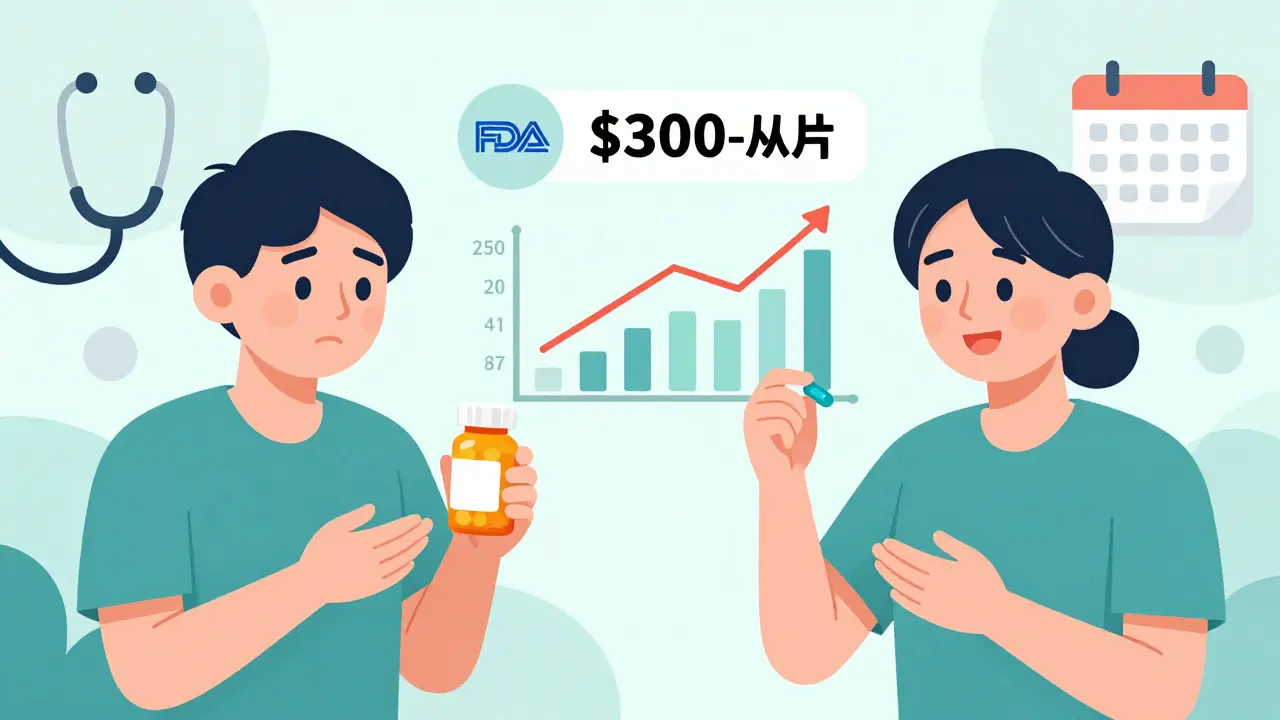
And here’s the kicker: generics save patients and the system billions. In 2023 alone, generic drugs saved the U.S. healthcare system $373 billion. For a Medicare patient switching from brand-name Crestor to generic rosuvastatin, that could mean saving $300 a month. That’s not just a number-it’s whether someone can afford to take their medicine every day.
The TELL Framework: A Simple Way to Talk About Generics
There’s no one-size-fits-all script. But there’s a proven method: TELL. It’s simple, practical, and built for real conversations.
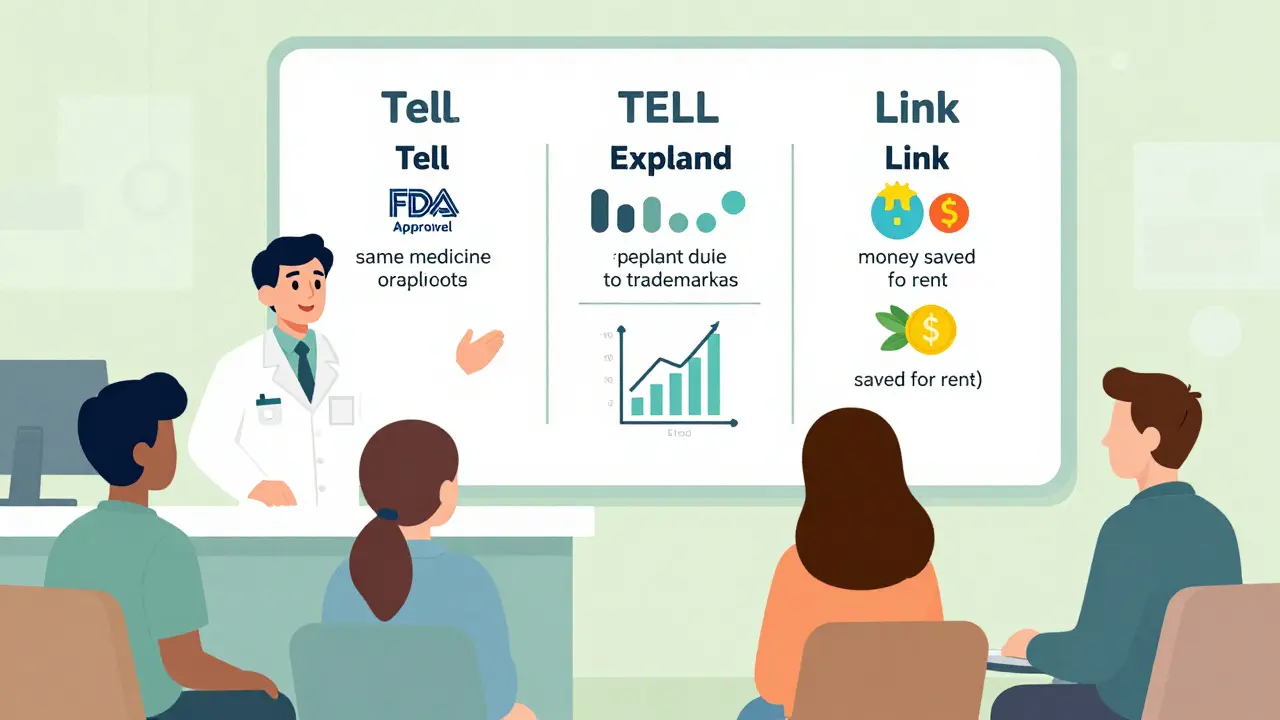
- Tell them the active ingredient is the same. Say: "This generic has the exact same medicine in it as your old pill. The FDA requires it to work the same way."
- Explain why it looks different. Say: "The color and shape changed because of trademark rules. The company that made the brand name owns those designs. But the medicine inside? Identical."
- Listen without interrupting. Ask: "What’s your biggest concern about this change?" Don’t assume. Maybe they had a bad experience with a different generic before. Maybe they heard a story from a friend. Let them say it.
- Link it to their goals. Say: "I know you want to keep your blood pressure under control. This generic does that-and it means you won’t have to choose between your medicine and your rent this month."
Studies show patients who get this kind of clear, personalized explanation are 22% more likely to stick with their medication six months later. That’s not a small boost. That’s life-changing.
Common Questions-and How to Answer Them
You’ll hear these over and over. Be ready.
- "Is this really the same medicine?" Yes. Same active ingredient. Same strength. Same way it’s absorbed. The FDA won’t approve it unless it’s identical in effect.
- "Why does it look different?" Trademark laws. The brand-name company owns the design. The generic manufacturer can’t copy it exactly. But the medicine? Exactly the same.
- "Is it as strong?" Yes. The FDA requires the same amount of active ingredient. It’s not weaker. It’s just cheaper to make.
- "I heard generics don’t work as well." That’s a myth. Over 47 studies show no difference in outcomes. If a generic didn’t work, it wouldn’t be on the market.
Use the teach-back method: ask the patient to repeat back what you said in their own words. If they can explain why the pill looks different but still works the same, they’re more likely to take it.
When Generics Need Extra Care
Most drugs are fine. But for a small group-like levothyroxine (for thyroid), warfarin (a blood thinner), or some seizure meds-the margin for error is thin. That’s why some providers prefer to keep patients on the same generic manufacturer once they’ve stabilized. Not because generics are unsafe. But because switching between different generic versions (even if both are FDA-approved) can sometimes cause small changes in absorption.
That’s not a reason to avoid generics. It’s a reason to be consistent. If a patient is doing well on a specific generic, try to keep them on it. If they need to switch, monitor them closely. And always document the change and why it happened.
What Works in Real Life
Pharmacists are the ones who talk to patients most often about generics. In fact, 67% of patients get their info from their pharmacist, not their doctor. That’s why training matters. Programs like the American Pharmacists Association’s "Communicating with Patients about Generics" certification have been shown to boost pharmacist confidence by 65%.
One clinic in Sydney started using short video explanations-under 90 seconds-alongside verbal counseling. Within six months, patient acceptance of generics jumped 31%. The videos showed how the FDA tests generics, what "bioequivalence" means, and how much money patients save. Patients said they felt more in control. They weren’t just told to switch. They understood why.
And the results? Fewer calls to the pharmacy asking if the pill was "real." Fewer patients stopping their meds because they "didn’t feel right." More people paying for prescriptions instead of skipping them.
What’s Next for Generics
The FDA is now spending $5 million on patient education projects in 2024. That’s a sign this isn’t going away-it’s getting more important. Biosimilars (complex generics for biologic drugs like insulin or rheumatoid arthritis treatments) are coming fast. In 2023, the FDA approved 43 of them. These will need even clearer explanations. The same principles apply: same active ingredient, same effect, different delivery system. But the science is more complex. So the conversation has to be too.
Insurance companies are pushing harder for generics too. Eighty-four percent of health plans put generics in the lowest cost tier. Brand-name drugs? Only 12%. That means if you don’t explain generics, patients might end up paying more-or skipping their meds entirely.
The future isn’t about stopping generics. It’s about helping patients understand them. And that starts with a simple conversation.
Are generic medications as safe as brand-name drugs?
Yes. The FDA requires generics to meet the same strict standards as brand-name drugs. They must have the same active ingredient, strength, dosage form, and route of administration. They’re tested for bioequivalence-meaning they work the same way in the body. Manufacturing facilities are inspected just like brand-name plants. The only differences are in inactive ingredients like color or filler, which don’t affect safety or effectiveness.
Why do generic pills look different from brand-name ones?
Trademark laws prevent generic manufacturers from copying the exact appearance of brand-name pills. That includes color, shape, and markings. But the medicine inside is identical. The difference is only cosmetic. The FDA allows this because it ensures competition while protecting intellectual property. Patients should be reassured that appearance doesn’t affect how well the drug works.
Can switching to a generic cause side effects?
Side effects from switching are rare and usually tied to inactive ingredients-not the active drug. For example, someone might react to a dye or filler in a new generic. If this happens, the pharmacist can help find another generic version or contact the prescriber. For most drugs, especially common ones like statins or blood pressure meds, switching causes no change in side effects. Studies show no increase in adverse events after switching to FDA-approved generics.
Are there any drugs where generics aren’t recommended?
For drugs with a narrow therapeutic index-like levothyroxine, warfarin, or certain seizure medications-small changes in blood levels can matter. While all generics for these drugs must meet strict bioequivalence standards, some providers prefer to keep patients on the same manufacturer once they’re stable. This isn’t because generics are unsafe, but to avoid potential variability between different generic versions. Always monitor patients closely after switching and document the change.
How much money can patients save with generics?
On average, generics cost 80-85% less than brand-name drugs. For example, switching from brand-name Crestor to generic rosuvastatin can save a patient over $300 per month. In 2023, generic drugs saved the U.S. healthcare system $373 billion. Medicare Part D beneficiaries saved an average of $1,269 per year just by using generics. These savings help patients stay on their medications instead of skipping doses due to cost.