
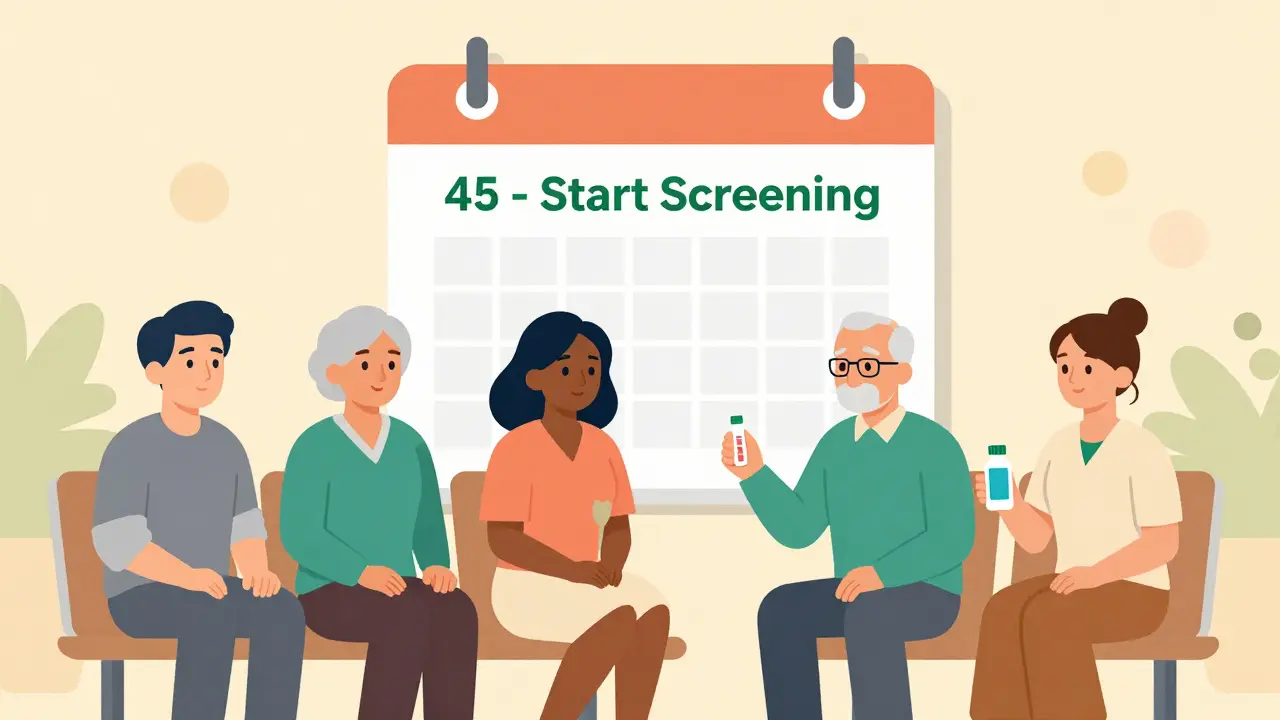
Colorectal cancer is one of the most preventable cancers-if you know when and how to screen. In 2026, the rules have changed. If you're 45 or older, you're now in the target group for routine screening. This isn't just a suggestion; it's backed by hard data showing rising cancer rates in younger adults. Between 1995 and 2019, cases in people under 50 rose by 2.2% every year. Rectal cancer, in particular, has climbed 3.2% annually in this group. The old belief that colorectal cancer only affects older people is outdated. Today, nearly 1 in 5 new cases happen before age 50.
Colonoscopy: The Gold Standard
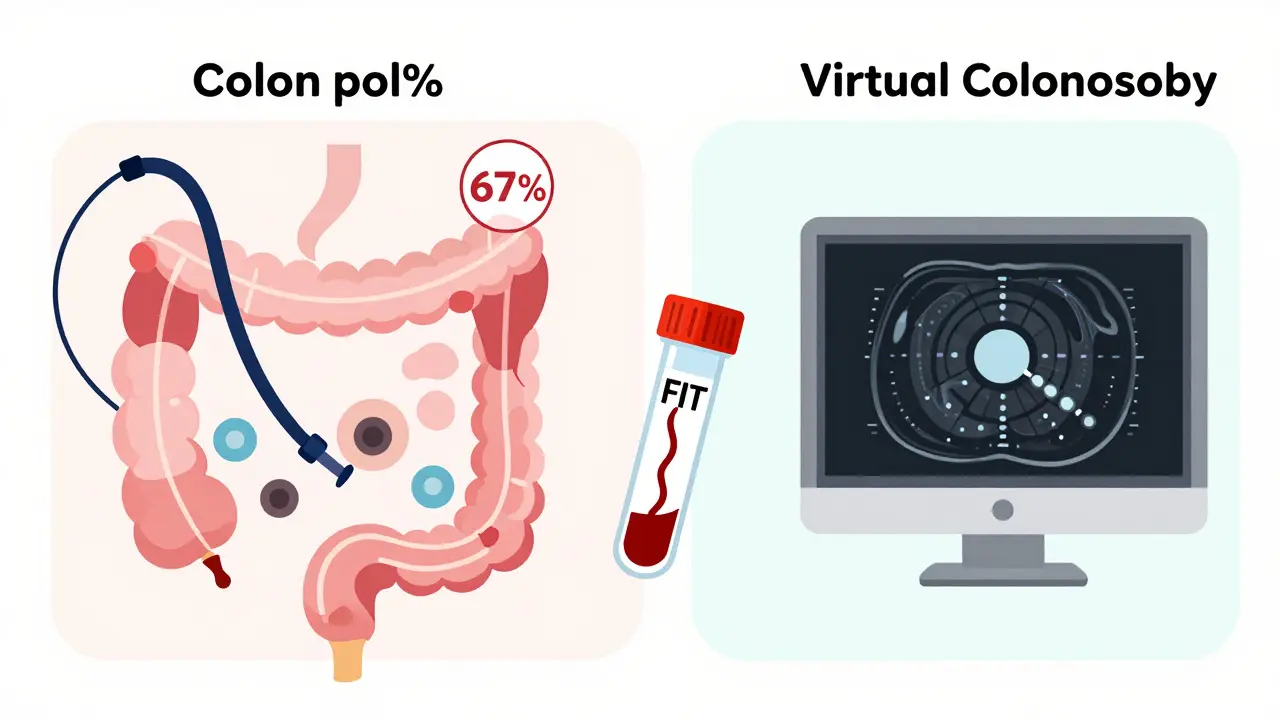
Colonoscopy remains the most effective screening tool. It doesn’t just find cancer-it stops it before it starts. During the procedure, doctors remove precancerous polyps. Studies show this cuts colorectal cancer incidence by 67% and death by 65%. For average-risk adults, a clean colonoscopy means you don’t need another for 10 years. That’s the standard.
But it’s not simple. The prep is rough. Most people describe it as the worst part. Polyethylene glycol (PEG) solutions are the most effective, but they require drinking up to 4 liters of liquid the day before. Many patients quit or skip the test because of this. Newer low-volume prep options exist, but they’re not as reliable. If you’re doing a colonoscopy, plan ahead. Skip red meat, fiber, and seeds three days before. Stay hydrated. And don’t skip the prep-even if it feels excessive.
Complications are rare but real. Perforation happens in about 1 out of every 1,000 to 1,500 colonoscopies. Bleeding after polyp removal occurs in 1-2% of cases. That’s why choosing an experienced endoscopist matters. Look for providers with an adenoma detection rate (ADR) above 25%. That’s the percentage of patients they find with precancerous polyps. Higher ADR means better screening.
What About Other Screening Methods?
You don’t have to do a colonoscopy. There are alternatives, each with trade-offs.
- Fecal Immunochemical Test (FIT): A simple at-home stool test. You collect one sample. It checks for hidden blood-often a sign of polyps or cancer. It’s 79-88% accurate at detecting cancer, but only 30-50% at finding large polyps. You need to do it every year. In safety-net clinics, FIT adherence is 67%, while colonoscopy adherence is only 42%. Why? Cost, access, and fear.
- Stool DNA Test (sDNA-FIT): This one looks for DNA changes and blood. It’s 92% sensitive for cancer, better than FIT alone. But it’s less specific-87% vs 95%-so more false positives. That means more unnecessary colonoscopies. It’s recommended every 3 years. The brand Cologuard dominates this market, but it’s expensive and not always covered by insurance.
- Flexible Sigmoidoscopy: Only examines the lower third of the colon. Less prep, no sedation. Reduces distal cancer risk by 26% and death by 28%. But misses up to 40% of cancers that occur higher up. Often paired with FIT for better coverage.
- CT Colonography (Virtual Colonoscopy): Uses X-rays to scan the colon. No sedation, but you still need the full bowel prep. Radiation exposure is low (1-10 mSv), but if they find anything, you still need a colonoscopy to remove polyps. Not all insurance covers it.
The U.S. Preventive Services Task Force says all these methods reduce death from colorectal cancer by 33-67%. But colonoscopy gives the biggest absolute benefit. If you’re healthy and willing to do the prep, it’s still the best choice.
Who Should Start Earlier Than 45?
If you have a family history, inflammatory bowel disease, or a genetic syndrome like Lynch syndrome or FAP, your timeline changes. You might need to start at 25, 30, or even younger.
For example, if your parent or sibling had colorectal cancer before 60, you should begin screening at age 40-or 10 years younger than their diagnosis age, whichever comes first. If you have ulcerative colitis or Crohn’s disease affecting your colon for more than 8 years, annual colonoscopies are recommended starting at age 50, or earlier if inflammation is severe.
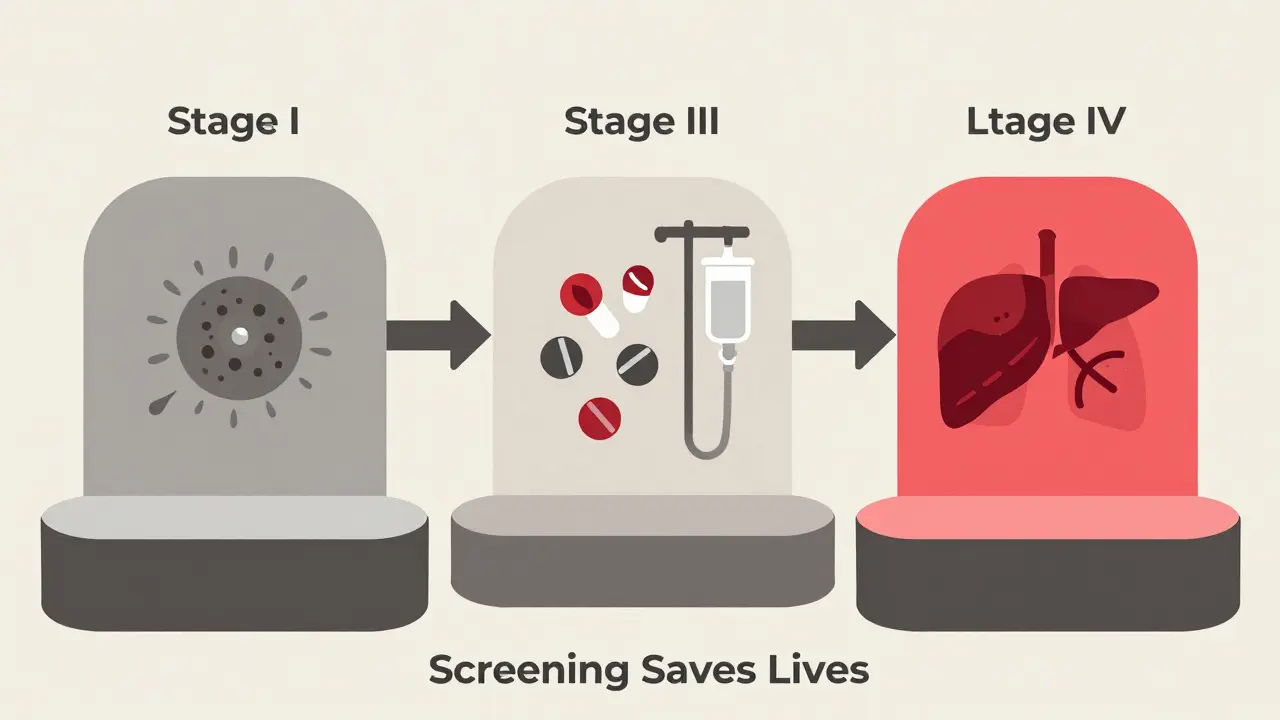
African Americans have a 20% higher incidence and 40% higher death rate from colorectal cancer. Guidelines recommend starting at 45, not 50. Even if you have no family history, this group benefits more from early screening. A 2023 case report in Gastroenterology & Hepatology showed a 47-year-old African American man with no family history had stage I cancer found during his first colonoscopy at 45. His 5-year survival chance was 95%. If it had been caught at stage IV, it would’ve been under 15%.
Chemotherapy After Diagnosis
If screening finds cancer, treatment depends on the stage. Stage I means the cancer is small and hasn’t spread. Surgery alone is usually enough. No chemo needed.
Stage II is more complex. The tumor is larger, maybe grown through the colon wall. Some patients get chemo, others don’t. Doctors look at factors like tumor grade, number of lymph nodes examined, and whether cancer cells are blocking lymph or blood vessels. If any of these are high-risk, they may recommend 5-FU (fluorouracil) or CAPOX (capecitabine + oxaliplatin).
Stage III is when cancer reaches nearby lymph nodes. Chemo is standard here. The two most common regimens are:
- CAPOX: Capecitabine (pill) + Oxaliplatin (IV). Given every 3 weeks for 6 months. Side effects: nerve tingling (peripheral neuropathy), fatigue, nausea. Nerve damage can last months or years.
- FOLFOX: 5-FU + Leucovorin + Oxaliplatin. Also every 3 weeks for 6 months. Similar side effects to CAPOX, but requires IV access.
Both are equally effective. CAPOX is often preferred because patients can take the pill at home. Oxaliplatin is the key drug here-it’s what makes chemo work for stage III. But it’s not for everyone. If you’re older, have nerve damage from diabetes, or can’t tolerate side effects, your doctor might skip oxaliplatin and use 5-FU alone.
Stage IV means cancer has spread to distant organs like the liver or lungs. Chemo here isn’t about cure-it’s about control. Regimens include FOLFOX, CAPOX, or FOLFIRI (5-FU + leucovorin + irinotecan). Targeted drugs like cetuximab or bevacizumab may be added if your tumor has specific genetic markers (like RAS wild-type). Immunotherapy works only if your cancer has microsatellite instability-high (MSI-H), which happens in about 15% of cases.
Screening Is Not One-Size-Fits-All
Guidelines changed in 2021 because the data changed. But implementation is still messy. In rural areas, wait times for colonoscopy can be over 60 days. Urban clinics have patient navigators-people who help you schedule, prep, and follow up. Rural clinics? Often none. Only 32% have them.
Insurance matters. Privately insured adults have a 78% screening rate. Uninsured? 58%. Medicare covers colonoscopy with no copay if it’s for screening. But if you’re under 50 and uninsured? You’re on your own. That’s why stool tests are so important. They’re cheaper, easier, and can be done at home. A 2020 study found they boost screening rates by 15-20% in underserved communities.
Adherence is the real problem. People don’t get screened because they’re scared, forget, or think it’s not necessary. A 2022 survey found 74% of people who did colonoscopy said the prep was the worst part-but 89% said they’d do it again. Why? Because it saved their life.
What’s Next?
New tools are coming. Blood tests that detect DNA from colon tumors are in trials. The Guardant SHIELD test showed 83% sensitivity in a 10,000-person study. AI-assisted colonoscopy systems like GI Genius from Medtronic are already in use-they boost polyp detection by 14%. These aren’t science fiction. They’re here.
The future is personalized screening. Instead of everyone starting at 45, future guidelines may use your genetics, lifestyle, and gut microbiome to decide when and how often to screen. One study estimates this could cut unnecessary procedures by 30% without missing cancers.
Right now, the message is clear: If you’re 45 or older, get screened. Don’t wait for symptoms. Colorectal cancer doesn’t always cause pain. It doesn’t always bleed. By the time you feel something, it might be too late. Screening isn’t about fear-it’s about control. Control over your health. Control over your future.


Post A Comment