
When you take a generic medication, you expect the same results as the brand-name version. And for most people, that’s exactly what happens. But sometimes, rare side effects show up - ones that weren’t seen in clinical trials, or that only appear after thousands of people start taking the drug. The question isn’t whether these reactions happen with generics - they do. The real question is: when should you report them?
Why reporting rare side effects matters
Generic drugs contain the same active ingredients as brand-name drugs. That’s the law. But they can differ in fillers, dyes, or coatings - things called excipients. For most people, these differences don’t matter. But for some, they trigger reactions. A rash. A sudden drop in blood pressure. Unexplained fatigue. Liver enzymes spiking. These aren’t common. They’re rare. But when they happen, they need to be reported.
The U.S. Food and Drug Administration (FDA) doesn’t treat generics differently when it comes to safety. A serious side effect from a generic pill is just as important to report as one from the brand-name version. In fact, the FDA’s Adverse Event Reporting System (FAERS) has over 25 million reports - and nearly all of them don’t even distinguish between generic and brand. Why? Because the active ingredient is identical. The body reacts the same way.
But here’s the problem: most people don’t report these events. Only 8.3% of all reports come from patients. And of those, only about 23% include enough detail for experts to make sense of them. That means a lot of signals get lost. A pattern that could lead to a label change - like a dose limit or a new warning - might never be spotted because no one spoke up.
What counts as a rare adverse event?
The FDA defines a rare adverse event as something that happens in fewer than 1 in 1,000 people. But in real life, some reactions are even rarer - 1 in 10,000 or less. That’s why clinical trials often miss them. Trials involve a few thousand people at most. Real-world use involves millions.
Examples of rare events linked to generics include:
- Stevens-Johnson Syndrome with generic lamotrigine (used for epilepsy and bipolar disorder)
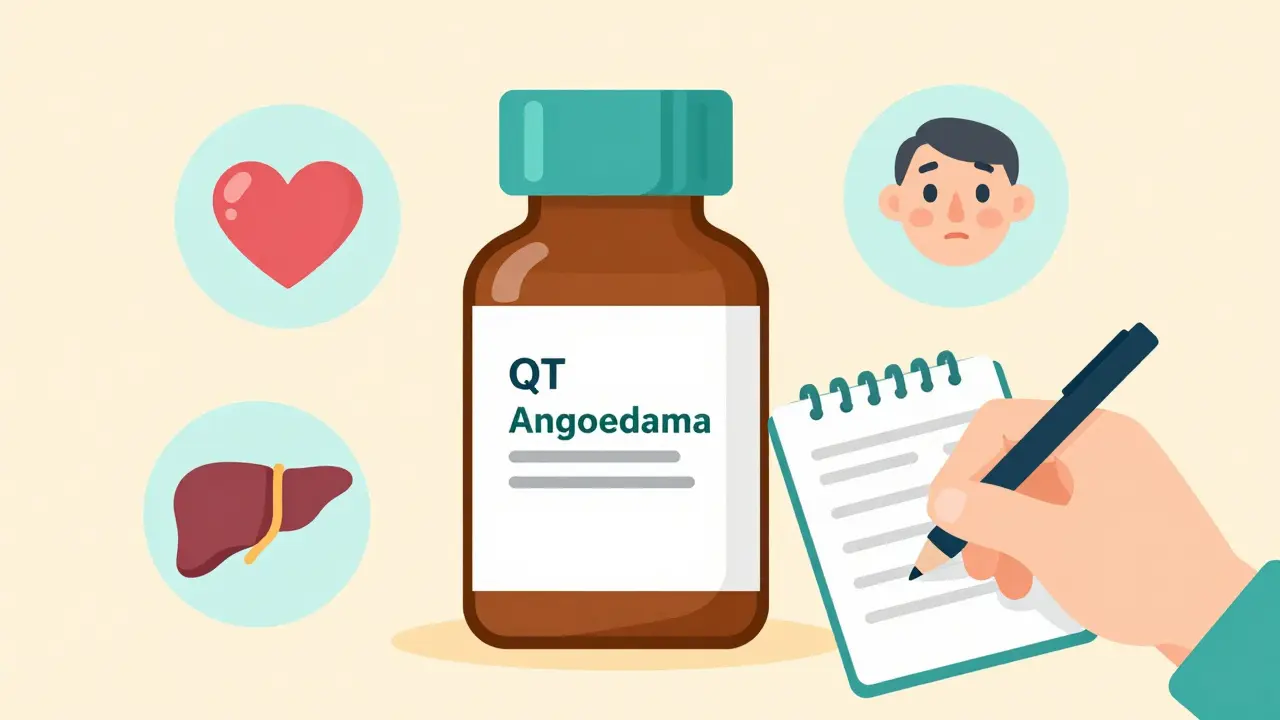
- QT prolongation with generic citalopram (an antidepressant)
- Acute liver injury after starting generic statins
- Angioedema (swelling of the face or throat) with generic ACE inhibitors
- Severe joint pain with generic levetiracetam (an anti-seizure drug)
These weren’t listed in the original labels. They showed up after people started taking the drugs in large numbers. That’s why post-marketing surveillance - watching what happens after a drug is widely used - is critical.
When you must report: The 3 triggers
You don’t need to be 100% sure the drug caused the problem. You just need to suspect it. Here are three clear signs it’s time to report:
- No other explanation - You’ve ruled out infections, other medications, or underlying conditions. The timing lines up. You started the generic drug, and within days or weeks, the reaction happened.
- It’s serious - The event is life-threatening, led to hospitalization, caused permanent damage, or required emergency treatment. Even if it’s rare, if it’s serious, it counts.
- It’s unexpected - It’s not listed in the drug’s patient information leaflet. If your doctor didn’t warn you about it, and it’s not in the official prescribing information, it’s unexpected. That’s a red flag.
For example, in 2021, 17 reports of QT prolongation - a heart rhythm issue - with generic citalopram led the FDA to update the label. Now, doctors are told not to prescribe more than 20mg per day for patients over 60. That change happened because people reported it.
Who should report - and how
Healthcare providers are required to report serious adverse events. But patients? You’re not required. But you’re just as important.
The FDA’s MedWatch program exists for exactly this. It’s free, easy, and confidential. You can report online, by phone, or by mail.
If you’re a patient or caregiver, use Form 3500B. It’s designed for consumers. You’ll need:
- Your name and contact info (optional - you can report anonymously)
- The name of the generic drug (include the manufacturer if you know it)
- The lot number (found on the bottle or packaging)
- When you started and stopped taking the drug
- A description of the side effect - what happened, when, and how bad
- Any other medications you were taking
- Any lab results or doctor visits related to the event
Don’t worry if you don’t have all the details. The FDA says 68% of major safety discoveries started with reports that were uncertain. If you’re unsure, report anyway.
Providers should use Form 3500 and follow a 5-step process:
- Document everything - dates, doses, symptoms, lab values
- Assess causality - did the drug cause it? Use tools like the Naranjo Scale
- Check if it’s serious - hospitalization? Life-threatening? Permanent damage?
- Compare to the label - is it listed? If not, it’s unexpected
- Submit within 15 days - for serious unexpected events, speed matters
Why lot numbers matter - and why most people skip them
Here’s the hidden gap: 88% of patient reports don’t include the lot number. That’s a big deal.
Why? Because two different manufacturers can make the same generic drug. One might have a bad batch. If you don’t report the lot number, the FDA can’t trace it. They can’t tell if it’s a manufacturing issue or a class-wide problem.
For example, if 10 people in different states report the same rare reaction with generic metformin, but none include lot numbers, the FDA sees it as a general issue with the drug. But if three of them list the same lot number? That points to a contaminated batch. That’s a recall - not a label change.
Always check the bottle. The lot number is usually on the side or bottom. Take a photo if you have to. Write it down. It’s the single most useful detail you can provide.
What happens after you report
Once you submit, your report goes into FAERS - the FDA’s database. It’s not a personal complaint. It’s data. Thousands of reports are analyzed together using AI tools. Machine learning now spots patterns 4.8 months faster than before.
Some reports lead to:
- Label updates - new warnings, dosage limits
- Public safety alerts - issued to doctors and pharmacists
- Manufacturing investigations - if a specific lot is involved
- Further studies - the FDA may launch new research
In 2022, the FDA’s Sentinel Initiative - which uses real-world data from 300 million patients - found seven new safety signals for generic drugs. One was increased hypoglycemia with certain metformin formulations. That discovery came from aggregated reports. Not one person’s story. But thousands.
What you can’t do - and what you can
You can’t demand a drug be pulled off the market. You can’t force a recall. But you can be the reason a warning gets added. You can be the reason a doctor stops prescribing a certain generic to elderly patients. You can be the reason a batch is pulled.
Don’t wait for someone else to report. Don’t think, “It’s just me.” If you’re the first person to notice a pattern, you’re not just helping yourself. You’re helping thousands.
And if you’re a provider? Don’t assume your patient’s side effect is “just anxiety” or “old age.” If it’s rare, serious, and unexpected - report it. Even if you think it’s unrelated. The FDA says uncertainty is part of the process.
Common myths about generic drug safety
There are a lot of myths floating around:
- Myth: Generics are less safe than brand-name drugs. Fact: The FDA requires them to be bioequivalent. The active ingredient is the same. Safety profiles are nearly identical.
- Myth: Only doctors should report. Fact: Patients report more than 8,000 events a year. Every report counts.
- Myth: If it’s not listed on the label, it’s not real. Fact: Many serious reactions only show up after widespread use. That’s why reporting exists.
- Myth: Reporting takes too long. Fact: The online form takes less than 10 minutes.
The truth? Generic drugs save the U.S. healthcare system over $300 billion a year. They’re safe for most people. But safety isn’t guaranteed. It’s monitored. And monitoring only works if people speak up.
What’s changing in 2026
The FDA’s 2024 action plan aims to increase high-quality reports by 25%. By December 2025, all manufacturers must report electronically. That means faster, cleaner data. But the most important change? More tools for patients.
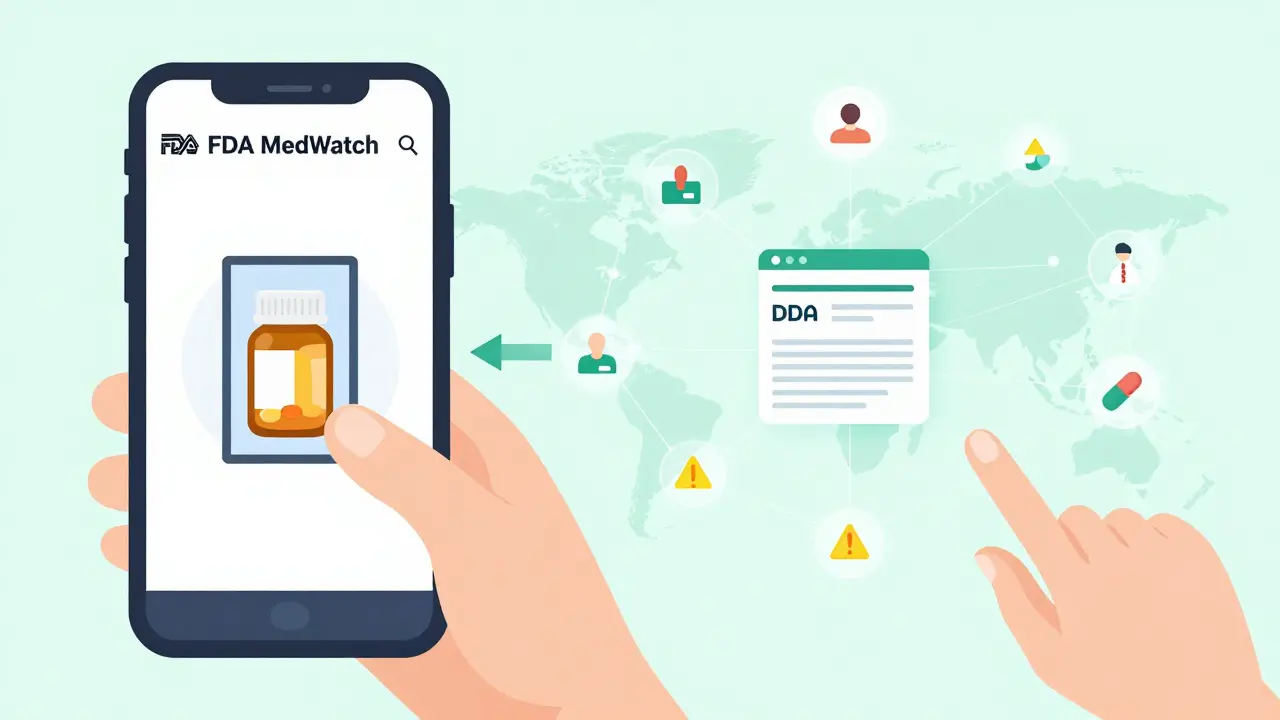
Starting in 2025, the FDA is rolling out a simplified mobile reporting tool. It’ll let you snap a photo of your pill bottle, auto-fill the drug name and lot number, and submit in under a minute. It’s being tested in pharmacies in Sydney, Melbourne, and Brisbane - and it’s coming to the U.S. soon.
For now, use what’s available. Don’t wait for perfection. Report what you know. Even if it’s messy. Even if you’re not sure. The system is built to handle uncertainty. It’s built for you.
Do I have to report side effects from generic drugs?
No, you’re not legally required to report side effects as a patient. But if the reaction is serious, rare, or unexpected, your report could help prevent harm to others. The FDA relies on public reports to catch problems that clinical trials miss. Even one detailed report can trigger a safety review.
What if I don’t know the lot number of my generic medication?
Report it anyway. While lot numbers help identify manufacturing issues, the FDA still uses reports without them. However, try to find the lot number on the pill bottle or packaging - it’s often printed near the expiration date. If you can’t find it, write down the pharmacy name and date you filled the prescription. That helps too.
Can I report a side effect even if I’m not sure it was caused by the drug?
Yes. In fact, the FDA encourages reporting even when causality is uncertain. Over two-thirds of major safety findings started as reports with unclear links. If you noticed a change in your health after starting the drug, and there’s no other clear cause, report it. The FDA uses statistical tools to sort out patterns across thousands of reports.
How long does it take for a reported side effect to lead to a label change?
There’s no fixed timeline. Some changes happen within months if multiple reports point to the same issue - like the citalopram QT prolongation case. Others take years if the signal is weak or spread across many manufacturers. The key is consistency: if several people report the same rare reaction, the FDA will investigate. Your report adds weight to that signal.
Are generic drugs more likely to cause side effects than brand-name drugs?
No. A 2021 FDA study of 1.2 million adverse event reports found no statistically significant difference in reporting rates between generic and brand-name cardiovascular drugs. The active ingredient is identical, so the body reacts the same. Any differences in side effects are usually due to excipients (inactive ingredients) - not the drug itself.
Can I report a side effect if I’m not in the U.S.?
If you’re taking a generic drug sold in the U.S., you can still report to the FDA’s MedWatch program. If you’re outside the U.S., check your country’s national reporting system - like TGA in Australia or EudraVigilance in Europe. Global systems share data, so your report can still contribute to international safety reviews.


Post A Comment