
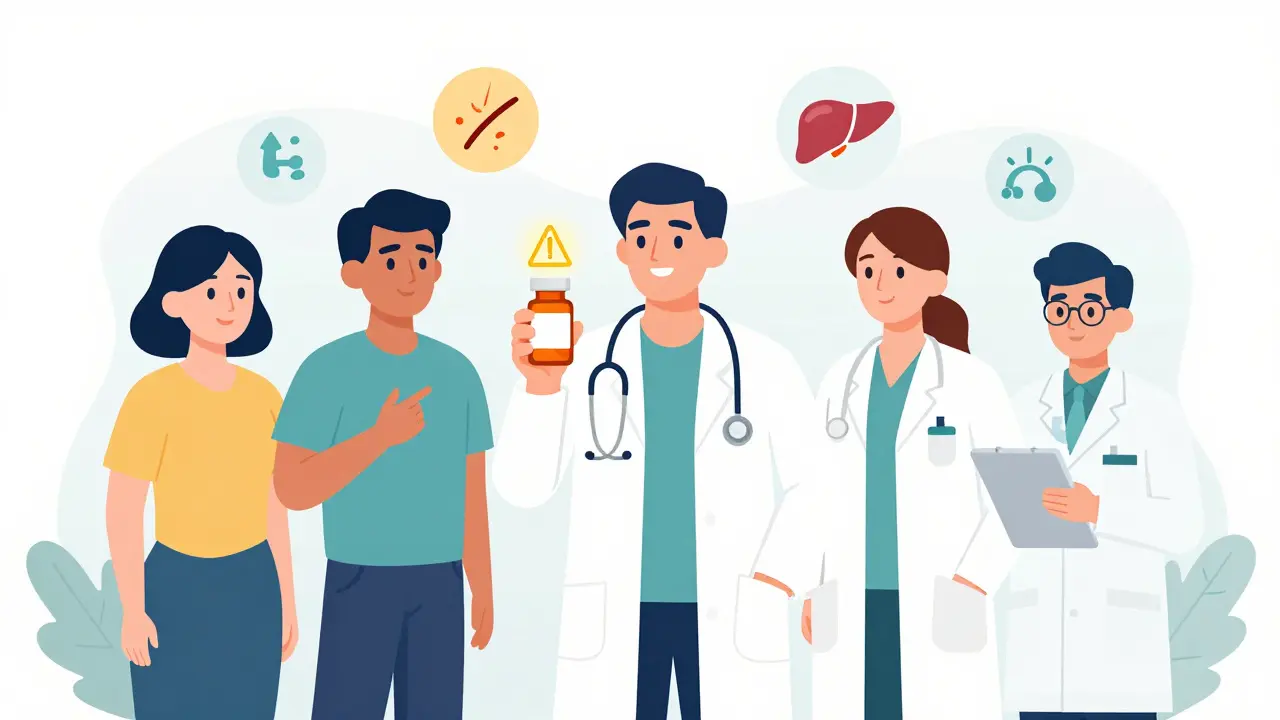
Every year, millions of people take prescription and over-the-counter drugs. Most of them work as expected. But some don’t. Sometimes, a medication causes an unexpected reaction - a rash, dizziness, liver damage, or worse. These are called adverse drug reactions, and they’re more common than you think. The problem? Many never get reported. That’s a problem because the FDA needs this data to catch dangerous patterns before more people get hurt.
If you’ve experienced a strange side effect after taking a drug - whether you’re a patient, a caregiver, or a healthcare provider - you have the power to help. Reporting it isn’t just a formality. It’s how the FDA finds out that a drug might be riskier than we thought. And it’s how warnings get added to labels, or how dangerous drugs get pulled from the market.
What Counts as a Reportable Adverse Reaction?
The FDA doesn’t need every minor headache or upset stomach. They focus on serious reactions. According to federal rules (21 CFR 314.80), a serious adverse event is one that:
- Causes death
- Is life-threatening
- Leads to hospitalization or extends a hospital stay
- Results in permanent disability or damage
- Causes a birth defect
- Requires medical intervention to prevent permanent harm
Even if you’re not 100% sure the drug caused it, report it. The FDA’s job is to figure out if there’s a link. You don’t have to be a doctor to spot something unusual. If a reaction surprised you - especially if it was sudden or severe - it’s worth reporting.
For example, a patient on a new blood pressure medication starts having chest pain and fainting. That’s serious. Or someone takes a new antibiotic and develops jaundice. That’s liver trouble. These aren’t just bad luck - they’re signals the FDA needs to see.
Who Can Report?
You don’t need special training to report. The FDA welcomes reports from:
- Patients and caregivers
- Doctors, nurses, pharmacists
- Manufacturers (who are legally required to report)
Healthcare professionals have a legal duty to report serious reactions, especially if they suspect a link. But patients? You’re just as important. In fact, about 40% of all reports come from patients and caregivers. That’s not a small number - it’s a lifeline.
Manufacturers must report serious and unexpected reactions within 15 days. But if you’re a patient and you notice something wrong, you don’t have to wait for your doctor to act. You can report it yourself - right now.
How to Report: Three Simple Ways
The FDA has made reporting as easy as possible. You have three options:
1. Online via MedWatch (Fastest and Recommended)
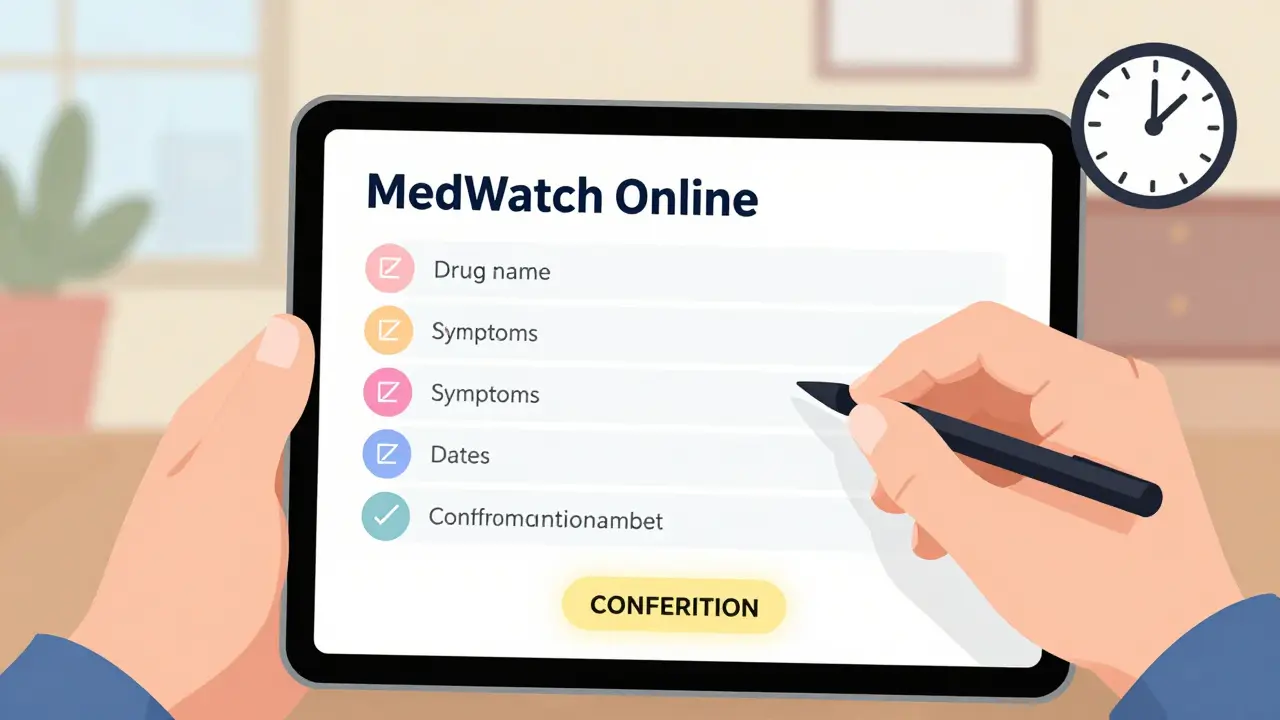
The easiest way is through the MedWatch Online Form. This is the FDA’s official portal for voluntary reporting. It’s free, secure, and works on any device.
Here’s what you’ll need to fill out:
- Your contact info (name, phone, email - you can remain anonymous if you prefer)
- Patient info (age, sex, weight - if known)
- Drug name (brand or generic)
- When you started and stopped taking it
- Dosage and how you took it (pill, injection, etc.)
- What happened (describe symptoms in detail)
- When symptoms started
- What happened after (did you go to the ER? Were you hospitalized?)
- Any other drugs or supplements you were taking
It takes about 20 minutes. Most people finish in under 30. The system saves your progress if you need to pause. Once submitted, you’ll get a confirmation number. Keep it.
2. Call 1-800-FDA-1088
If typing isn’t your thing, call the FDA’s toll-free hotline. Trained staff will walk you through the report over the phone. This is especially helpful if you’re reporting for someone else - like an elderly parent or a child.
The hotline is staffed Monday through Friday, 8 a.m. to 10 p.m. Eastern Time. Average wait time is under 10 minutes. You don’t need to know all the details - they’ll help you gather them.
3. Mail a Paper Form
You can download Form 3500 from the FDA website, print it, fill it out, and mail it. But this method is slow. It can take weeks for the report to be processed. For urgent cases - like hospitalizations or deaths - online or phone reporting is strongly preferred.
What Happens After You Report?
Your report goes into the FDA Adverse Event Reporting System (FAERS), a database that’s been collecting safety data since 1969. Every year, the FDA gets over 2 million reports. Each one is reviewed.
Here’s how it works:
- Reports are coded using standardized medical terms (MedDRA) so similar events can be grouped together.
- Algorithms look for patterns - like 50 people reporting the same rare side effect after taking a new drug.
- If a signal emerges, the FDA investigates further. They might review medical literature, contact manufacturers, or even call for new studies.
Real-world impact? In 2022, a nurse reported severe low blood sugar in patients taking a new diabetes drug. Within 47 days, the FDA updated the drug’s label with a stronger warning. That change likely prevented dozens of emergency room visits.
Don’t think your report won’t matter. Even one report can start a chain reaction.
Common Mistakes People Make
Many reports are incomplete - and that delays action. Here’s what to avoid:
- Not naming the drug - “I took a pill” isn’t enough. Use the exact brand or generic name.
- Skipping dates - When did you start? When did symptoms begin? Time matters.
- Being vague - “I felt bad” doesn’t help. Say: “I had sharp pain in my right side, nausea, and yellow eyes.”
- Waiting too long - If it’s serious, report it within 48 hours. The faster, the better.
Also, don’t assume someone else already reported it. Even if your doctor knows, they might not report it. Only 6% of actual adverse events are captured through voluntary reporting. That means 94% go unnoticed. You could be the one who changes that.
Why Reporting Matters More Than Ever
Drug trials test medicines on thousands of people. But real-world use involves millions. Side effects that show up in 1 in 10,000 patients won’t show up in trials. That’s why post-market reporting is critical.
The FDA now uses AI to scan reports for hidden patterns. Since 2023, companies with over 50 drugs must use AI to detect signals. But AI can’t find what isn’t reported.
And here’s the kicker: The FDA expects to start pulling data from social media and health apps by 2025. But even then, your direct report will still be the most reliable source.
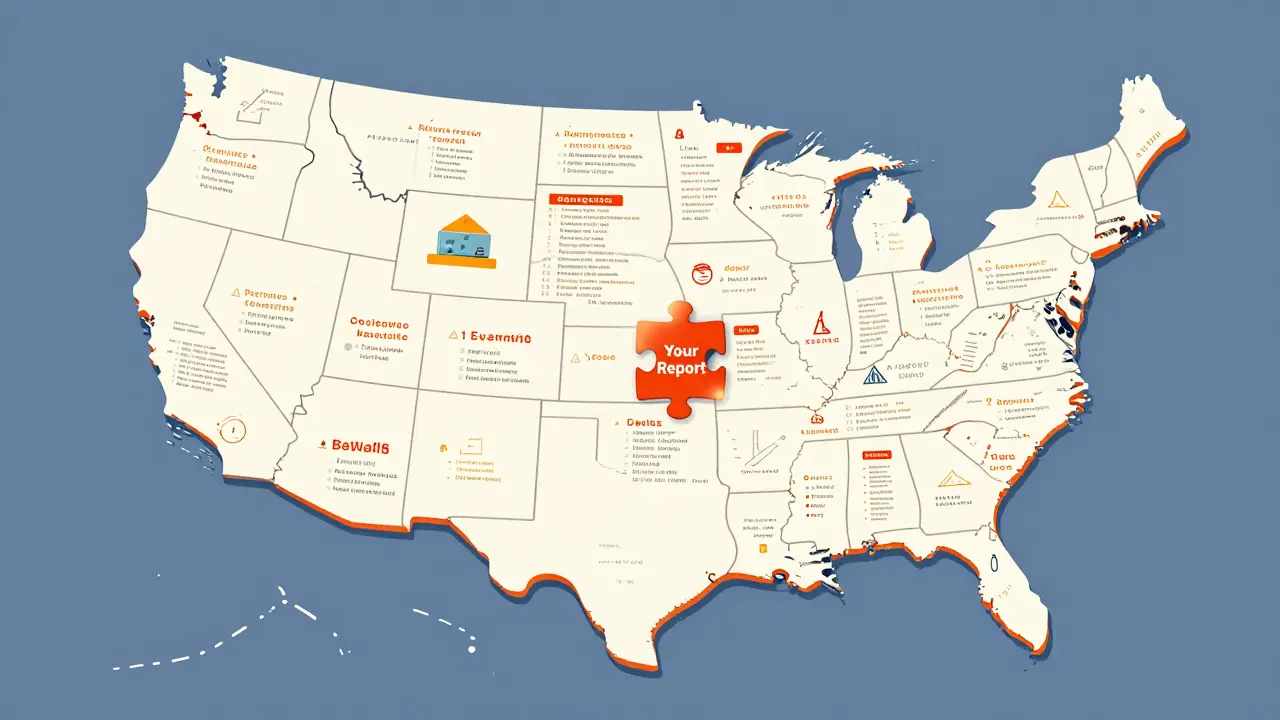
Every report adds to the puzzle. One report might seem small. But 100 reports? 1,000? That’s a pattern. And patterns save lives.
Need Help? Here’s What to Do
If you’re unsure whether to report:
- Call the MedWatch Safety Information hotline at 1-800-FDA-1088 - they answer clinical questions.
- Email [email protected] for technical help with the online form - response time is under 24 hours.
- Check the FDA’s free MedDRA training modules if you’re unsure how to describe symptoms.
And if you’re a healthcare provider: Don’t wait for your hospital’s compliance team. Report directly. It’s your responsibility - and your power.
Reporting isn’t about blame. It’s about safety. It’s about making sure the next person who takes that drug doesn’t go through what you did.


Post A Comment