
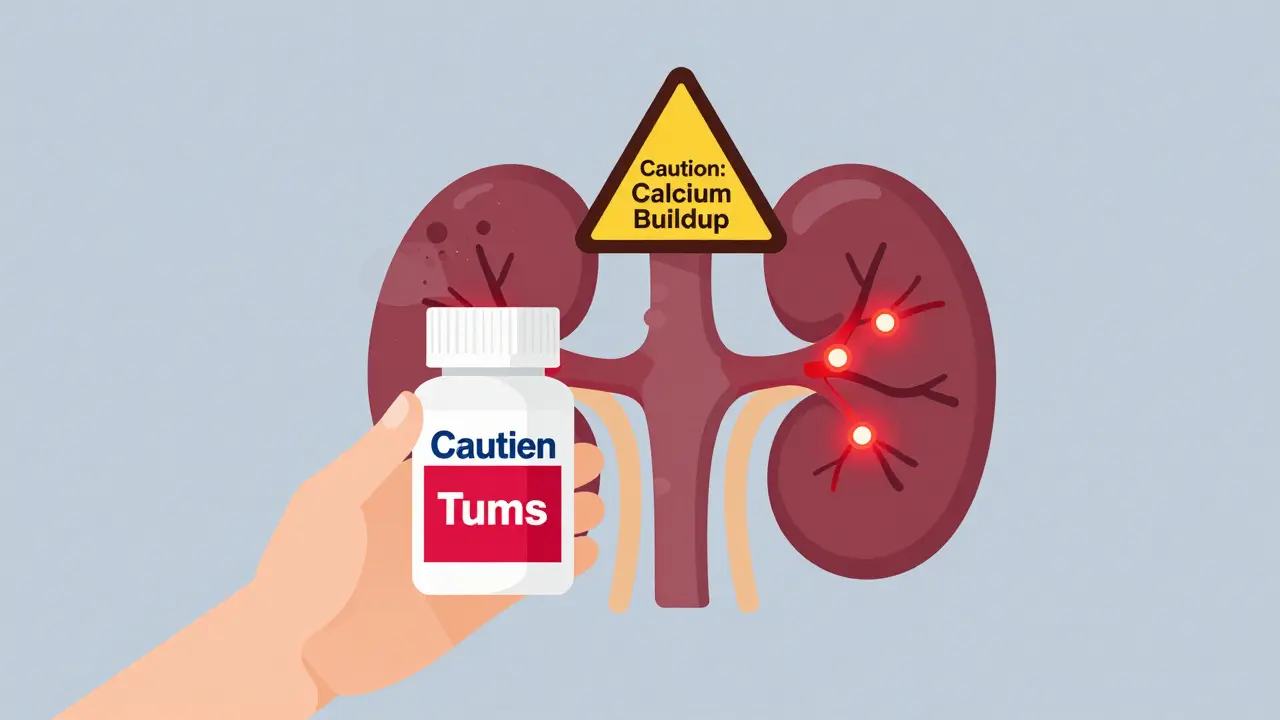
For millions of people with kidney disease, a simple over-the-counter antacid like Tums or Milk of Magnesia might seem like a harmless fix for heartburn or indigestion. But for someone with chronic kidney disease (CKD), these common medications can be dangerous - even life-threatening. The problem isn’t just about stomach acid. It’s about how your kidneys handle minerals, and what happens when you add aluminum, calcium, or magnesium into the mix.
Why Antacids Are Used in Kidney Disease
Antacids were originally designed to neutralize stomach acid. But in people with advanced kidney disease, they’ve taken on a second, critical role: acting as phosphate binders. When kidneys fail, they can’t remove excess phosphate from the blood. That leads to high phosphate levels - a condition called hyperphosphatemia. Over time, this causes calcium to pull out of bones and deposit in blood vessels, leading to heart attacks, strokes, and bone fractures.
Phosphate binders work by attaching to phosphate in food during digestion, so it doesn’t get absorbed. Calcium carbonate (Tums) and aluminum hydroxide (Amphojel) are common antacids that do this. They’re cheap, easy to get, and often used when prescription binders aren’t covered by insurance. For many patients, especially those in early-stage CKD, calcium-based antacids are the only affordable option.
But here’s the catch: what works as a temporary fix can become a long-term hazard.
The Hidden Dangers: Aluminum, Calcium, and Magnesium
Not all antacids are created equal when it comes to kidney disease. Each type carries its own risks.
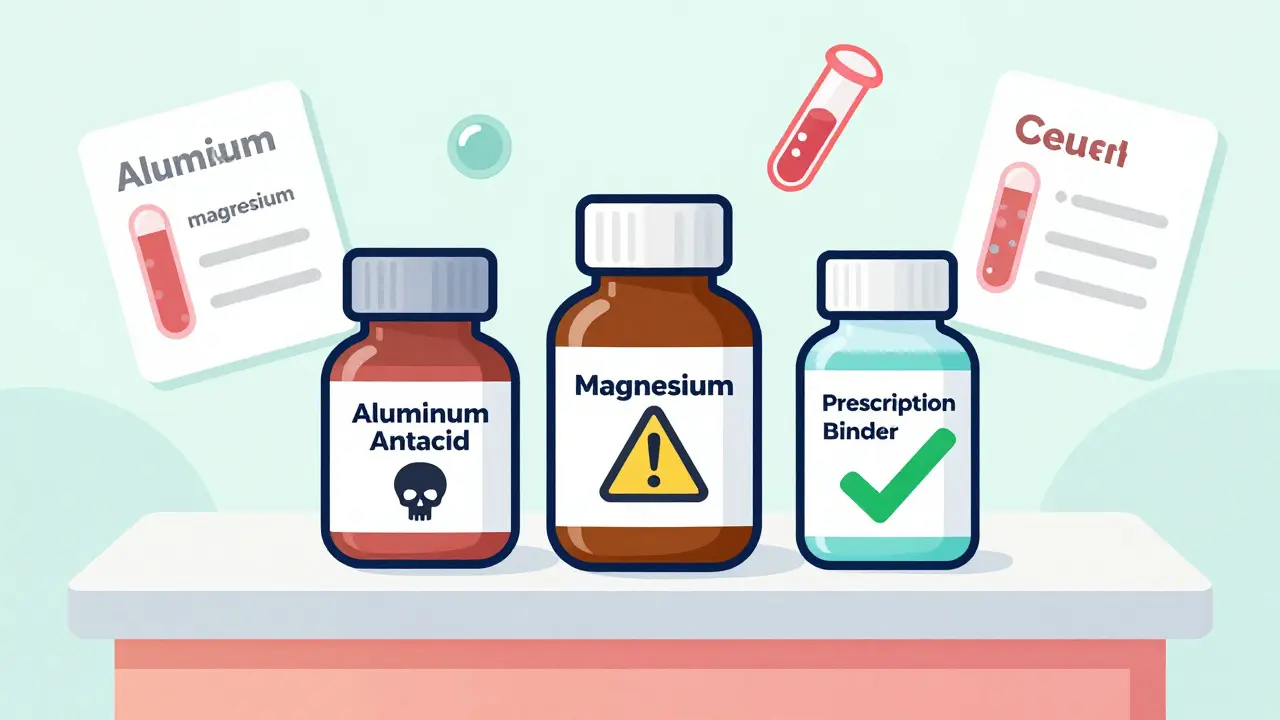
- Aluminum-based antacids (like Maalox or Mylanta) bind phosphate tightly - but they’re absorbed into the bloodstream when kidneys can’t filter them out. Aluminum builds up over time. Levels above 40 mcg/L can cause bone disease. Above 60 mcg/L, it leads to dialysis dementia - confusion, memory loss, seizures. The FDA has required warning labels since 1990, and nephrologists now treat aluminum antacids as a last resort.
- Calcium-based antacids (Tums, Caltrate) are widely used. But in CKD patients, they can push serum calcium above 10.2 mg/dL, which increases the risk of vascular calcification. Studies show a 30-50% higher chance of heart events in patients with calcium levels above this threshold. Many patients don’t realize they’re taking calcium daily - they think they’re just treating heartburn.
- Magnesium-based antacids (Milk of Magnesia) are often used for constipation. But in advanced CKD (GFR under 30 mL/min), magnesium can’t be cleared. Levels above 4 mg/dL cause muscle weakness. Above 10 mg/dL, it can paralyze breathing or stop the heart. Emergency room reports show patients ending up in ICU after using magnesium laxatives for weeks.
The National Kidney Foundation warns that magnesium-containing antacids should be avoided entirely in CKD stage 4 or 5. Yet, many patients don’t know the difference between a laxative and a phosphate binder.
Prescription Binders vs. Over-the-Counter Antacids
Prescription phosphate binders like sevelamer (Renagel), lanthanum carbonate (Fosrenol), and sucroferric oxyhydroxide (Velphoro) were developed specifically for kidney patients. They’re designed to bind phosphate without adding dangerous minerals to the body.
| Medication | Type | Phosphate Reduction | Monthly Cost (USD) | Key Risk |
|---|---|---|---|---|
| Calcium carbonate (Tums) | Antacid | 15-25% | $10 | Hypercalcemia, vascular calcification |
| Sevelamer (Renagel) | Prescription | 25-35% | $1,800-$2,500 | Gastrointestinal upset |
| Lanthanum carbonate (Fosrenol) | Prescription | 25-35% | $2,500-$3,500 | Tooth discoloration |
| Sucoferric oxyhydroxide (Velphoro) | Prescription | 25-30% | $4,000 | Black stools |
Prescription binders are far more expensive - but they’re safer. A 2018 study in the New England Journal of Medicine found that CKD stage 4 patients using calcium carbonate had a 40% higher risk of hypercalcemia than those using sevelamer. For patients on dialysis, the difference in survival rates is measurable.
Yet, cost is a real barrier. A 2022 survey by the American Association of Kidney Patients found that 82% of low-income patients relied on calcium carbonate because their insurance wouldn’t cover prescription binders. Many patients go months without proper phosphate control - not because they’re noncompliant, but because they can’t afford the right medication.
When Antacids Are Safe - and When They’re Not
It’s not black and white. Antacids aren’t always dangerous. They can be used safely - if you know your stage of kidney disease and follow strict rules.
- CKD Stage 3 (GFR 30-59): Calcium carbonate is acceptable as a phosphate binder if serum calcium is below 10.2 mg/dL. Take it with meals. Avoid aluminum and magnesium products entirely. Get blood tests every month.
- CKD Stage 4-5 (GFR under 30): Do not use antacids as phosphate binders. Use only prescription binders under your nephrologist’s supervision. If you need heartburn relief, use calcium carbonate occasionally - but take it at least two hours before or after your phosphate binder. Never use aluminum or magnesium products.
- On dialysis: Aluminum is absolutely contraindicated. Magnesium is dangerous. Calcium can still cause calcification. Prescription binders are the only safe choice.
Even then, timing matters. Antacids can block the absorption of other medications - including antibiotics, thyroid pills, and seizure drugs. The Cleveland Clinic recommends taking other meds at least one hour before or four hours after an antacid.
What Patients Are Saying - And What Doctors Are Seeing
Real-world stories show how easily things go wrong.
A 62-year-old woman with CKD stage 4 took Tums daily for heartburn for six months. Her calcium level hit 11.2 mg/dL. A CT scan showed calcium deposits in her heart arteries. She needed emergency treatment.
A man on dialysis used Milk of Magnesia for constipation. His magnesium level rose to 8.7 mg/dL. He lost feeling in his legs. He spent three days in the ICU.
These aren’t rare cases. A 2022 review in the Clinical Journal of the American Society of Nephrology found that 57% of emergency visits related to antacids in CKD patients involved aluminum or magnesium products. And 68% of patients couldn’t tell the difference between a phosphate binder and a regular antacid.
Doctors are seeing this too. The USRDS 2022 report estimates that 15% of hypercalcemia hospitalizations in kidney patients stem from inappropriate antacid use. The annual cost? Over $427 million.

What You Should Do
If you have kidney disease:
- Know your GFR. Ask your doctor. Stage 3? Stage 4? That changes everything.
- Check every medication you take - even OTC ones. Look for aluminum, calcium, or magnesium.
- Never use antacids as phosphate binders if your GFR is below 30 mL/min unless your nephrologist says so.
- Get monthly blood tests: calcium, phosphate, magnesium, and aluminum (if you’ve used aluminum products).
- Use calcium carbonate only for occasional heartburn - and never with meals if you’re on prescription binders.
- Ask your pharmacist or nephrologist: “Is this safe for my kidneys?” Don’t assume it’s okay because it’s over-the-counter.
The FDA updated its warnings in March 2023, requiring stronger labels on aluminum antacids. The National Institutes of Health is funding a major 5-year study to create clearer guidelines. And organizations like the American Nephrology Nurses Association are launching education campaigns - because knowledge saves lives.
What’s Next?
New drugs are emerging. Tenapanor (Xphozah), approved in 2023, works differently - it blocks phosphate absorption in the gut without binding it. It doesn’t carry the mineral risks of antacids. Early data looks promising.
But until these drugs become affordable and widely available, the problem remains: patients are choosing between cost and safety. Many choose cost. And many pay the price.
The truth? Antacids aren’t just for heartburn. In kidney disease, they’re a medical tool - and one that can backfire badly if used without understanding the risks. If you have kidney disease, your antacid isn’t just a pill. It’s a decision with consequences. Know what you’re taking. Ask questions. Monitor your numbers. Your heart and bones depend on it.
Can I take Tums if I have kidney disease?
You can take calcium carbonate (Tums) only if your kidney function is stage 3 or higher (GFR above 30 mL/min) and your blood calcium is normal. It should be taken with meals to bind phosphate, not just for heartburn. Avoid it entirely if your GFR is below 30, or if you’re on dialysis. Always check with your nephrologist before using it regularly.
Is Milk of Magnesia safe for kidney patients?
No. Milk of Magnesia contains magnesium hydroxide, which can cause dangerous buildup of magnesium in the blood if your kidneys aren’t working well. It can lead to muscle weakness, low blood pressure, breathing problems, or even cardiac arrest. Avoid it completely if you have stage 4 or 5 kidney disease or are on dialysis.
Why are aluminum antacids so dangerous for kidney disease?
Aluminum isn’t cleared by failing kidneys. It builds up in bones and the brain, causing bone pain, fractures, dementia, and anemia. Levels above 40 mcg/L damage bones; above 60 mcg/L can cause irreversible brain damage. The FDA restricts aluminum antacids to 2 weeks of use in people with normal kidneys - and they’re banned as first-line treatment in CKD.
How do I know if my antacid is a phosphate binder?
Check the active ingredients. If it contains calcium carbonate, aluminum hydroxide, or magnesium hydroxide, it can bind phosphate. Prescription binders like sevelamer or lanthanum carbonate will list those names. If you’re unsure, show the bottle to your nephrologist or pharmacist. Don’t assume - ask.
Can I use antacids for heartburn if I’m on dialysis?
Only calcium carbonate - and even then, only occasionally and at least two hours before or after your phosphate binder. Avoid aluminum and magnesium completely. Even small amounts can cause serious complications. Talk to your dialysis team before taking any antacid, even once.


Post A Comment