
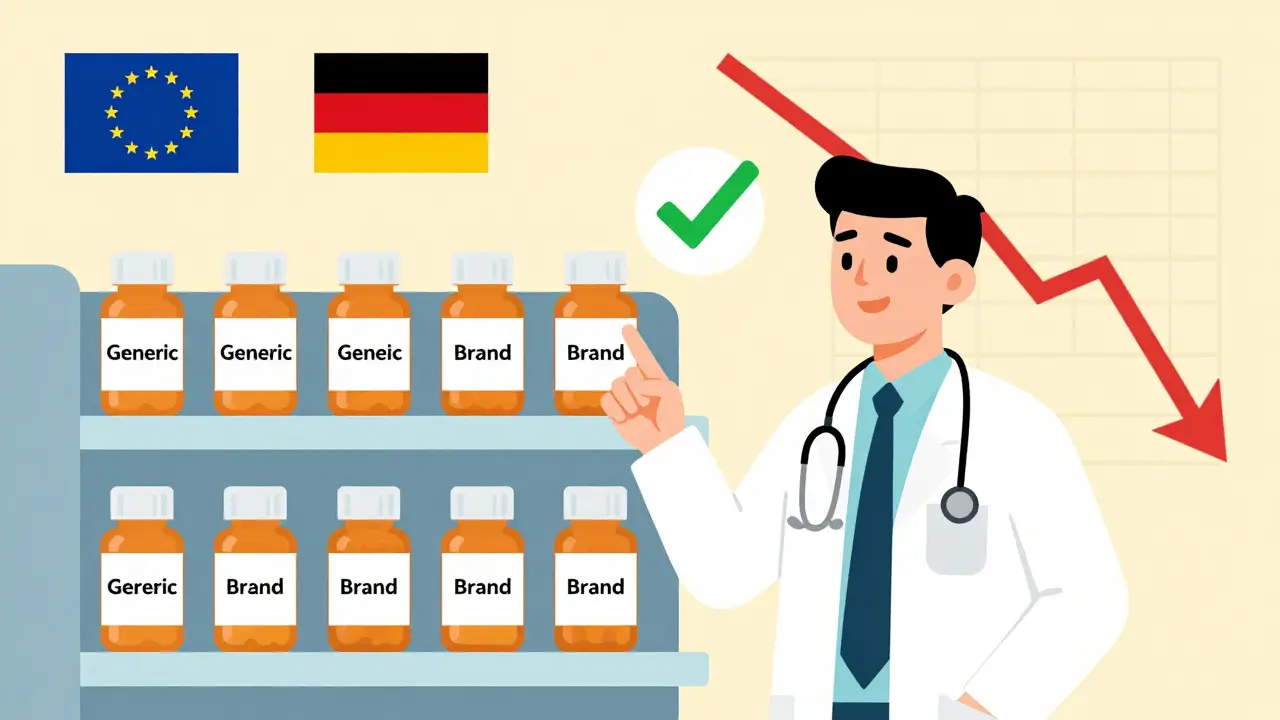
When you walk into a pharmacy in Sydney, London, Delhi, or Berlin, the pills on the shelf might look identical-but what doctors and pharmacists think about them? That’s where things get interesting. Generics aren’t just cheaper versions of brand-name drugs. Across the world, they’re seen as essential tools, risky shortcuts, or even national assets-depending on where you are.
Europe: Generics as Policy, Not Choice
In Germany, France, and the UK, doctors don’t just accept generics-they’re often required to prescribe them. Government policies push pharmacists to swap brand-name drugs for generics unless the patient refuses. Why? Cost. European healthcare systems are under constant pressure to stretch budgets. In 2025, generics made up 70-80% of all prescriptions across the EU, but only about 20% of total drug spending. That’s because a $100 brand-name pill might drop to $3 as a generic. Providers in these countries don’t see generics as inferior. They see them as predictable. Regulatory standards are tight. The European Medicines Agency requires generics to prove they’re bioequivalent-meaning they deliver the same effect in the body. German pharmacists even track substitution rates. If a generic isn’t working as expected, it’s pulled. That kind of oversight builds trust. Providers know they can rely on generics to keep patients on treatment without breaking the bank.Asia-Pacific: The Engine of Global Generics
Look at India. It doesn’t just make generics-it supplies them. About 40% of all generic drugs used in the U.S. come from Indian manufacturers. Indian doctors don’t think of generics as a backup. They think of them as the baseline. For a diabetic in rural Maharashtra, a branded insulin might cost three days’ wages. A generic? A few rupees. That’s not affordability-it’s survival. China’s approach is similar but more strategic. The government actively pushes generics as part of universal healthcare expansion. In provinces with limited hospital funding, prescribing generics isn’t optional-it’s the only way to keep clinics open. Providers there don’t debate quality. They focus on access. And it works. Asia-Pacific is growing at 5-6.5% yearly, the fastest in the world. Why? Aging populations, rising chronic diseases like diabetes and heart failure, and millions who can’t afford branded drugs. Indian and Chinese factories now produce complex generics too-injectables, inhalers, even biologics. These aren’t simple pills anymore. They’re precision medicines. And providers across Southeast Asia and Africa are starting to trust them. A hospital in Nairobi might use a generic insulin pen made in Hyderabad because it’s the only option that fits their budget-and it works just as well.United States: The Love-Hate Relationship
In the U.S., generics are everywhere. About 90% of prescriptions are for generics. But here’s the twist: they make up only 15-20% of total drug spending. Why? Because brand-name drugs are priced so high that even a small number of them dominate costs. A single cancer drug can cost $10,000 a month. Its generic? $300. So doctors push generics hard-especially for chronic conditions like hypertension or cholesterol. But trust is shaky. There have been scandals. A generic pill made in a factory with unsanitary conditions. A shortage because the only supplier shut down. A batch that didn’t dissolve properly. These aren’t common-but they happen often enough to make providers nervous. Many U.S. doctors now ask: “Is this generic from a reliable source?” The U.S. relies heavily on Indian and Chinese manufacturers. That creates a tension. Providers want affordable drugs. But they also worry about supply chains that stretch halfway around the world. A drug shortage in 2024 left hospitals scrambling because a single Indian plant had a quality issue. That’s not just a logistics problem-it’s a patient safety problem.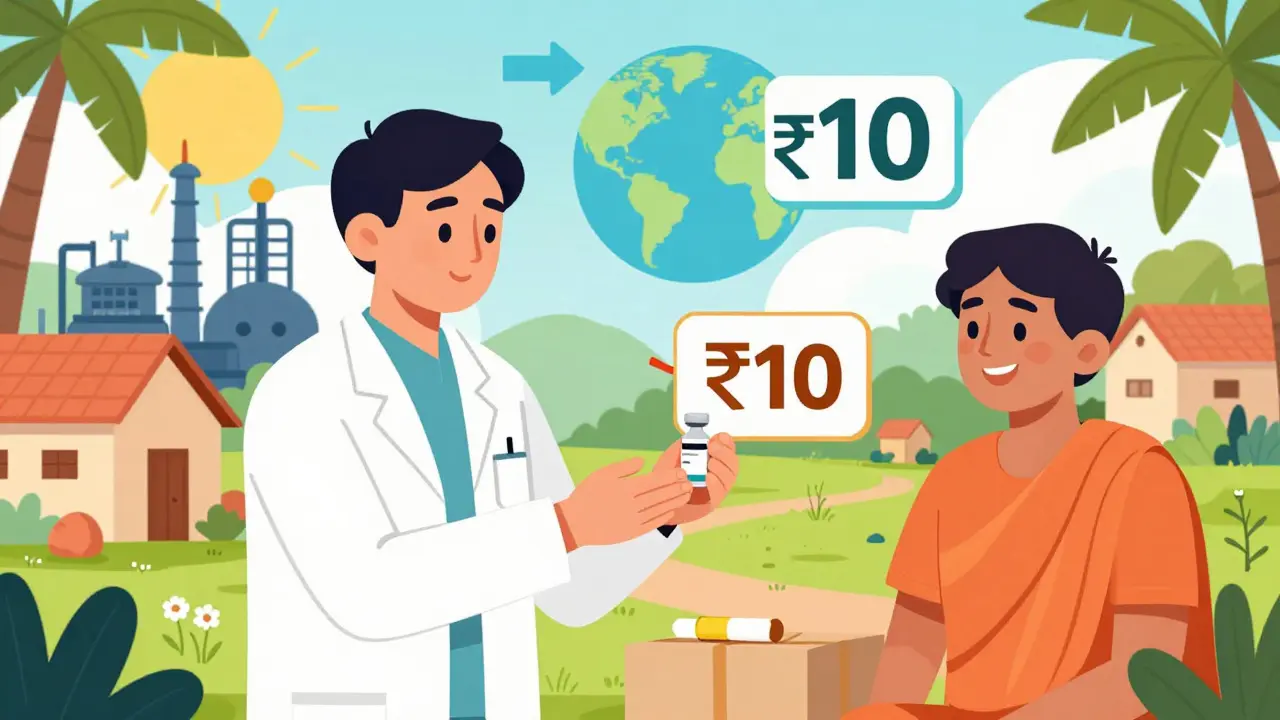
Japan: Price Cuts and Provider Adaptation
Japan’s system is unique. The government cuts drug prices every two years. Brand-name drugs get hit hard. Generics? They get a boost. Doctors there don’t have much choice. If you prescribe a brand-name drug, you’ll get less reimbursement. So you prescribe the generic. Simple as that. Providers adapted. They stopped seeing generics as “second-tier.” They started seeing them as the standard. Even for complex conditions like rheumatoid arthritis, generics are the first line. The result? Japan’s pharmaceutical market is flat-or shrinking. Not because people are healthier. But because they’re using cheaper drugs. That’s a sign of success, not failure.Emerging Markets: Generics as Healthcare Infrastructure
In Brazil, Turkey, and parts of Africa, generics aren’t just preferred-they’re the only option. Healthcare systems here are underfunded. Hospitals run on donations. Clinics close when they can’t pay for expensive drugs. Providers in these places don’t have the luxury of choice. They don’t ask, “Should I use a generic?” They ask, “Which generic do I have in stock today?” Quality varies. Some drugs are good. Others aren’t. But there’s no alternative. So providers become experts in sourcing. They build relationships with trusted suppliers. They test batches. They monitor outcomes. This isn’t ideal. But it’s real. And it’s changing how the world thinks about medicine. In these regions, generics aren’t a cost-cutting tactic. They’re the backbone of care.
The Rise of Specialty Generics
The biggest shift? It’s not in pills anymore. It’s in injectables, inhalers, and complex delivery systems. The global market for these specialty generics is growing at over 11% a year. Why? Because biologics-expensive drugs made from living cells-are losing patents. Drugs like ustekinumab for psoriasis and vedolizumab for Crohn’s disease are going generic soon. Providers in hospitals are watching closely. In the U.S., oncology units are already switching to generic versions of chemotherapy drugs. In India, hospitals are training nurses to use generic inhalers for asthma. These aren’t simple pills. They’re delicate, high-tech treatments. And if providers trust them, it means generics have matured.What This Means for Everyone
Generics aren’t the same everywhere. In Europe, they’re a policy. In Asia, they’re a lifeline. In the U.S., they’re a necessity with risks. In emerging markets, they’re the only game in town. The future? More patents expiring. More demand for affordable drugs. More pressure on manufacturers to deliver quality. Providers across the globe are adjusting-not because they’re forced to, but because they’ve seen the results. A patient on a generic blood pressure pill lives longer. A child with asthma gets a generic inhaler instead of going without. That’s not a compromise. That’s healthcare working as it should. The real question isn’t whether generics work. It’s whether we’re willing to make them accessible, reliable, and trusted everywhere-not just in rich countries.Are generic drugs as effective as brand-name drugs?
Yes, when they’re made under strict regulatory standards. In the U.S., Europe, Japan, and India, generics must prove they deliver the same amount of active ingredient into the bloodstream at the same rate as the brand-name version. This is called bioequivalence. Millions of patients worldwide take generics every day with the same results. The difference isn’t in effectiveness-it’s in price, packaging, and sometimes, manufacturing quality.
Why do some doctors hesitate to prescribe generics?
In some places, it’s about past issues. A few bad batches, supply shortages, or inconsistent quality have made providers cautious. In the U.S., some doctors worry about generics made in overseas factories with unclear oversight. In countries with weak regulation, providers may not trust local generics. But in places with strong systems-like Germany or Japan-doctors prescribe generics without hesitation because they’ve seen the outcomes over time.
Do all countries regulate generics the same way?
No. The U.S. FDA, Europe’s EMA, and Japan’s PMDA have very high standards. India and China have improved dramatically but still face scrutiny. In some low-income countries, regulation is weak or poorly enforced. That’s why global health organizations track where generics are made and how they’re tested. A pill that’s approved in Germany might not meet standards in a country with limited oversight.
Why are Indian manufacturers so dominant in the generics market?
India has a long history of generic manufacturing, low labor costs, strong chemical engineering expertise, and government support. It produces over 20% of the world’s generic drugs by volume. Indian companies supply 40% of U.S. generic demand because they can make high-quality pills at a fraction of the cost. Many U.S. and European brands outsource production to India-not because it’s cheaper, but because they’ve built trust in their quality systems.
What’s driving the growth of specialty generics?
Patent expirations. Drugs like biologics for cancer, autoimmune diseases, and rare conditions are losing exclusivity starting in 2025. These were once too complex to copy. Now, manufacturers have the tech to replicate them. Hospitals are adopting them because they’re 70-90% cheaper. A generic insulin pen that costs $30 instead of $300 changes how clinics treat diabetes in poor regions. This isn’t just about savings-it’s about access.


Post A Comment