
When you're under stress, a physical and emotional response to pressure that can trigger changes in heart rate, sleep, and hormone levels. Also known as chronic tension, it's not just in your head—it rewires how your body reacts to medicine. Many people turn to prescriptions to manage stress symptoms like insomnia, anxiety, or high blood pressure. But here’s the catch: some of those same meds can make stress worse over time, or create dangerous side effects when mixed with other drugs.
Anxiety medication, prescriptions like SSRIs, benzodiazepines, or beta-blockers used to calm nervous system overactivity. Also known as anti-anxiety drugs, they help millions—but they’re not harmless. Take benzodiazepines: they work fast but can lead to dependence, and stopping them suddenly can spike your stress levels even higher. Or consider beta-blockers, often prescribed for heart rate control during panic attacks. They might reduce physical symptoms, but they can also mask your body’s natural warning signs, making you feel disconnected from your own stress triggers.
Sleep aids, medications like zolpidem, doxylamine, or melatonin supplements used to induce or maintain sleep. Also known as hypnotics, they’re commonly used when stress keeps you awake at night. But poor sleep isn’t just a symptom of stress—it’s a fuel. Relying on sleep meds long-term can disrupt your natural sleep cycle, making you more sensitive to stress the next day. And if you’re also taking blood pressure meds or antidepressants? That’s when interactions get risky. Alcohol, caffeine, even over-the-counter cold pills can throw off your INR, raise your cortisol, or amplify drowsiness in ways you won’t notice until it’s too late.
Stress doesn’t live in a vacuum. It’s tied to your diet, your sleep, your other meds, and even your gut. That’s why so many people end up on multiple prescriptions trying to fix symptoms instead of the root cause. You might be taking a statin for cholesterol, metformin for blood sugar, and an SSRI for anxiety—all of which can affect how your body handles stress hormones. Some meds lower vitamin B12. Others interfere with thyroid function. And if you’re taking levothyroxine? Timing matters. A stressed-out morning routine with coffee or breakfast right after your pill can cut its effectiveness in half.
There’s no one-size-fits-all fix. What works for one person’s stress and medication balance might backfire for another. That’s why it’s so important to understand how your body responds—not just to the drugs, but to the way they talk to each other. The posts below dig into real cases: people who thought their anxiety meds were helping, only to find out they were making sleep worse. Others who switched from one blood pressure drug to another and noticed their irritability dropped. And the hidden dangers of mixing supplements with prescriptions—because ‘natural’ doesn’t mean safe when you’re already on medication.
Below, you’ll find practical guides on how to spot drug interactions, when to ask your doctor about alternatives, and how to reduce your pill burden without sacrificing control over your symptoms. No fluff. Just what works—and what doesn’t—when stress and medication collide.
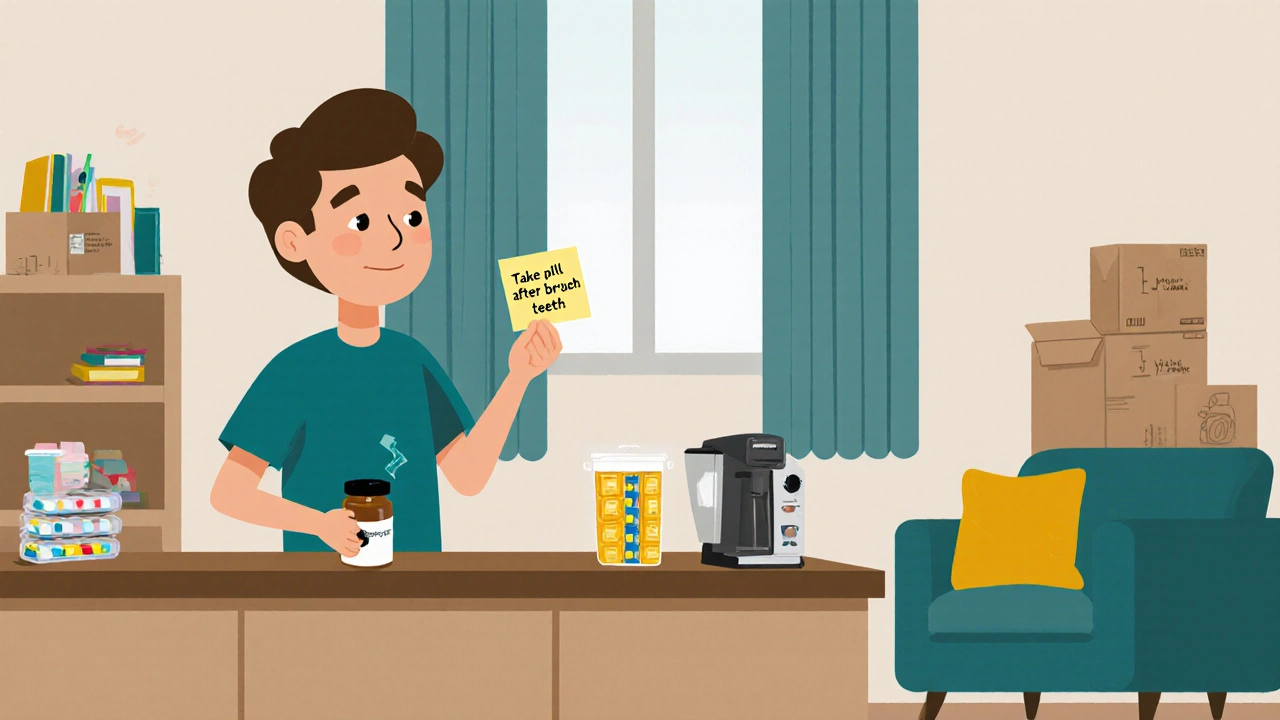
Learn how to maintain medication adherence during life transitions and stress with practical, evidence-based strategies that focus on flexible routines, social support, and psychological resilience - not just reminders.
Read More