
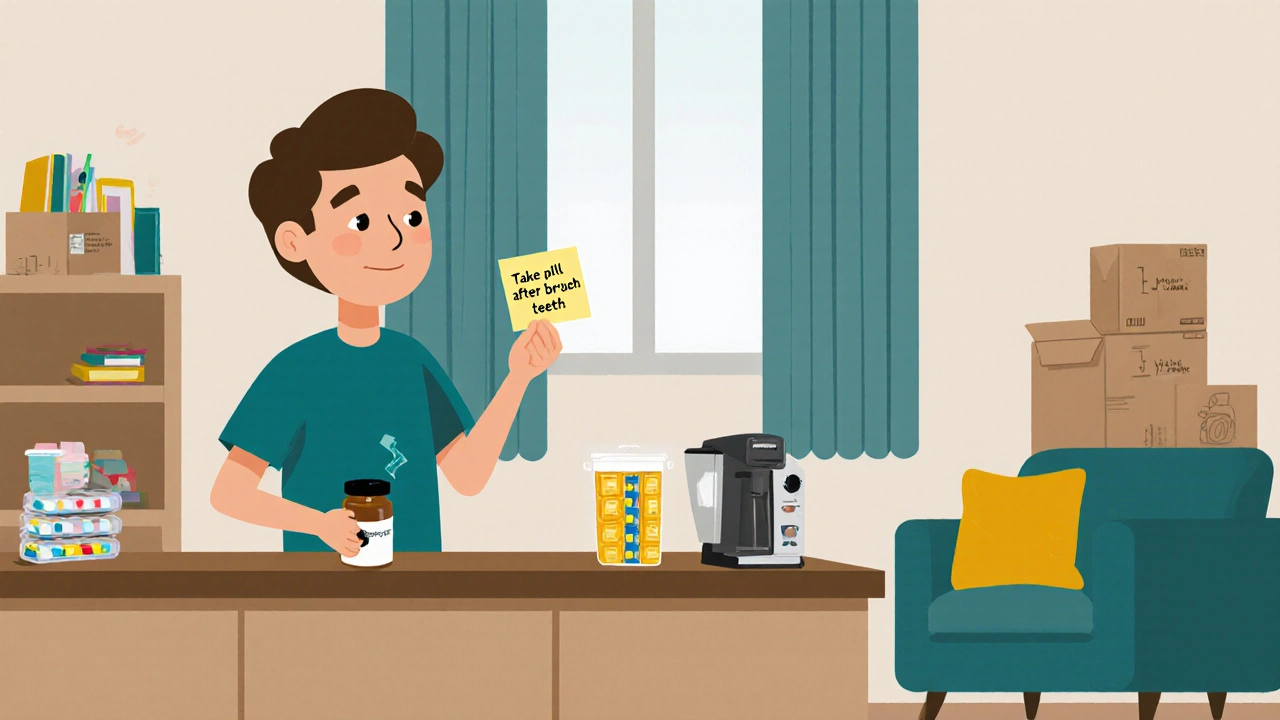
When your life changes - whether you’re moving cities, starting a new job, going through a breakup, or dealing with a family crisis - your medication routine often gets tossed aside. Not because you don’t care. Not because you’re lazy. But because your brain is overloaded, your schedule is shattered, and your sense of control has vanished. That’s when medication adherence drops - fast. Research shows medication adherence can fall by 32% during major life transitions. In some cases, people stop taking their meds entirely for weeks or months. And it’s not just about forgetting pills. It’s about losing the structure that made taking them possible.
Why Your Medication Routine Falls Apart During Transitions
It’s not random. Your brain doesn’t handle change well when you’re already stressed. A 2023 study from the American Psychological Association found that 68% of chronic disease setbacks happen within the first three months after a big life shift. Why? Because adherence isn’t just about remembering to take your pills. It’s tied to your daily rhythm, your environment, your emotional state, and your sense of control. Think about it: if you’ve been taking your blood pressure pill every morning with your coffee, then you move to a new apartment and your coffee maker breaks, suddenly the whole ritual collapses. No one asks you how you’re managing your meds. No one checks in. So you just… stop. And that’s exactly what 78% of people on Reddit’s r/ChronicIllness community reported after major life changes - relocation, job loss, divorce.What You Can Actually Control (And What You Can’t)
Here’s the secret: the more energy you waste worrying about things you can’t change, the less you have left to protect your health. A 2023 analysis from Supportive Care found that during transitions, people divide their concerns into three buckets:- 27.3%: Things you can control directly (like taking your pill at the same time every day)
- 43.8%: Things you can influence but not control (like getting your prescription refilled on time)
- 28.9%: Things completely out of your hands (like your boss changing your schedule last minute)
Build Flexible Routines, Not Rigid Schedules
Rigid routines break under pressure. Flexible ones bend - and survive. Research from the Journal of Personality and Social Psychology shows that keeping just 3 to 5 daily anchor activities during a transition reduces stress by 23% and boosts medication adherence by over 31%. These anchors don’t need to be perfect. They just need to be consistent. Examples:- Morning: Brush your teeth → take your pill → drink water
- Evening: Put your pill organizer on the counter → check your calendar for tomorrow’s appointments
- Weekly: Every Sunday, refill your pill box before you do your laundry
Use Tools That Adapt to Change - Not Just Remind You
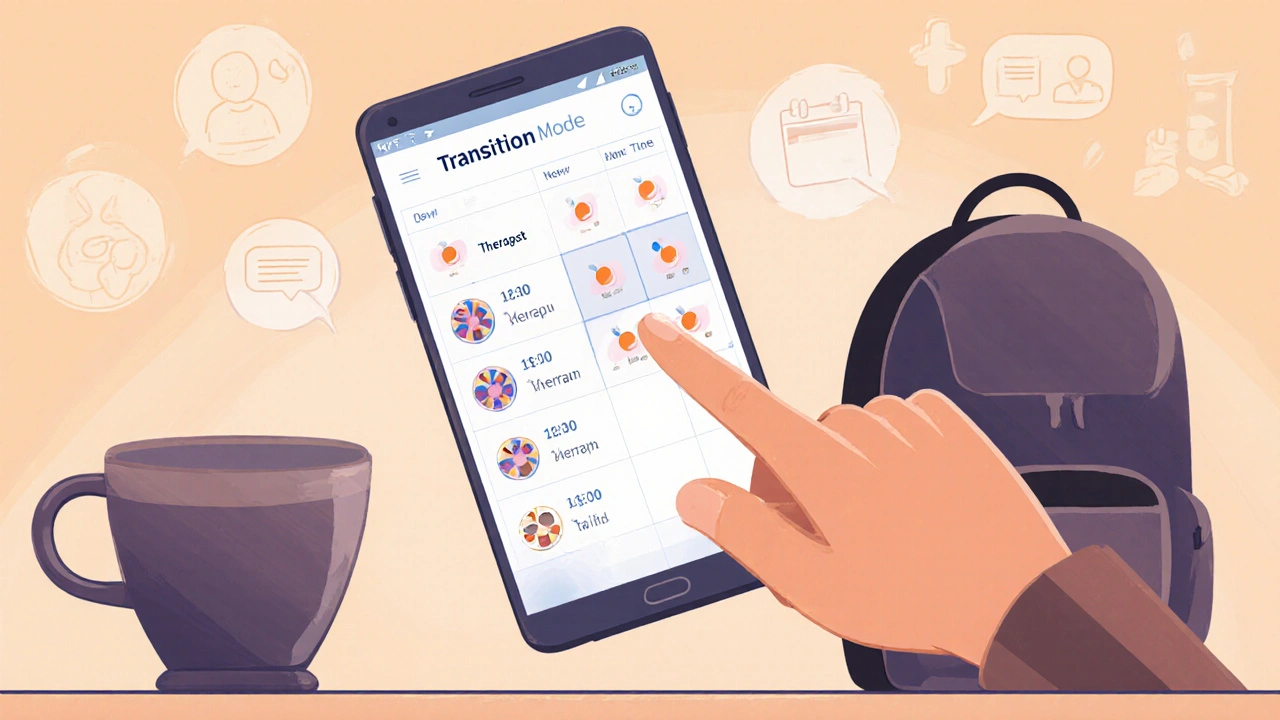
Most medication apps are useless during transitions. They just beep at you. That’s fine if your life is stable. But when everything’s falling apart, another notification feels like pressure, not help. A 2023 study in the Journal of Medical Internet Research found that while apps improve adherence by 22.8% in normal times, that drops to just 8.3% during major transitions. Why? Because they don’t account for chaos. Look for apps with features like:- Flexible scheduling (you can drag your dose to a new time)
- “Transition mode” that lets you map your new routine
- Sync with calendar apps so it updates when your schedule changes
Social Support Is Your Secret Weapon
You don’t have to do this alone. And you shouldn’t. Health Psychology found that people who felt supported during transitions had 34.2% better medication adherence - and 41.7% lower cortisol levels. That’s not magic. That’s biology. When you feel seen, your body doesn’t go into survival mode. You can think clearer. You can stick to your plan. Who can help?- A friend who checks in: “Hey, how’s your pill routine going?”
- A family member who keeps a spare set of your meds at their house
- A pharmacist who knows your situation and can help you refill early if you’re moving
Professional Help Isn’t a Last Resort - It’s a Strategy
If you’re struggling, therapy isn’t about being “broken.” It’s about getting the right tools. Acceptance and Commitment Therapy (ACT) has been shown to improve medication adherence by 48.6% during transitions - more than any other method. Why? Because ACT doesn’t fight your stress. It teaches you to carry it while still doing what matters. A therapist doesn’t tell you to “just take your pills.” They help you:- Identify what’s really stopping you (fear? grief? exhaustion?)
- Connect your meds to your values (“I take this because I want to be there for my kids”)
- Accept that some days will be messy - and that’s okay
Break It Down - Tiny Steps, Big Results
When your life is in chaos, a full medication routine feels impossible. So break it into micro-tasks. Instead of: “I need to manage my meds during my divorce.” Try:- Step 1: Call pharmacy to transfer prescription
- Step 2: Get a pill organizer with morning/evening slots
- Step 3: Set one phone reminder for 7 p.m.
- Step 4: Tell one person you’re working on this
Learn to Say No - Protect Your Health Like a Boundary
During transitions, you’re bombarded with demands: new meetings, social events, family drama, house repairs. Saying yes to everything means saying no to your health. People who successfully maintain adherence during transitions are 3.2 times more likely to say “no” to non-essential commitments. That’s not selfish. It’s survival. Practice this phrase: “I’d love to, but I’m protecting my health right now.” It’s not an excuse. It’s a priority.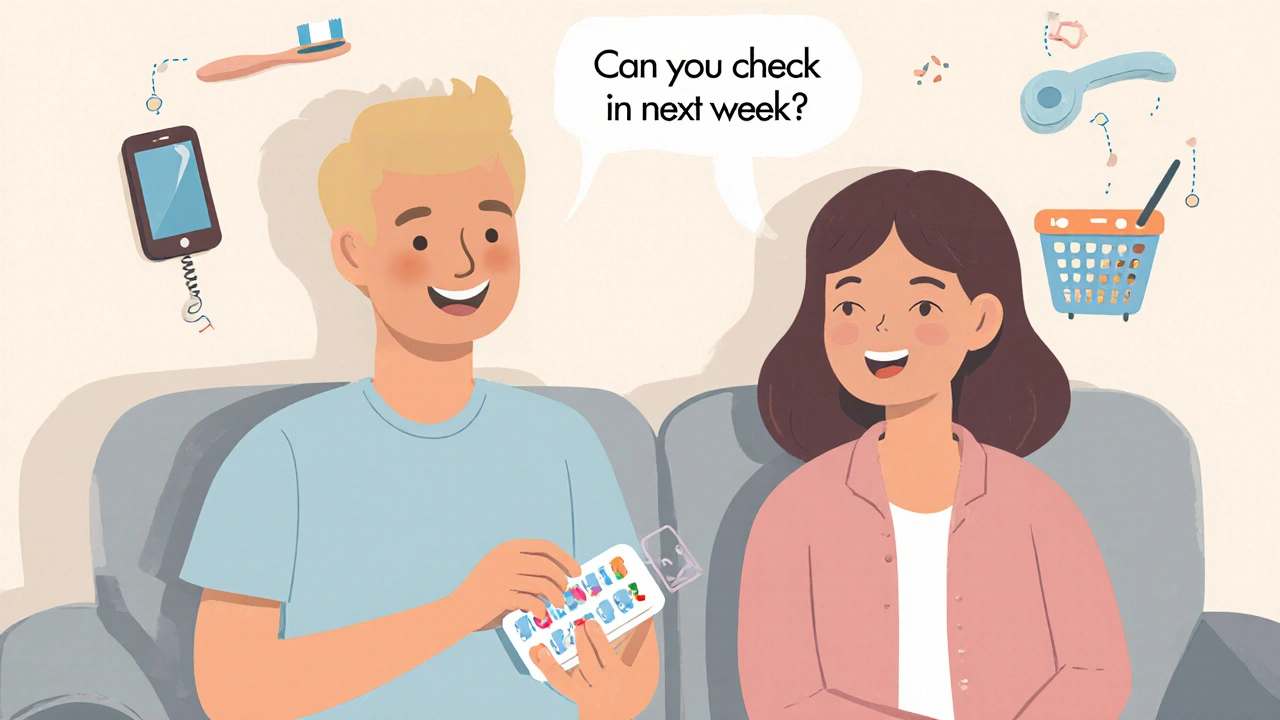
What Works Best - And What Doesn’t
Here’s a quick comparison of strategies during transitions:| Strategy | Adherence Improvement | Best For |
|---|---|---|
| Acceptance and Commitment Therapy (ACT) | 48.6% | People overwhelmed by emotions |
| Flexible daily anchors (3-5 routines) | 31.4% | Anyone with disrupted schedules |
| Social support (check-ins, accountability) | 34.2% | People who feel isolated |
| General medication apps | 8.3% | Stable routines only |
| Traditional pill organizers | 5-10% | Minimal disruption |
Your Transition Adherence Plan - Start Today
Here’s a simple 5-step plan you can start in 20 minutes:- Identify your top 3 anchors - things you do every day no matter what (e.g., brush teeth, check phone, eat lunch).
- Attach your meds to one anchor - “I take my pill after I brush my teeth.”
- Choose one tool - a simple app with flexible scheduling, or a pill box you keep in your bag.
- Tell one person - “I’m going through a big change. Can you ask me how my meds are going next week?”
- Give yourself grace - If you miss a day, don’t quit. Just reset. One pill tomorrow is still progress.
Frequently Asked Questions
What if I don’t have a routine to begin with?
Start small. Pick one daily activity you already do - drinking water, sitting down for dinner, checking your email. Attach your medication to that. You don’t need a perfect schedule. You just need one consistent trigger. Even one pill a day, taken at the same moment, builds momentum.
Can I just stop taking my meds if I’m feeling overwhelmed?
No. Stopping suddenly can be dangerous - especially for blood pressure, mental health, or diabetes meds. If you’re struggling, talk to your doctor. They can adjust your dose, switch to a once-daily version, or help you create a transition plan. You don’t have to suffer in silence.
I moved and lost my meds. What do I do now?
Call your pharmacy immediately. Most can transfer your prescription to a new location. If you’re out of refills, ask for a 7-day emergency supply. Many states allow pharmacists to give short-term refills without a new prescription. Don’t wait until you’re out. Act before you hit zero.
Why do apps fail during transitions?
Most apps assume your life stays the same. They beep at the same time every day. But when your schedule changes - you start night shifts, you’re caring for a sick relative, you’re sleeping on a couch - rigid alerts become noise, not help. The best tools let you drag your dose to a new time, sync with your calendar, or mark a day as “transition mode.” Look for apps built for change, not just reminders.
Is it normal to feel guilty about missing doses?
Yes - but guilt doesn’t help. It’s a natural reaction, especially if you’ve been told “non-adherence is dangerous.” But your health isn’t about perfection. It’s about persistence. One missed dose isn’t failure. Stopping for weeks is. Focus on getting back on track, not punishing yourself. You’re doing your best in a hard time.
How long does it take to rebuild a routine after a transition?
Most people find stability in 2-3 weeks. That’s the average learning curve, according to The New Hope Mental Health Clinic. But it’s not about speed. It’s about consistency. Even if you only get 3 days in a row right, that’s progress. Keep going. Your body remembers the rhythm - even if your mind doesn’t.
Next Steps - What to Do Right Now
If you’re going through a transition right now:- Look at your medication list. Are any pills taken more than once a day? Ask your doctor if they can switch you to once-daily versions.
- Find one person you trust. Text them this: “I’m going through a big change. Can you check in on me next week about my meds?”
- Open your phone’s calendar. Block out 15 minutes tomorrow to set up one medication anchor.
- If you’re using a pill organizer, put it somewhere you’ll see it - not tucked away in a drawer.


Post A Comment