
When it comes to pediatric dosing, the precise calculation of medication amounts for children based on age, weight, and developmental stage. Also known as child-specific dosing, it’s not just shrinking an adult pill—it’s a science built on how a child’s body absorbs, processes, and eliminates drugs differently than an adult’s. Giving a child the wrong dose can be dangerous, even if it’s just a little too much or too little. Kids aren’t small adults. Their liver and kidneys are still developing, their body fat and water content vary by age, and their metabolism changes rapidly as they grow. That’s why pediatric dosing isn’t a one-size-fits-all rule—it’s a carefully calibrated process.
One key concept tied to this is pediatric exclusivity, a regulatory incentive from the FDA that gives drugmakers extra market protection when they study medicines specifically in children. This isn’t about extending patents—it’s about forcing companies to test drugs on kids so we know what doses actually work and are safe. Before this rule, many medications used in children had no real pediatric data, meaning doctors guessed. Now, thanks to pediatric exclusivity, we have better data on how drugs like antibiotics, asthma inhalers, and seizure meds behave in infants, toddlers, and teens. Another related entity is drug dosing by weight, the standard method of calculating pediatric doses using kilograms instead of age alone. You’ll see this on prescriptions as mg/kg, meaning milligrams per kilogram of body weight. It’s the most accurate way to dose because children vary so much in size—even at the same age. A 10-pound newborn and a 70-pound third-grader both need different amounts, even if they’re prescribed the same medicine. And then there’s pediatric pharmacology, the study of how drugs affect children’s bodies and how their bodies affect drugs. This field explains why some medications that are safe for adults cause side effects in kids, or why certain drugs simply aren’t approved for use under a certain age. These aren’t just academic terms—they’re the foundation of every safe prescription a child receives.
What you’ll find in the posts below isn’t just theory. It’s real-world guidance from parents, pharmacists, and doctors who’ve dealt with the messiness of giving meds to kids. You’ll see how pediatric dosing connects to things like medication adherence during life changes, why some kids react differently to generics, how to handle refills while traveling, and why some drugs get special FDA rules just for children. No fluff. No guesswork. Just what works when the stakes are high and the patient is small.
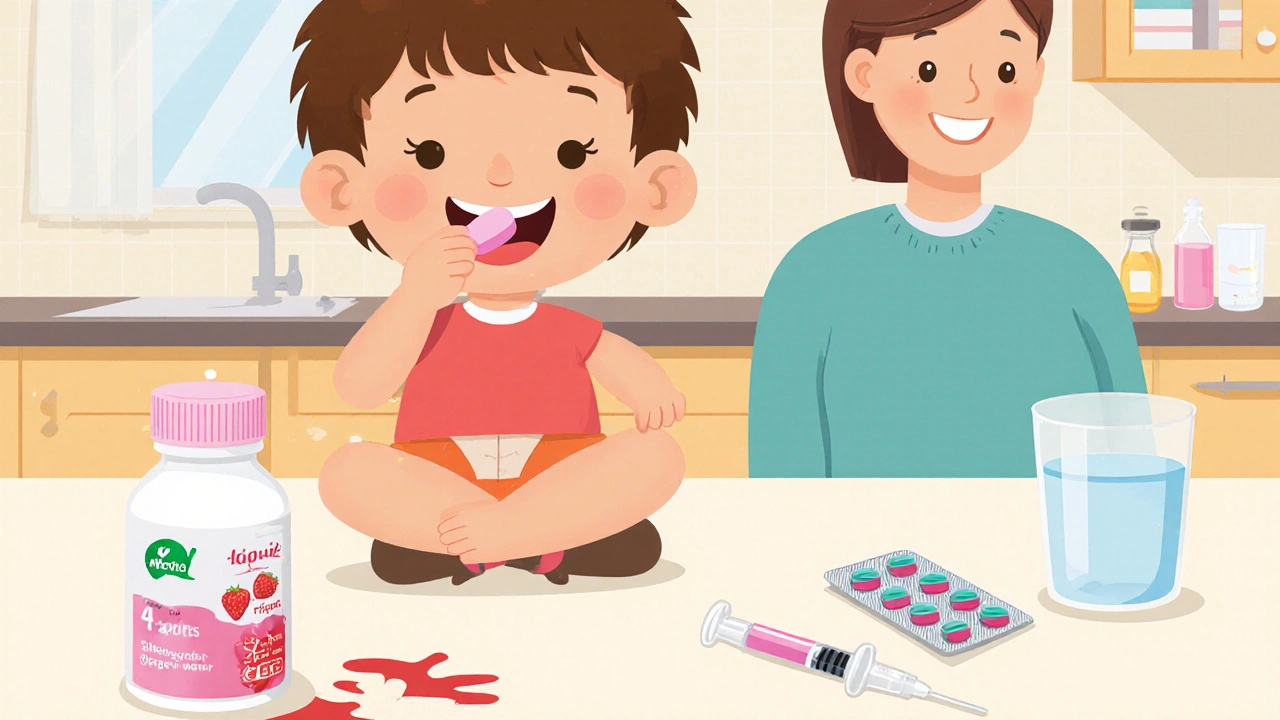
Choosing between liquid and tablet medications for children isn't just about preference-it's about safety, accuracy, and long-term adherence. Discover when tablets are better, how to train your child to swallow them, and why outdated assumptions are changing pediatric care.
Read More