
When you swallow a pill, you're not just taking the active medicine—you're also swallowing magnesium stearate, a common inactive ingredient used to help pills form properly and move smoothly through manufacturing equipment. Also known as magnesium salt of stearic acid, it's a white powder that acts like a lubricant in tablets and capsules. You’ll find it in everything from ibuprofen to vitamin D supplements. It doesn’t treat anything. It doesn’t get absorbed. It’s just there to make production easier and pills more reliable.
But here’s the thing: people worry about it. Online forums call it a "filler," "toxin," or even a "cancer trigger." None of that is backed by science. The FDA and health agencies worldwide have reviewed magnesium stearate for decades and keep approving it. It’s used in doses so small—often less than 1% of a pill—that it has zero effect on your body. Even if you took 100 pills a day, you’d still be consuming less than a teaspoon of it. That’s not dangerous. That’s normal.
It’s not just magnesium stearate. Pills are full of these quiet helpers: cellulose, a plant-based binder that holds tablets together, silicon dioxide, a flow agent that stops powders from clumping, and starch, a natural thickener used in hundreds of medications. These aren’t secrets. They’re standard, safe, and tested. The real question isn’t whether they’re harmful—it’s why they’re so misunderstood.
Some brands skip magnesium stearate to appeal to "clean label" trends. But those pills often cost more, break apart easily, or don’t dissolve right. That’s worse than a tiny bit of stearate. If a pill crumbles in your hand or doesn’t release its medicine properly, you’re not getting the dose you paid for. That’s a real risk. Magnesium stearate prevents that.
There’s one exception: if you have a rare allergy to stearic acid, you might react. But that’s like being allergic to the wax on an apple. It’s possible, but you’d know by now. For everyone else, it’s just a quiet helper in your medicine cabinet. You don’t need to avoid it. You need to understand it.
The posts below dig into how ingredients like this show up in real medications, why they matter more than you think, and how to tell when a supplement is actually worth taking. You’ll see how magnesium stearate fits into bigger conversations about drug safety, label truth, and what’s really in the pills you swallow every day. No fearmongering. Just clear, practical info from real prescriptions and studies.
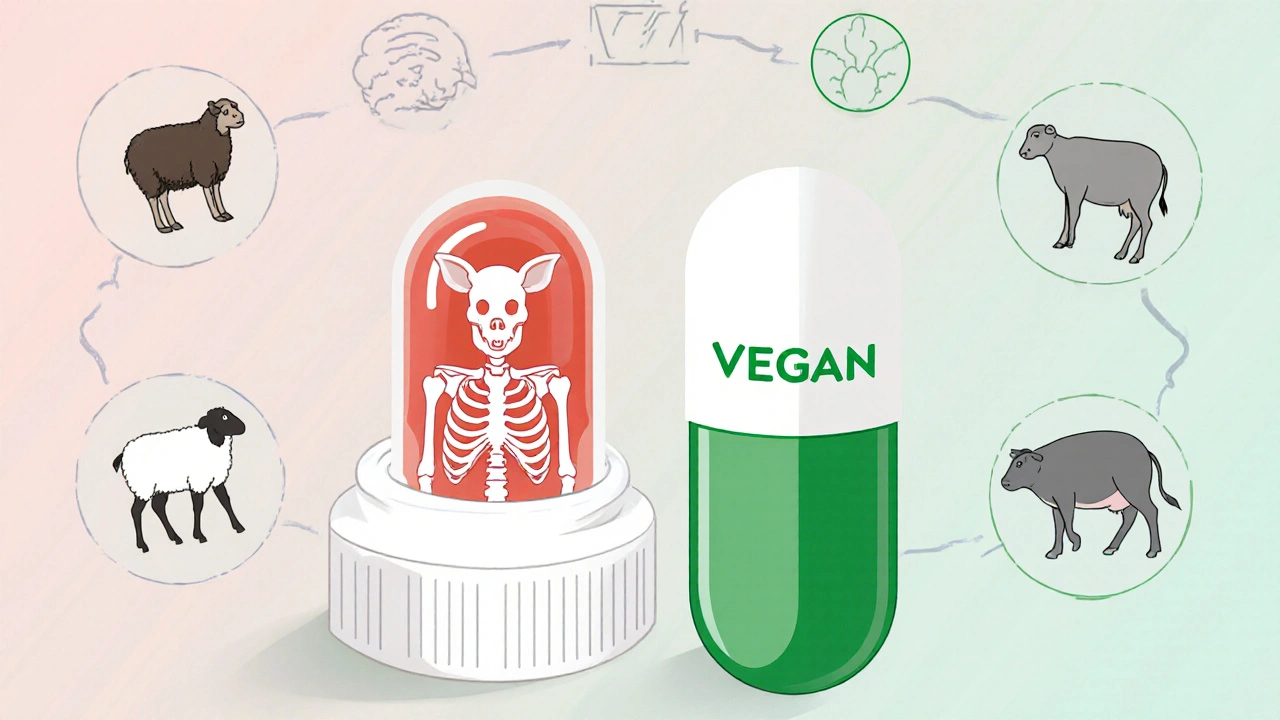
Many common medications contain hidden animal ingredients like gelatin, lanolin, and magnesium stearate. Vegans and vegetarians need to know which drugs use animal byproducts and how to find plant-based alternatives.
Read More