
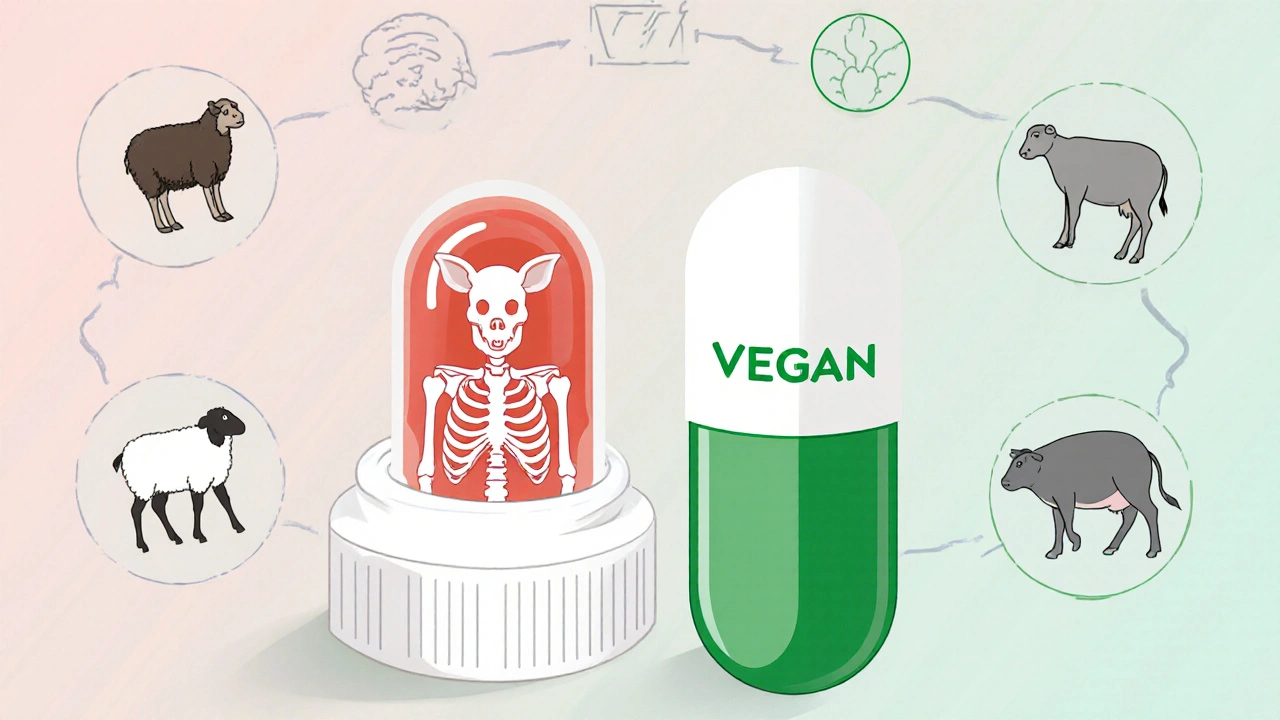
Most people assume that if a pill is prescribed by a doctor or bought over the counter, it’s safe and neutral-free from ethical conflicts. But for vegans and vegetarians, that’s not always true. Many common medications contain hidden animal ingredients that aren’t listed on the label. You won’t find ‘pig fat’ or ‘sheep wool’ on the box. Instead, you’ll see chemical names like gelatin, magnesium stearate, or lanolin. These sound harmless, but they come from animals. And if you avoid animal products for ethical, environmental, or health reasons, this matters.
What’s Really in Your Pills?
The biggest hidden animal ingredient in medications is gelatin. It’s used in about 90% of capsules and softgels. Gelatin comes from boiling down the bones, skin, and connective tissues of pigs, cows, and chickens. It’s what holds the medicine inside and makes the pill easy to swallow. But if you’re vegan, that’s the same material used in gummy candies and marshmallows-just in pill form. Then there’s magnesium stearate. It’s a flow agent that helps machines produce pills smoothly. About 65% of the time, it’s made from animal fat. Even though it’s in tiny amounts, it’s still derived from slaughtered animals. You’ll find it in everything from antibiotics to heart meds. Vitamin D3 is another surprise. Most supplements use lanolin, which comes from sheep’s wool. It’s processed into a form your body can use. But plant-based Vitamin D3 exists-it’s made from lichen or green algae. It’s just harder to find because manufacturers stick with the cheaper animal source. Other common culprits include:- Glycerin (often from animal fat, not always plant-based)
- Stearic acid (E570-fat from cows, pigs, or sheep)
- Squalane (from shark liver oil, sometimes from olives)
- Glucosamine and chondroitin (from shellfish or cow cartilage)
- Collagen (from fish or cow skin)
Medicines That Are Directly Made From Animals
Some drugs don’t just use animal parts as fillers-they’re made from them. These are harder to swap out. - Armour Thyroid: Used for hypothyroidism. Made from dried pig thyroid glands. There’s no vegan version that works the same way. Synthetic levothyroxine (T4) is animal-free and often prescribed instead. - Premarin: A hormone therapy for menopause. Made from the urine of pregnant mares. Synthetic estrogen alternatives exist, like estradiol, which don’t come from animals. - Heparin: A blood thinner. Sourced from pig intestines. No vegan substitute is approved in most countries. Some patients use synthetic alternatives like fondaparinux, but they’re more expensive and not always covered by insurance. - Creon and Viokace: Pancreatic enzymes for digestion. Made from pig pancreas. No plant-based version exists. People with cystic fibrosis or pancreatitis often have no choice but to take them. - Vascepa: A fish oil-based drug for high triglycerides. Made from purified EPA from anchovies and sardines. No vegan alternative is currently available. - Propofol: An anesthetic. Contains egg phospholipids. Vegans may need to discuss alternatives with their anesthesiologist before surgery. These aren’t just supplements. These are life-saving or essential medications. For some people, the choice isn’t between vegan and non-vegan-it’s between taking the drug or risking their health.What You Can Do: Ask, Check, Switch
You don’t have to accept this silently. There are steps you can take to find animal-free options. First, talk to your pharmacist. Don’t just say, “I’m vegan.” Say: “I need medications without gelatin, magnesium stearate, lanolin, or any animal-derived ingredients.” Pharmacists are trained to check ingredient sources. Many now use databases like Pill Clarity (formerly VeganMed), which tracks verified animal-free medications. Second, check the form. Capsules are the biggest problem. Tablets are more likely to be vegan because they don’t need gelatin shells. Ask for tablets instead. If you’re given a capsule, ask if it’s available in a cellulose-based (plant-derived) version. Third, look for certifications. Some brands now label their products as vegan. Look for the Vegan Society logo or PETA’s “Cruelty-Free and Vegan” seal. But don’t rely on marketing alone. Always verify the ingredients. For Vitamin D3, switch to algae-based versions. Brands like DEVA, Garden of Life, and Nordic Naturals offer vegan D3. The same goes for Omega-3s-algae oil replaces fish oil without losing effectiveness.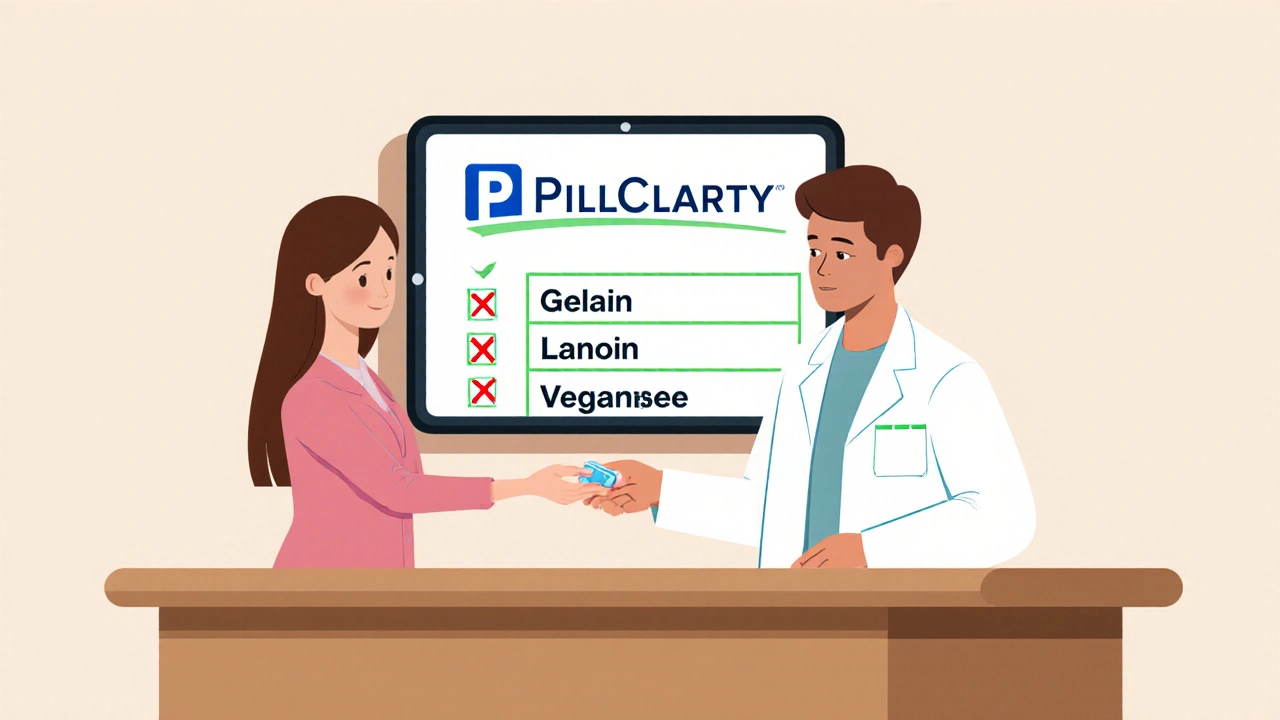
What You Can’t Change (And How to Handle It)
Some medications have no vegan alternative. That’s the hard truth. If you need heparin, Creon, or Armour Thyroid, you’re faced with a difficult decision. For many, the choice isn’t about ethics-it’s about survival. In these cases, it’s okay to prioritize health. Being vegan doesn’t mean being perfect. It means doing your best with the options available. Many vegans who need these drugs still identify as vegan. They see it as a medical necessity, not a compromise of values. Talk to your doctor. Ask if there’s a synthetic version. For example, instead of Armour Thyroid, ask about levothyroxine. Instead of Premarin, ask about estradiol. These aren’t identical, but they’re often just as effective-and animal-free. If your doctor says there’s no alternative, ask why. Sometimes it’s because they’re not aware of options. Bring your own research. Mention Pill Clarity or Dr. Vegan’s work. Be polite but persistent.Why This Isn’t Common Knowledge
You might wonder: Why aren’t these ingredients labeled clearly? Because they don’t have to be. In the U.S., Australia, and most countries, pharmaceutical regulations treat inactive ingredients differently than food. You don’t need to list gelatin or stearic acid as “animal-derived.” They’re just “excipients”-technical jargon for fillers. The same way a candy bar doesn’t have to say “made with pig fat,” a pill doesn’t have to say “made with cow bones.” The Transparent Label Campaign found that 50% of supplements contain hidden animal ingredients. Most consumers don’t know. And even among vegans, many assume their meds are fine because they’re “prescribed.” The industry is slow to change. Manufacturing processes are built around animal ingredients. Switching requires retesting, reapproving, and retooling. It’s expensive. But demand is growing. Pill Clarity now handles thousands of inquiries a month. Pharmacists are starting to get training. In 2024, the American Pharmacists Association is rolling out new guidelines to help pharmacists answer these questions.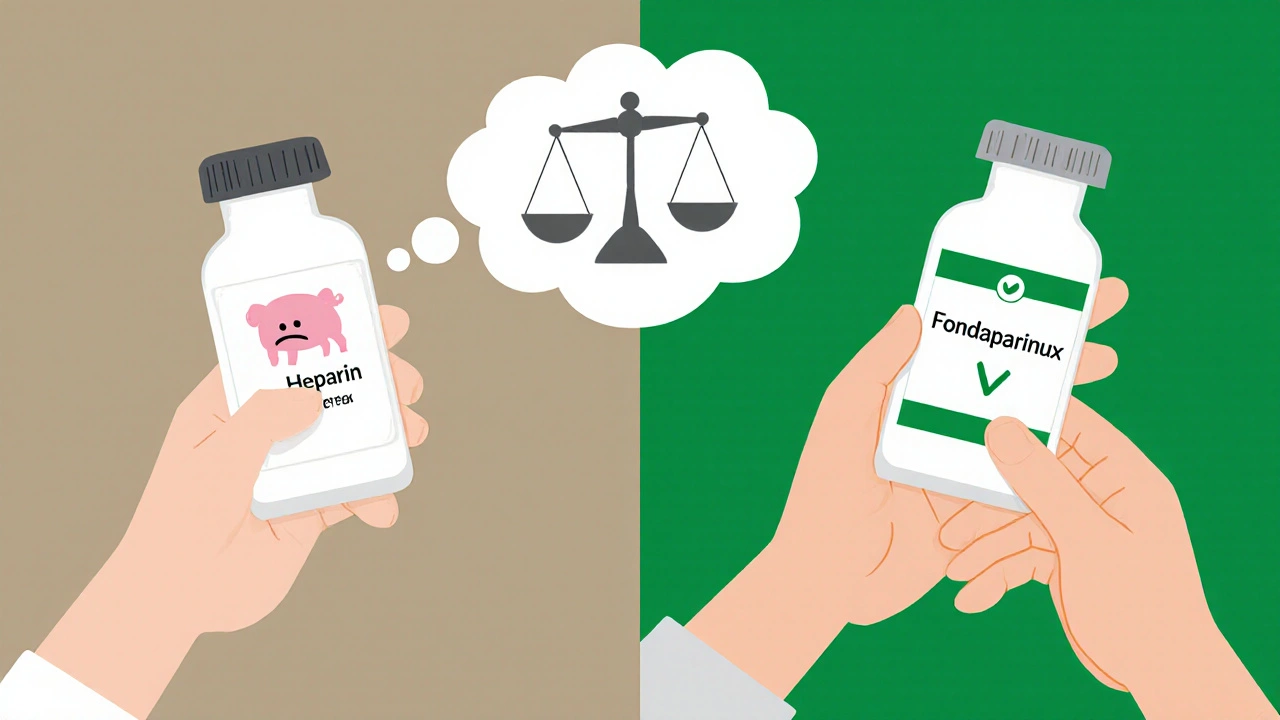
What’s Changing for the Better
There’s hope. More companies are offering vegan alternatives. Algae-based Vitamin D3 is now widely available. Plant-based capsules are becoming standard in some brands. Even big pharmacies like CVS and Walgreens now carry vegan supplements on their shelves. The rebranding of VeganMed to Pill Clarity in 2023 shows the movement is growing beyond just vegans. People with allergies, religious restrictions, or ethical concerns are all asking the same question: What’s in this? The future of medication transparency is coming. But right now, it’s up to you to ask. Don’t assume. Don’t guess. Check the ingredients. Talk to your pharmacist. Demand better.Frequently Asked Questions
Are all gelatin capsules made from animals?
Almost all traditional capsules are made from animal gelatin, usually from pigs or cows. But plant-based capsules made from hydroxypropyl methylcellulose (HPMC) are widely available. Ask your pharmacist for cellulose capsules instead. They look the same, work the same, and are completely vegan.
Is Vitamin D3 always from sheep wool?
No. Most Vitamin D3 supplements use lanolin from sheep wool, but plant-based D3 from lichen or green algae is just as effective and widely available. Look for brands that clearly state “vegan D3” or “algae-derived.” Avoid anything that says “cholecalciferol” without a source-it’s likely from animals.
Can I get vegan heparin or insulin?
Heparin is still made from pig intestines, and there’s no approved vegan substitute in most countries. Insulin used to come from pigs or cows, but all modern insulin is synthetic and made using genetically modified bacteria or yeast. So yes-today’s insulin is vegan. Always confirm with your pharmacist if you’re unsure.
How do I know if magnesium stearate is vegan?
Magnesium stearate can come from either animal fat or plants like palm or coconut oil. There’s no way to tell from the label alone. The only reliable way is to contact the manufacturer or use a trusted database like Pill Clarity. Some brands, like Pure Encapsulations and Thorne, use plant-based stearate and list it on their website.
What should I do if my only option is an animal-derived medication?
If the medication is essential for your health-like Armour Thyroid, heparin, or Creon-take it. Being vegan doesn’t mean refusing life-saving treatment. Many vegans make exceptions for medical needs. Talk to your doctor about alternatives, but don’t refuse necessary treatment out of guilt. Your health matters too.
Are there any apps or tools to check if my meds are vegan?
Yes. Pill Clarity (pillsclarity.com) is the most reliable resource. It’s a free database that lists verified animal-free medications and supplements. You can search by drug name or ingredient. Some pharmacies also use it internally. PETA’s list of animal-derived ingredients is another helpful reference, though it’s not updated as frequently.


Post A Comment