
When you're giving liquid medicine for kids, a form of medication designed for children who can't swallow pills. Also known as syrup medicine, it's one of the most common ways to treat fevers, coughs, allergies, and infections in young children. But it’s not as simple as pouring a spoonful. The wrong dose—even a little too much—can be dangerous. And not all liquid meds are made the same. Some are flavored to mask bitterness, others use alcohol or artificial sweeteners you might not expect. And while generics are cheaper, they’re not always interchangeable, especially with drugs like levothyroxine that need precise absorption.
Choosing the right pediatric dosing, the exact amount of medication based on a child’s weight and age is critical. Pediatricians don’t just shrink adult doses—they calculate based on kilograms, not cups or teaspoons. A teaspoon isn’t always 5 ml. Some dosing cups are off by 20%. That’s why using the syringe or dropper that comes with the bottle matters more than the kitchen spoon you think you know. And if your child is on multiple meds, watch for hidden overlaps. Ibuprofen and acetaminophen are common, but mixing them with cold syrups that already contain them? That’s how accidental overdoses happen. You’re not just giving medicine—you’re managing a system.
children's medication, drugs formulated specifically for pediatric use, often with adjusted concentrations and inactive ingredients also need to consider what’s inside beyond the active drug. Gelatin capsules? Some contain animal byproducts like gelatin or magnesium stearate, which matters if you’re vegan or allergic. Alcohol? Some cough syrups have it—enough to raise concerns in toddlers. And while child-friendly drugs, medications designed with taste, texture, and ease of administration in mind for young patients are getting better, not all are created equal. A medicine that works for a 6-year-old might be too thick or too sweet for a 2-year-old. The FDA’s pediatric exclusivity rules help push safer, better-formulated options to market, but it’s still up to parents to ask the right questions.
What you’ll find in the posts below isn’t just a list of brands. It’s real-world advice on how to avoid common mistakes—like confusing milligrams with milliliters, trusting expired syrups, or skipping interactions because "it’s just a cold medicine." You’ll see how generic drugs can behave differently in kids, why some liquid meds interfere with thyroid treatment, and how to talk to pharmacists about hidden ingredients. There’s no fluff here. Just what you need to give your child the right dose, safely, without guesswork.
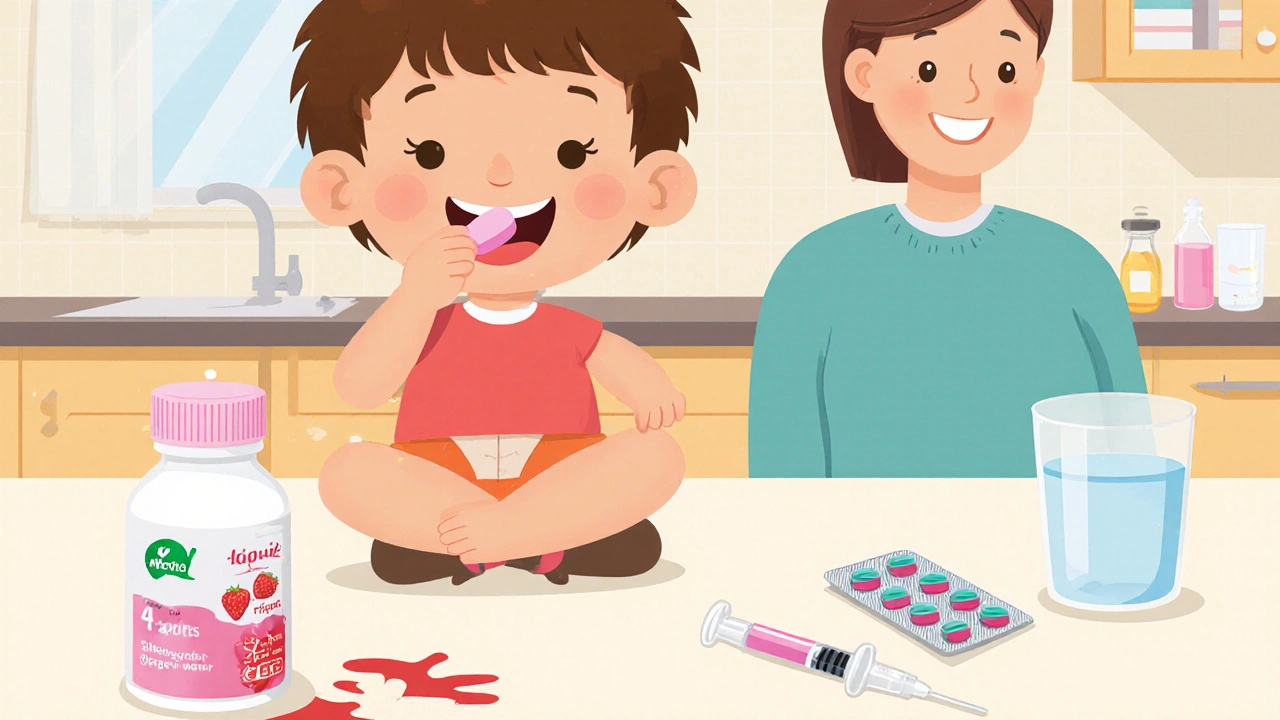
Choosing between liquid and tablet medications for children isn't just about preference-it's about safety, accuracy, and long-term adherence. Discover when tablets are better, how to train your child to swallow them, and why outdated assumptions are changing pediatric care.
Read More