
When you swallow a pill, you're often taking a gelatin capsule, a two-piece shell made from animal-derived gelatin that holds medication inside until it reaches your digestive system. Also known as hard gelatin capsules, they’re one of the most common ways drugs are packaged because they dissolve reliably in the stomach and protect sensitive ingredients from air and moisture. Unlike tablets, which are pressed into solid form, gelatin capsules let you take powders, oils, or granules that wouldn’t work as well in a solid pill. That’s why you’ll find them holding everything from vitamin D to probiotics to prescription antibiotics.
The shell itself is made from purified collagen, usually from cows or pigs, and is designed to break open quickly once it hits stomach acid. This means the medicine inside gets released fast—often within minutes—so your body can absorb it without delay. That’s important for drugs that need to act quickly, like pain relievers or antihistamines. It also helps with medications that taste bad, since the capsule hides the flavor. You won’t find gelatin capsules in every drug, though. Some people avoid them for dietary or religious reasons, which is why vegetarian alternatives made from plant-based materials like hypromellose are becoming more common. But for now, gelatin remains the gold standard in pharmaceutical manufacturing because it’s cheap, stable, and works every time.
What makes gelatin capsules special isn’t just the shell—it’s how they interact with the medicine inside. Some capsules are made to dissolve slowly, giving you extended release. Others are coated to survive stomach acid and release their contents in the intestines. That’s why you can’t always crush them or open them up without changing how the drug works. For example, if you open a capsule meant for slow release, you might get too much medicine all at once. That’s why healthcare providers pay close attention to how a drug is delivered, not just what’s inside. Whether it’s a blood pressure pill, a thyroid hormone, or a vitamin supplement, the capsule type can affect how well it works for you.
Below, you’ll find detailed comparisons and guides on medications that come in gelatin capsules—from antihistamines to antifungals to blood thinners—and why the form matters just as much as the active ingredient. You’ll learn how timing, absorption, and even dietary restrictions can change how these drugs behave in your body. Whether you’re switching meds, managing side effects, or just trying to understand why your pill looks the way it does, these posts give you the real-world details you need.
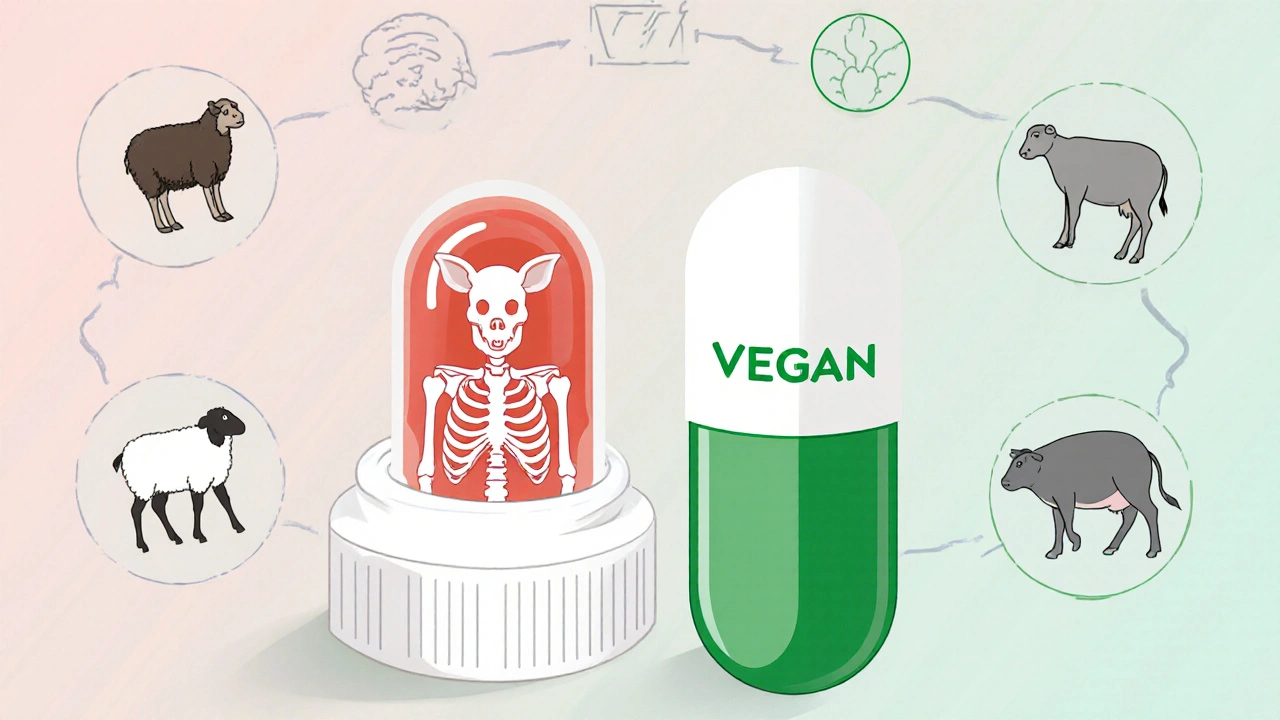
Many common medications contain hidden animal ingredients like gelatin, lanolin, and magnesium stearate. Vegans and vegetarians need to know which drugs use animal byproducts and how to find plant-based alternatives.
Read More