
When it comes to children's medication, medicines specifically formulated or dosed for kids, not just smaller versions of adult drugs. Also known as pediatric pharmaceuticals, it's one of the most misunderstood areas of health care—because what works for adults often doesn't work, or worse, can harm children. Kids aren't small adults. Their bodies process drugs differently, their organs are still developing, and even tiny dosing errors can lead to serious side effects. The FDA’s pediatric exclusivity, a regulatory incentive that gives drugmakers extra market protection for studying medicines in children exists for a reason: too many drugs were given to kids without proper testing. That’s changing, slowly, but parents still need to be the first line of defense.
One of the biggest risks isn’t the drug itself—it’s the drug interactions in kids, how medications mix with each other, supplements, or even foods. A common cold medicine combined with a vitamin supplement might contain the same active ingredient, doubling the dose. Or a child on antibiotics might develop a dangerous reaction if given a certain antacid. Even something as simple as grapefruit juice can interfere with how some medicines are absorbed. And then there’s the issue of child-safe medicines, formulations designed to be palatable, accurate, and non-toxic at low doses. Many liquid medicines use flavorings and preservatives that aren’t tested for long-term use in young children. Some capsules contain gelatin or dyes that vegans or kids with allergies can’t tolerate.
What you’ll find here isn’t a list of approved drugs. It’s a collection of real-world stories, warnings, and practical fixes from parents and doctors who’ve been through it. You’ll read about how a simple switch from one generic to another caused thyroid issues in a toddler, why some kids can’t tolerate common pain relievers, and how a single misread label led to an ER visit. You’ll learn how to talk to pharmacists about inactive ingredients, how to spot when a medicine isn’t right for your child’s age, and why some medications are pulled from shelves after being used for years in kids. This isn’t about fear—it’s about awareness. Because when it comes to your child’s health, the smallest detail can make the biggest difference.
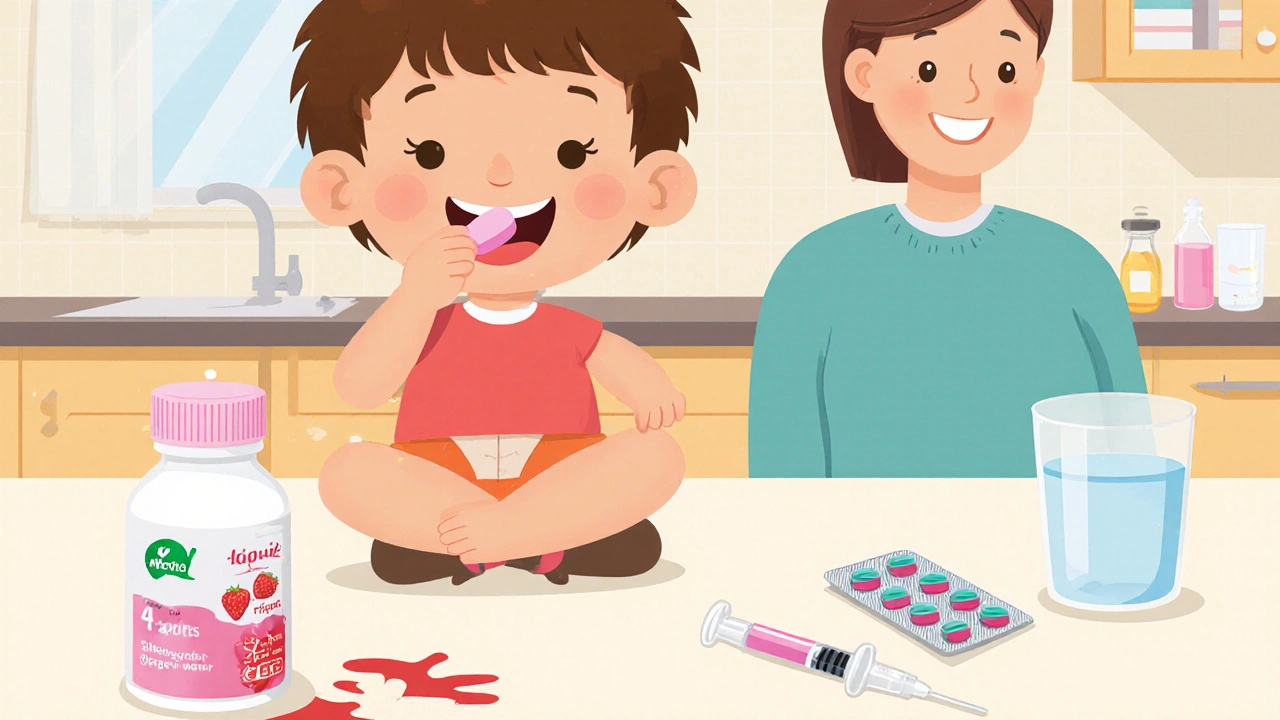
Choosing between liquid and tablet medications for children isn't just about preference-it's about safety, accuracy, and long-term adherence. Discover when tablets are better, how to train your child to swallow them, and why outdated assumptions are changing pediatric care.
Read More