
When it comes to child medication safety, the practice of ensuring medications are given correctly, safely, and appropriately for a child’s age, weight, and condition. Also known as pediatric drug safety, it’s not just about avoiding overdoses—it’s about understanding how a child’s body processes medicine differently than an adult’s. Kids aren’t small adults. Their liver and kidneys are still developing, their body fat and water content vary by age, and even small errors in dosing can lead to serious harm. A teaspoon instead of a milliliter. A pill meant for a 60-pound child given to a 20-pound toddler. These aren’t hypotheticals—they happen every day, often because parents assume "more is better" or "it worked for my older kid."
Pediatric dosing, the calculation of medication amounts based on a child’s weight or body surface area, not age alone. Also known as weight-based dosing, it’s the foundation of safe treatment. Many over-the-counter cold syrups, pain relievers, and even vitamins list dosing by age, but that’s a rough guide. The real rule? Use milligrams per kilogram. That’s why some kids end up with liver damage from too much acetaminophen, or stomach bleeding from repeated ibuprofen doses. And it’s not just prescription drugs. Supplements marketed as "natural" for kids can be just as risky—some contain unlisted stimulants or heavy metals. One study found nearly 1 in 5 children’s supplements had ingredients not listed on the label. That’s why drug interactions in children, how one medication affects another when taken together, especially in kids with multiple conditions are so hard to predict. A common antihistamine for allergies might make a child drowsy, but if they’re also on a cough syrup with the same ingredient? That’s an accidental overdose waiting to happen.
Child-friendly medications, formulations designed for kids—liquid suspensions, chewables, or dissolvable tablets that avoid choking hazards and make dosing easier. Also known as pediatric formulations aren’t just about taste. They’re about precision. A pill cut in half might not deliver half the dose if it’s not scored. A liquid that’s shaken poorly can mean the child gets too little or too much. And let’s not forget storage. Leaving medicine on the counter? That’s a toddler’s treasure hunt. Lock it up. Use child-resistant caps. And never refer to medicine as "candy."
What you’ll find here isn’t theory. It’s real advice from parents and doctors who’ve seen the fallout of mistakes. You’ll learn how to spot hidden dangers in supplements, how to ask your pharmacist the right questions about generic substitutions, and why some medications that work fine for adults can be dangerous for kids. You’ll see how medication errors happen—not because of carelessness, but because the system is confusing. And you’ll find out what to do when your child’s doctor gives you a prescription that doesn’t mention weight-based dosing. This isn’t about scaring you. It’s about giving you the tools to protect your child before it’s too late.
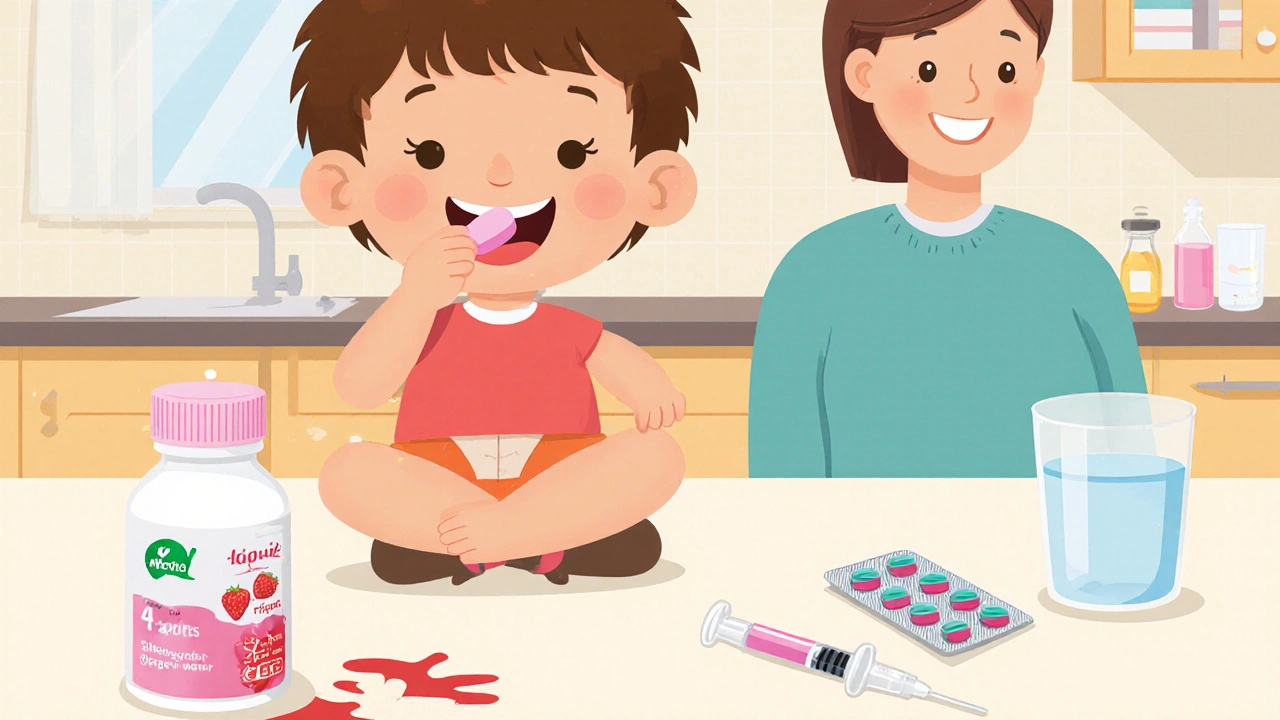
Choosing between liquid and tablet medications for children isn't just about preference-it's about safety, accuracy, and long-term adherence. Discover when tablets are better, how to train your child to swallow them, and why outdated assumptions are changing pediatric care.
Read More