
When you’re juggling multiple medications, specialists, and test results, care coordination, the organized effort to connect all parts of a patient’s healthcare journey so nothing falls through the cracks. Also known as healthcare integration, it’s not just paperwork—it’s what keeps you from taking two drugs that cancel each other out, missing a follow-up after hospital discharge, or getting confused about who’s in charge of what. Without it, even the best treatment plan can fail because no one’s connecting the dots.
Think about someone on warfarin who also takes levothyroxine, a thyroid hormone replacement that’s sensitive to food, supplements, and other drugs. If their pharmacist doesn’t know they started a new painkiller, or their doctor doesn’t know they skipped a dose because they were traveling, their INR could spike or their TSH could go wild. That’s where care coordination, a system where doctors, pharmacists, nurses, and even family members share updates in real time saves lives. It’s why clinics now track statin side effects across visits, why vegans get flagged for gelatin capsules, and why people on metformin get regular B12 checks—someone’s watching the whole picture, not just one piece.
Good care coordination doesn’t need fancy tech. It starts with simple things: a medication list everyone agrees on, a single point of contact when you’re confused, and a plan for what to do if you lose your pills while traveling. It’s why patients with celiac disease get alfacalcidol recommendations tied to their gluten-free diet, and why someone on lenalidomide has strict pregnancy controls enforced by their whole care team. It’s not about doing more—it’s about doing the right thing at the right time, with the right person involved.
Below, you’ll find real stories and practical guides from people who’ve been through it—the ones who avoided hospital stays by planning refills ahead, the ones who switched from Coumadin to a safer alternative after a bleed, and the ones who finally got their cholesterol under control after years of statin intolerance. These aren’t theory pieces. They’re what happens when care coordination actually works.
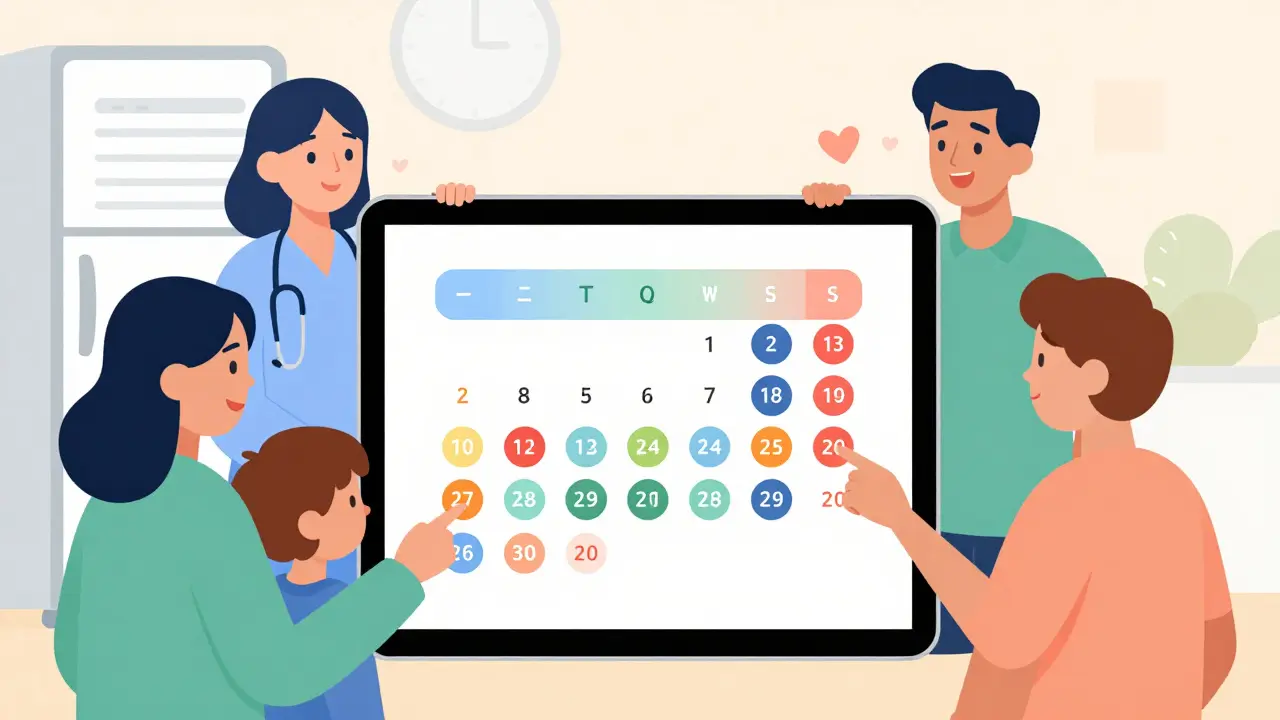
A shared medication calendar helps families and caregivers coordinate doses, avoid dangerous interactions, and reduce missed pills. Learn how to set one up with free tools or specialized apps for better safety.
Read More
Learn how to prevent dangerous drug interactions by communicating clearly with multiple healthcare providers. Get practical steps to organize your meds, ask the right questions, and get your team on the same page.
Read More