
When you take a pill, you're not just getting the cure—you're also accepting the possible downsides. That’s where benefit-risk assessment, the process of comparing how well a drug works against its potential harms. It’s not just for doctors—it’s something every patient should understand before starting any new medication. Whether it’s a daily blood pressure pill, a short-term painkiller, or a long-term therapy for a chronic condition, every drug has a balance. Too much focus on the benefit, and you ignore the nausea, dizziness, or worse. Too much focus on the risk, and you miss out on real improvement.
This is why medication safety, the practice of minimizing harm while maximizing therapeutic outcomes. It’s the backbone of smart prescribing. Take metformin for diabetes: it helps control blood sugar, but long-term use can drain your vitamin B12, leading to nerve damage that feels like diabetic complications. Or consider warfarin: it prevents deadly clots, but requires constant monitoring and has dozens of food and drug interactions. Meanwhile, newer drugs like apixaban or rivaroxaban offer simpler use but cost more. Each choice has a trade-off. Even something as simple as an antihistamine like cetirizine or loratadine—designed to be non-drowsy—still carries risks like dry mouth, headaches, or rare liver issues. The treatment trade-offs, the hidden compromises between effectiveness and side effects in medical decisions. They’re real, and they’re personal.
Benefit-risk assessment isn’t a one-time checkbox. It changes as you age, as your other conditions shift, or as you start new meds. Azilsartan might be great for your blood pressure and insulin sensitivity, but if you’re also taking a supplement that affects potassium, the risk spikes. Levothyroxine works best on an empty stomach, but if you’re taking calcium or iron supplements, absorption tanks—and suddenly your thyroid isn’t controlled, even if the pill seems fine. And when you’re dealing with something like lenalidomide for cancer, the benefit of survival can outweigh the risk of birth defects, but only if strict contraception rules are followed. These aren’t abstract concepts. They’re daily realities for millions.
What you’ll find below isn’t just a list of drugs. It’s a collection of real-world examples showing how benefit-risk assessment plays out in practice. From vegan-friendly pills that avoid gelatin to antifungals that spare your liver, from antivirals that work against COVID to ED meds that won’t crash your blood pressure—we’ve gathered the comparisons that matter. You’ll see what works, what doesn’t, and why. No fluff. No marketing. Just clear, practical insights to help you ask the right questions—and make smarter choices with your health.
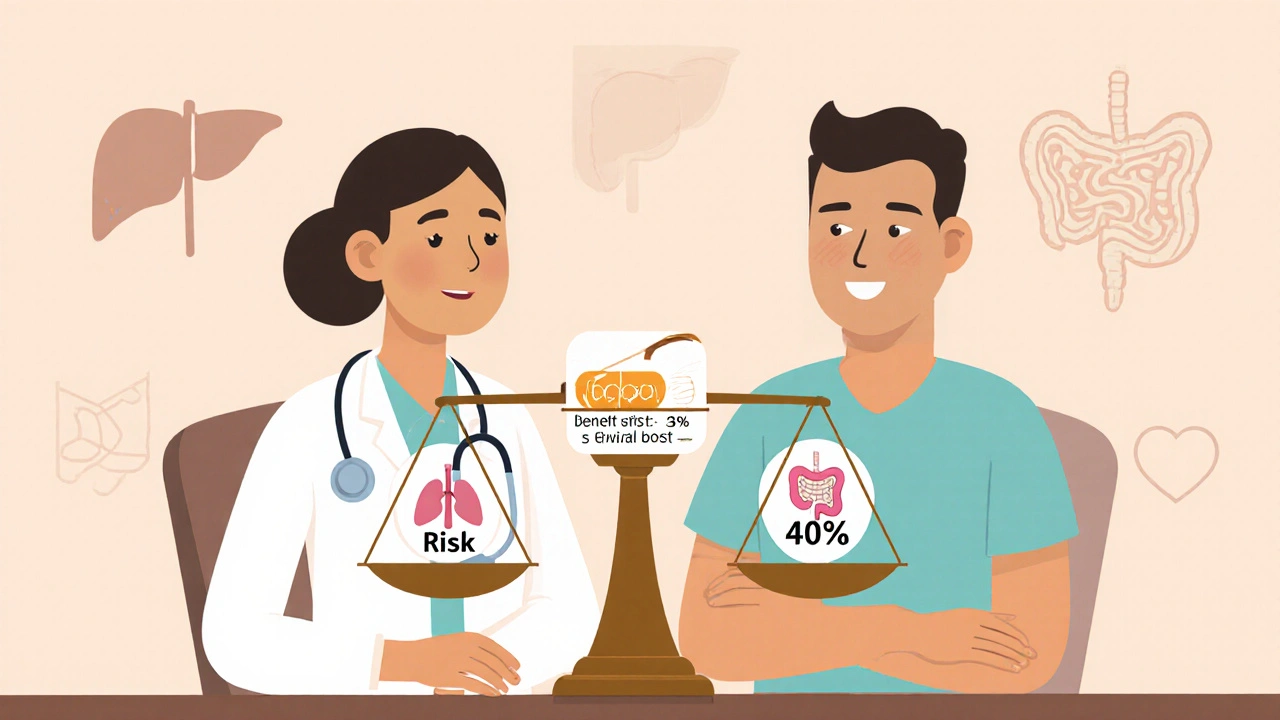
Healthcare providers weigh medication risks versus benefits to ensure treatments do more good than harm. This process considers disease severity, patient preferences, and real-world data to make safer, personalized decisions.
Read More