
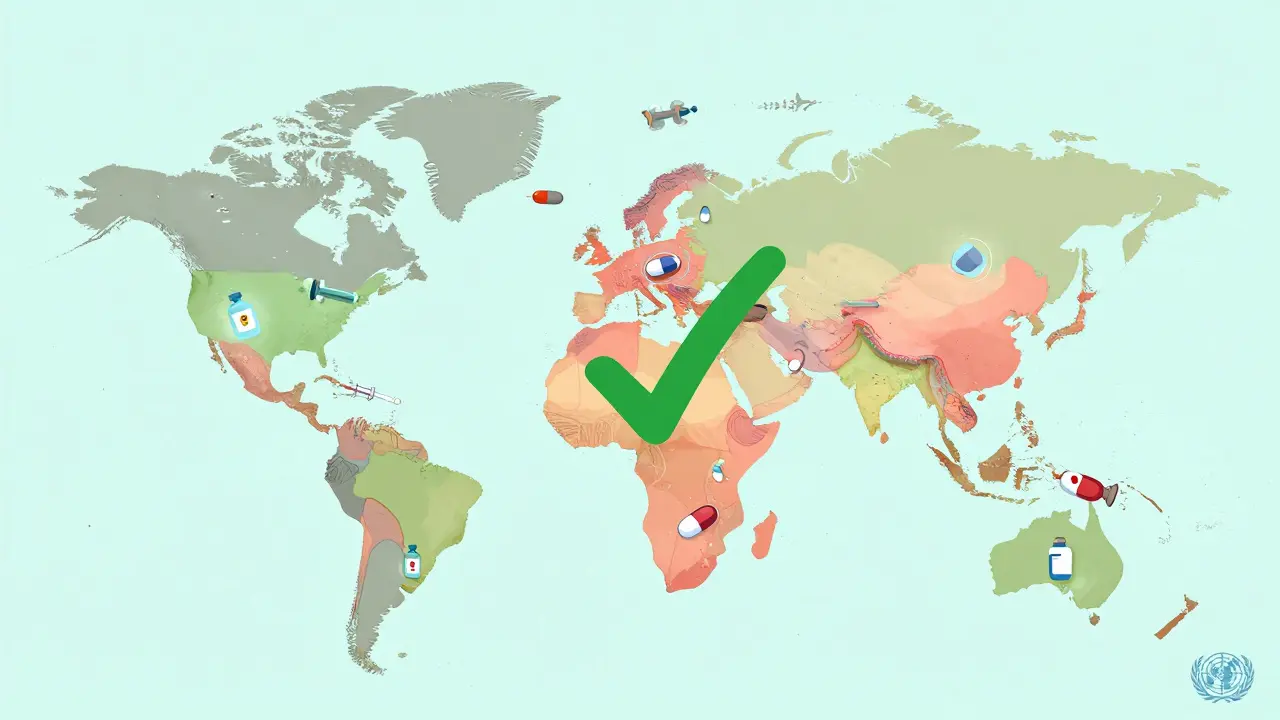
The WHO Model Formulary isn’t a list you’ll find on a hospital shelf or in a pharmacy’s computer system. It’s something bigger - a global blueprint for what medicines every country, rich or poor, should have available to save lives. Developed by the World Health Organization, it’s the most trusted guide on earth for selecting essential generic medicines that work, are safe, and can be bought at prices people can afford.
What the WHO Model Formulary Actually Is
The official name is the WHO Model List of Essential Medicines - but people often call it the Model Formulary because it guides how countries build their own medicine lists. First published in 1977, it’s been updated every two years. The latest version, released in July 2023, includes 591 medicines covering 369 health conditions. Nearly half of them - 273 to be exact - are generic drugs.
This isn’t just a suggestion. It’s a science-backed standard. Every medicine on the list has been reviewed by an independent committee of 25 experts from 18 countries. They don’t pick based on popularity or profit. They look at hard data: Does it work? Is it safe? Is it the best value for money? And does it treat a disease that affects a lot of people?
The list is split into two parts. The core list has the most basic, life-saving medicines - things like antibiotics for pneumonia, insulin for diabetes, or antimalarials. These should be available in every primary health clinic. The complementary list includes medicines that need special equipment or trained staff - like cancer drugs or advanced HIV treatments. These are for hospitals or specialized centers.
Why Generics Are the Heart of the List
Generic medicines aren’t second-rate. They’re the same active ingredients as brand-name drugs, made to the same strict quality standards. The WHO pushes generics because they cut costs dramatically. For example, the price of generic HIV antiretrovirals dropped 89% between 2008 and 2022 - from over $1,000 per patient per year to just $119. That’s how millions got access to treatment instead of just thousands.
But not all generics are equal. The WHO requires every generic on the list to meet one of two quality benchmarks: either it’s been through WHO Prequalification, or it’s approved by a strict regulatory agency like the U.S. FDA, the European EMA, or Japan’s PMDA. Over 92% of the generics on the list are WHO-prequalified. That means they’ve passed tests for purity, strength, and how well they’re absorbed in the body.
For tricky drugs - like blood thinners or epilepsy meds - the standards are even tighter. The generic must match the original drug’s absorption within 90-111%, not the usual 80-125%. This ensures patients don’t have dangerous fluctuations in their treatment.
How Countries Use the List
More than 150 countries have built their own national essential medicines lists based on the WHO Model List. In Africa, 92% of countries use it as their foundation. In Ghana, adopting these guidelines helped cut out-of-pocket medicine costs by 29% between 2018 and 2022. Pharmacists there say they now reliably stock generics for high-blood pressure and diabetes - medicines people need every day.
But it’s not smooth everywhere. In Nigeria, a 2022 survey found only 41% of essential medicines were consistently available. The problem wasn’t the list - it was broken supply chains. Stockouts lasted an average of 58 days per medicine. In India, where the national list closely follows the WHO model, pharmacists report a 35% drop in antibiotic costs after switching to WHO-recommended generics. But they also warn that fake or substandard generics still slip into the market.
High-income countries like the U.S. don’t use the WHO list for their hospital formularies. Instead, they rely on domestic databases like Micromedex. Still, U.S. hospitals running global health programs - like those in refugee clinics or international partnerships - often reference the WHO list to guide what they send abroad.
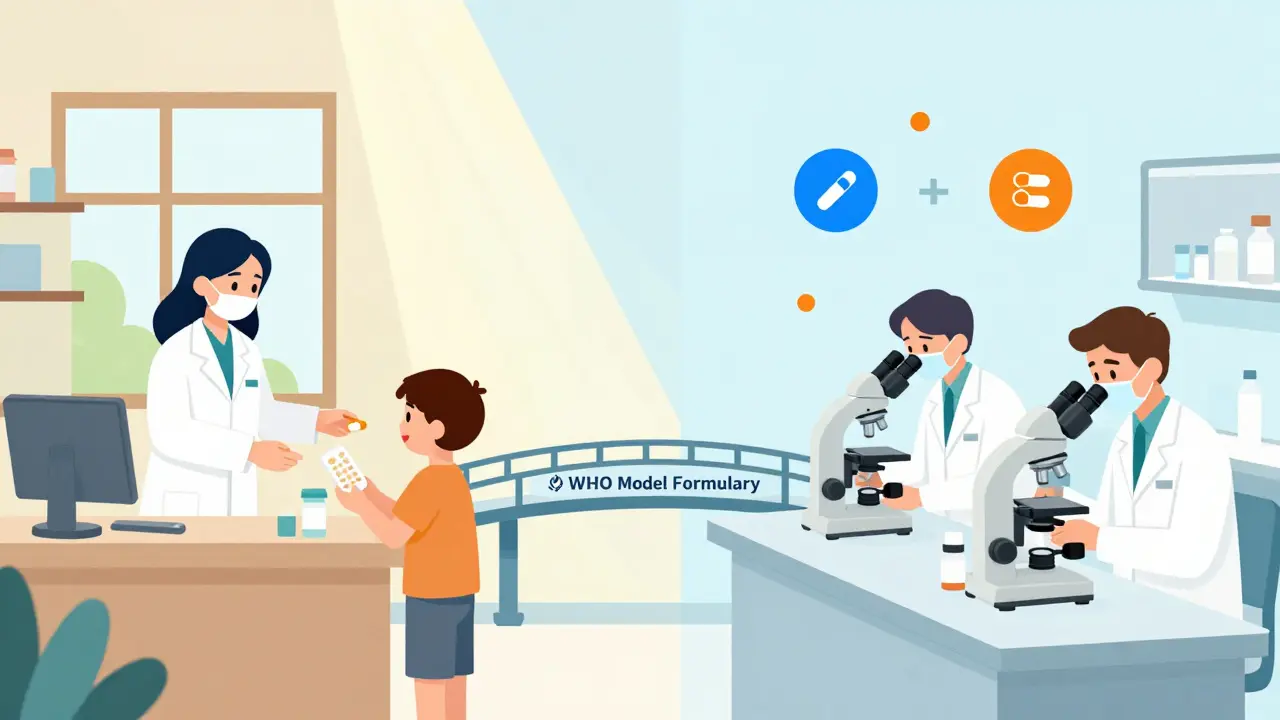
How the Selection Process Works
The WHO doesn’t just guess what medicines to include. Every application is scored on four criteria:
- Public health relevance (30%) - How many people does this disease affect?
- Efficacy and safety (30%) - Is there strong clinical evidence from randomized trials?
- Cost-effectiveness (25%) - Does it give good health outcomes for the price? (Must cost less than three times the country’s GDP per capita per quality-adjusted life year gained.)
- Programmatic feasibility (15%) - Can it be stored, distributed, and used in real-world clinics?
A medicine needs at least a 7 out of 10 in each category and an overall score of 7.5 to make the list. In 2023, 217 new applications were reviewed. Only a fraction made it. The process is transparent, and committee members must disclose any financial ties to drug companies - a rule tightened after criticism in past years.
What’s New in the 2023 List
The 2023 update brought major changes. For the first time, there are formal rules for biosimilars - generic versions of complex biologic drugs like cancer treatments. Seven monoclonal antibodies were added, with stricter bioequivalence requirements: 85-115% instead of the usual 80-125%.
More medicines now come in child-friendly forms - syrups, dispersible tablets, or smaller doses. In 2019, only 29% of listed medicines had pediatric options. By 2023, that jumped to 42%. That’s huge for countries where kids make up half the population.
There’s also a new WHO Essential Medicines App, downloaded over 127,000 times in 158 countries. It lets pharmacists and doctors check the list on their phones, even without internet. It’s simple, fast, and works offline - perfect for rural clinics.
Challenges and Criticisms
Even with its successes, the WHO Model Formulary isn’t perfect.
One big issue: new medicines are slow to be added. Between 2018 and 2022, 12% of novel drugs approved globally made it onto the 2023 list. In the U.S., high-income country formularies include 35-45% of new drugs in the same period. Critics say the WHO is too cautious, delaying access to breakthrough treatments.
Another problem: implementation gaps. While 92% of African countries use the list, only 31% of low-income countries spend enough on medicines - at least 15% of their health budget - to make it work. Many clinics run out of stock because they can’t afford to buy, not because the list is wrong.
Some experts worry about industry influence. In 2023, 45% of the clinical evidence used to support inclusions came from industry-funded trials - up from 28% in 2015. The WHO says it now requires full disclosure of conflicts of interest, and all committee members complied in 2023. But skepticism remains.
And then there’s the supply chain. Over 78% of generic medicine production happens in just three countries: India, China, and the U.S. When the pandemic hit, 62% of low-income countries faced shortages of essential antibiotics because global supply chains broke down. Relying on so few sources is risky.
The Bigger Picture: Access, Equity, and Survival
The WHO Model Formulary isn’t about fancy drugs or profit margins. It’s about survival. It’s the reason a mother in rural Malawi can get antibiotics for her child’s pneumonia. It’s why a man in Bangladesh can afford his insulin. It’s why a cancer patient in Uganda gets a generic version of a drug that would otherwise cost 10 times more.
Global health agencies like the Global Fund and UNICEF base over 85% of their medicine purchases on this list. That means billions of dollars in funding flow to manufacturers who meet WHO standards - and that pushes the entire generic market toward better quality.
It’s not a magic solution. But it’s the most powerful tool we have to make sure life-saving medicines aren’t a luxury reserved for the rich. The goal by 2030? Get essential medicine availability in primary care from 65% to 80%. That’s not just a number. It’s millions more people who won’t die because they couldn’t afford a pill.
What Comes Next
The WHO is now linking the Model List more closely to Universal Health Coverage goals. New guidelines released in early 2024 focus on fighting antimicrobial resistance by requiring hospitals to use tiered antibiotic lists - meaning only the most effective, lowest-cost generics are used first.
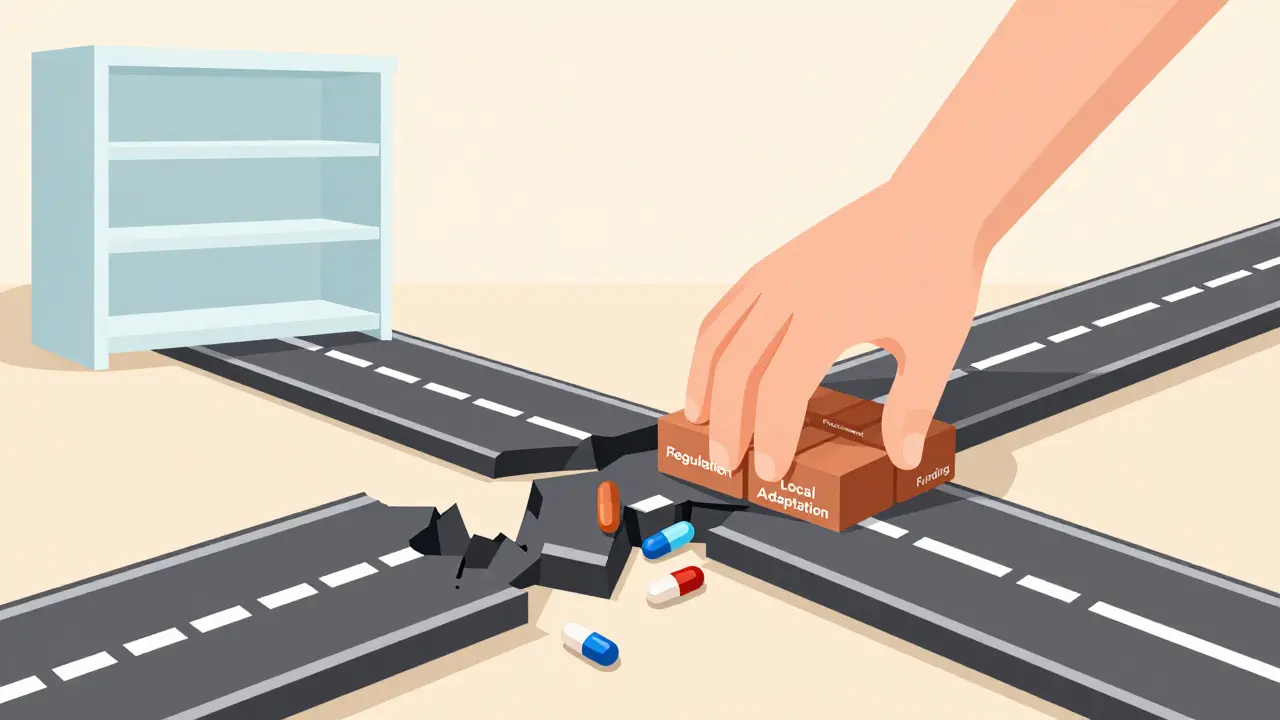
They’re also working on better tools for countries to adapt the list locally - like dosage guides for children in different weight ranges, or strategies to fix supply chain gaps. The days of just handing out a list and saying “use this” are over. Now, they’re asking: How do we make sure it actually reaches the people who need it?
The answer isn’t more lists. It’s better systems - smarter procurement, stronger regulation, and real investment in health infrastructure. The WHO Model Formulary gives us the map. The rest is up to the countries that use it.
Is the WHO Model Formulary the same as a national formulary?
No. The WHO Model Formulary is a global reference list of essential medicines based on public health need and cost-effectiveness. National formularies are country-specific and include implementation rules - like which drugs are covered by insurance, what tier they’re in, or how much patients pay. Countries use the WHO list as a starting point but adapt it to their own health systems, budgets, and regulations.
Are all generics on the WHO list safe?
Only those that meet WHO Prequalification or approval by a stringent regulatory authority like the FDA or EMA are included. These standards require rigorous testing for quality, strength, and bioequivalence. However, substandard or falsified medicines still enter markets illegally, especially in low-resource settings. The WHO list ensures the *recommended* generics are safe - but doesn’t control the entire supply chain.
Why doesn’t the WHO include more new drugs?
The WHO prioritizes medicines that are proven, affordable, and address widespread diseases. New drugs often lack long-term safety data, are expensive, or target rare conditions. The selection process requires strong evidence from large clinical trials and cost-effectiveness data - things that take years to gather. While this can delay access to breakthroughs, it ensures the list stays focused on what works for the most people.
Can low-income countries afford to follow the WHO list?
Yes - that’s the whole point. The list is designed to help them spend less while saving more lives. Countries using it have seen 23-37% reductions in pharmaceutical spending. But affordability depends on funding. Only 31% of low-income countries spend enough on medicines to fully implement the list. Without dedicated budgets and strong supply chains, even the best list won’t reach patients.
How does the WHO Model Formulary affect drug prices?
It drives prices down by creating demand for quality generics and giving governments the leverage to negotiate bulk purchases. For example, the price of generic HIV drugs fell 89% since 2008. When countries align procurement with the WHO list, manufacturers compete to meet quality standards at the lowest cost. This has turned essential medicines from luxury items into affordable staples in many parts of the world.


Post A Comment