
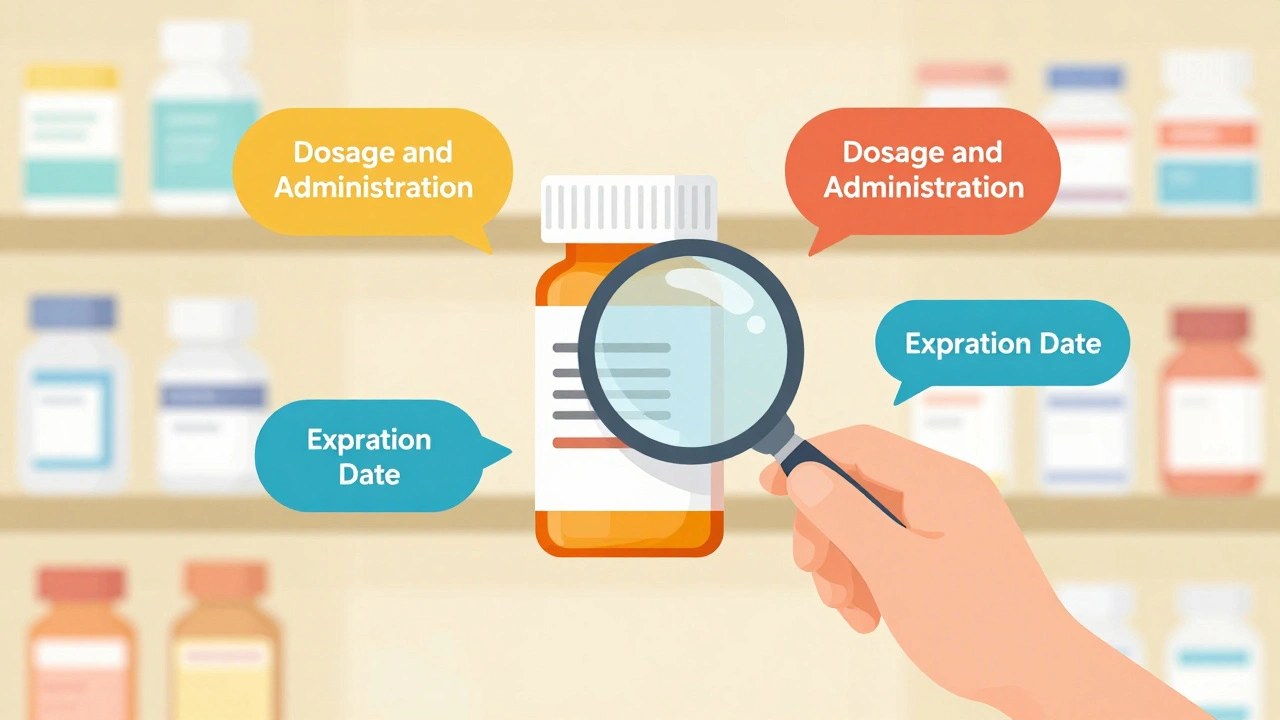
Every time you pick up a prescription or grab a bottle of painkillers from the shelf, you’re holding a critical safety document. But most people don’t know how to read it. If you’ve ever stared at a tiny print label wondering what "q.i.d." means, or if you’ve taken medicine at the wrong time because the instructions were unclear-you’re not alone. In fact, nearly 70% of patients in the U.S. say they struggle to understand their medication labels. And that confusion isn’t just annoying-it’s dangerous. Medication errors linked to misread labels contribute to over 7,000 deaths every year in the United States alone.
What’s on a Prescription Drug Label?
Prescription labels in the U.S. follow a strict format set by the FDA, called the United States Prescribing Information (USPI). It’s designed for doctors and pharmacists, not patients. But if you want to understand what you’re taking, you need to know its structure. The label breaks down into three main parts: Highlights, Table of Contents, and Full Prescribing Information. The Highlights section is the shortest part. It gives you the most urgent info: what the drug treats, how much to take, and the biggest risks. But here’s the catch-it’s not meant to be used alone. It’s a quick reference for clinicians, not a replacement for full instructions. The Full Prescribing Information is where the real details live. It’s divided into 17 standardized sections. The most important ones for patients to know:- Section 1: Indications and Usage - This tells you exactly what the drug is approved to treat. If your doctor prescribed it for something not listed here, that’s called "off-label" use. It’s legal, but you should ask why.
- Section 2: Dosage and Administration - This is where you find the exact dose, how often to take it, and whether to take it with food. Look for phrases like "take once daily" or "take every 6 hours as needed."
- Section 4: Contraindications - This section lists when you should NOT take the drug. For example, if you have severe liver disease or are pregnant, this will say so.
- Section 5: Warnings and Precautions - This covers serious side effects, drug interactions, and special risks like falls in older adults or suicidal thoughts in young people.
- Section 6: Adverse Reactions - Lists side effects that actually happened in clinical trials. Don’t panic if you see a long list-most are rare. Focus on the ones marked as "common" or "serious."
- Section 16: How Supplied/Storage and Handling - Tells you how the drug looks (color, shape), how many pills are in the bottle, and how to store it. Some meds need refrigeration. Others must be kept away from light or moisture.
- Section 17: Patient Counseling Information - This is the closest thing to patient-friendly text. It’s what pharmacists are supposed to explain to you when you pick up the prescription.
What’s on an Over-the-Counter (OTC) Label?
Unlike prescription labels, OTC drug labels are designed for you-the consumer. They follow a simple, standardized format called the Drug Facts label. You’ll find this on everything from Tylenol to allergy pills to cough syrup. Here’s what each part means:- Active Ingredient - This is the medicine itself. For example, "acetaminophen" is the active ingredient in Tylenol. Always check this if you’re taking more than one medicine-you don’t want to accidentally double up.
- Purpose - What the active ingredient does. "Pain reliever," "antihistamine," or "decongestant." Helps you understand what the drug is actually doing in your body.
- Uses - Symptoms it treats. "Relieves headaches," "reduces fever," "helps with runny nose." If your symptom isn’t listed, the medicine probably won’t help.
- Warnings - When NOT to use it. This includes allergies, other conditions (like high blood pressure), and drug interactions. Also tells you when to stop and call a doctor.
- Directions - How much to take, how often, and for how long. This is the most important part. Never guess. If it says "take every 4 to 6 hours," don’t take it every 3.
- Inactive Ingredients - These don’t treat your symptoms, but they’re in the pill. Important if you have allergies to dyes, gluten, or lactose.
- Other Information - Storage tips, like "keep at room temperature" or "protect from moisture."
What’s on the Physical Bottle or Package?
Even if you understand the USPI or Drug Facts, you still need to check the physical label on your bottle. Here’s what to look for every single time:- Your full name - Double-check spelling. A wrong name means you might get someone else’s medicine.
- Drug name - Both brand name (e.g., Lipitor) and generic name (e.g., atorvastatin). Know both.
- Dosage - How strong each pill or dose is. Example: "10 mg" or "500 mg." Don’t confuse this with the number of pills.
- Directions - How many to take and how often. "Take one tablet by mouth twice daily."
- Dispensing date - When the pharmacy filled it. Medications expire.
- Expiration date - Never use medicine past this date. It can lose strength or become unsafe.
- Pharmacy name and phone - Always keep this handy. If something doesn’t make sense, call them.
- NDC number - The National Drug Code. A unique 10-digit number that identifies the exact product, manufacturer, and package size. Useful if you need to report a problem.
Why Do Prescription Labels Feel So Confusing?
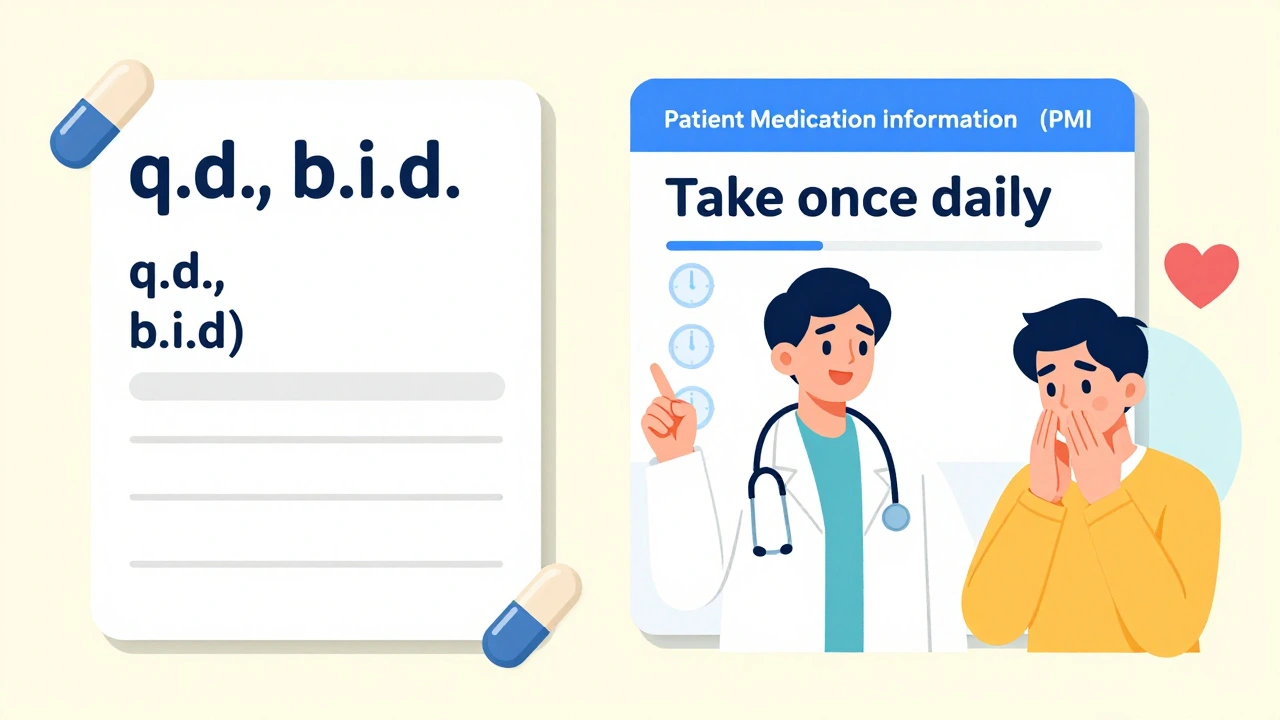
The system was built for doctors, not patients. That’s why you’ll see abbreviations like "q.d." (once daily), "b.i.d." (twice daily), or "p.o." (by mouth). These are outdated and dangerous. The Institute for Safe Medication Practices says confusing abbreviations cause about 15% of all medication errors. Even worse, many labels use tiny fonts. A 2022 report from the Medicare Rights Center found that 54% of seniors over 65 struggle to read the print on their pill bottles. That’s not a design flaw-it’s a public health risk. The FDA admits this. Their own guidelines say prescription labels aren’t meant to be patient-centered. But patients are the ones taking the pills. That disconnect is why so many people make mistakes.How to Avoid Common Mistakes
Here’s what actually works:- Always check the generic name - If your doctor prescribes "Lisinopril," make sure the bottle doesn’t say "Zestril" (the brand name). They’re the same thing. But if you’re told to take two different drugs and both are Lisinopril, you’ve got a problem.
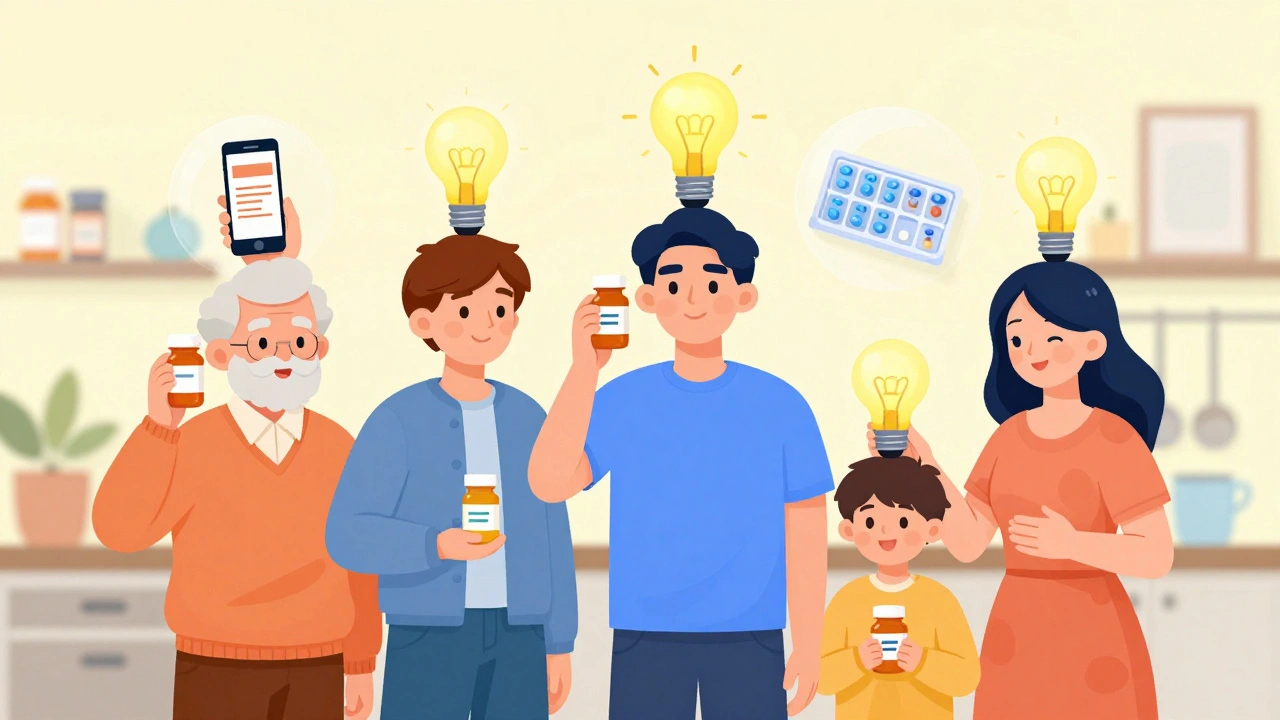
- Use a pill organizer - If you take multiple meds, a weekly organizer with time slots helps prevent missed or double doses.
- Ask your pharmacist to explain it - Pharmacists are trained to translate labels into plain language. Don’t be shy. Say: "Can you help me understand what this is for and how to take it?"
- Take a photo of the label - Save it on your phone. If you forget the instructions, you’ve got it right there.
- Watch for look-alike names - Hydroxyzine (for allergies) vs. Hydralazine (for high blood pressure). These sound similar but do completely different things. The FDA recommends "tall man lettering" (like predniSONE vs. predniSOLONE) to avoid mix-ups.
- Don’t rely on memory - Even if you’ve taken the same pill for years, check the label every time. Manufacturers change packaging. Doses change. You might get a refill from a different pharmacy.
What’s Changing in Drug Labeling?
Good news: change is coming. The FDA is working on something called Patient Medication Information (PMI). Think of it as a one-page, easy-to-read summary for every prescription drug. It’ll include:- Why you’re taking it
- How to take it clearly
- What side effects to watch for
- When to call your doctor
What You Can Do Today
You don’t have to wait for the FDA to fix the system. Here’s your action plan:- Every time you get a new prescription, ask your pharmacist: "Can you explain this label to me?"
- Write down the purpose of the drug: "This is for my blood pressure," not just "This is my pill."
- Take a picture of the label and save it in your phone under the drug’s name.
- If you’re over 65 or have trouble reading small print, ask for a large-print label. Pharmacies are required to provide it.
- Never assume two pills are the same just because they look alike. Check the name and dosage.
Frequently Asked Questions
What does "q.d." mean on a prescription label?
"q.d." stands for "quaque die," Latin for "once daily." But it’s outdated and dangerous. Many pharmacies now write "once daily" instead. If you see an abbreviation you don’t understand, always ask your pharmacist. Never guess.
Can I take my medicine with food?
It depends. Some medicines work better with food-like antibiotics that upset your stomach. Others must be taken on an empty stomach-like thyroid meds. Always check the label or ask your pharmacist. If it’s not clear, assume it’s safe with food unless told otherwise.
Why does my pill look different this time?
Generic drugs can look different each time you refill them. That’s because different manufacturers make them. The active ingredient is the same, but the shape, color, or markings change. Always check the name and dosage on the label. If the name or dose changed, call your pharmacy immediately.
What should I do if I think my label is wrong?
Don’t take the medicine. Call your pharmacy right away. If they say it’s correct but you still feel unsure, call your doctor. It’s better to be safe than sorry. Mistakes happen-even at professional pharmacies.
Are there apps that help me understand my labels?
Yes. Apps like MyTherapy, Medisafe, and Drugs.com let you scan your pill’s barcode or enter the name to get plain-language info about dosage, side effects, and interactions. Some even send reminders. But never rely on apps alone. Always cross-check with the physical label and your pharmacist.


Post A Comment