
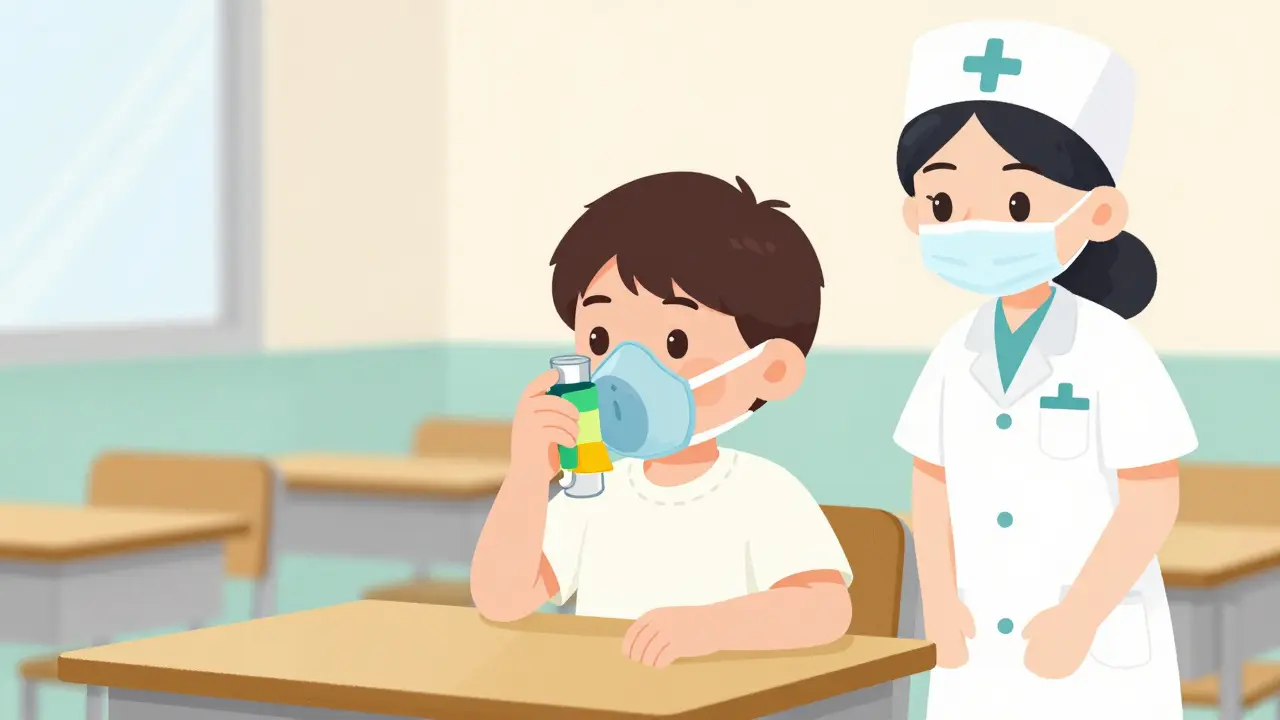
When a child struggles to breathe, every second counts. For millions of kids with asthma, the right tool at the right time can mean the difference between a normal day and an emergency room visit. Asthma spacers are one of those tools - simple, quiet, and surprisingly powerful. Yet many parents, teachers, and even doctors don’t use them the way they should. If your child has asthma, understanding how spacers work, why schools need to be part of the plan, and how a clear care plan saves lives isn’t optional. It’s essential.
Why Spacers Are Non-Negotiable for Kids
Asthma spacers aren’t fancy gadgets. They’re plain plastic tubes, usually 10 to 20 centimeters long, that snap onto a metered-dose inhaler (MDI). But their impact is huge. Without a spacer, most of the medicine from an inhaler hits the back of the throat - not the lungs. Kids, especially under age five, can’t coordinate pressing the inhaler and breathing in at the same time. That’s where the spacer helps. It holds the medicine like a little cloud, letting the child breathe in slowly, naturally, and fully.Studies show that when used correctly, spacers deliver up to 73% more medication to the lungs than inhalers alone. One 2022 study found that children using spacers with a mask had an 88.7% success rate in proper technique. Without the mask? That number drops to 54.2%. And here’s the kicker: kids who use spacers properly are far less likely to end up in the hospital. A JAMA Pediatrics study found that emergency admissions for asthma dropped from 20% with nebulizers to just 5% with spacers. That’s not a small improvement - it’s life-changing.
But spacers aren’t magic. They need to be cleaned right. Washing them with dish soap, then air-drying without rinsing, reduces static. Static traps medicine. Rinsing after washing? That leaves water behind, which also messes up the dose. And if the spacer is wet? Don’t use it. Use the inhaler alone. A wet spacer doesn’t work - and that’s a common mistake.
How Spacers Beat Nebulizers (and Save Money)
For years, nebulizers were the go-to for kids with asthma. Big machines, noisy, bulky, and messy. Parents had to sit their child still for 10 to 15 minutes while the machine turned liquid medicine into a mist. It was stressful - for the child, the parent, and the emergency room.Spacers changed that. A 2013 Cochrane review looked at 39 studies involving nearly 2,000 children. The result? MDI with spacer was just as effective as a nebulizer for mild to moderate asthma flare-ups. But here’s what no one talks about enough: spacers cut costs. Shorter ER visits. Fewer hospital stays. Less time off work for parents. One study showed families using spacers saved an average of $200 per asthma-related visit compared to nebulizer use.
And for very young kids? The data is even clearer. For children under five with wheezing, using a spacer with inhaler reduced hospital admission odds by more than half compared to nebulizers. The American Academy of Pediatrics and Global Initiative for Asthma (GINA) now say: for preschoolers, spacers aren’t just an option - they’re the standard.

Why Schools Are the Missing Link
Most asthma attacks in kids happen outside the home - at school, during sports, or on the bus. And yet, many schools still don’t have a solid plan for managing asthma. A 2022 study in the Journal of School Nursing found that schools with full asthma policies - including easy access to spacers and trained staff - cut absenteeism by 37%. That’s not a coincidence. It’s strategy.Here’s the reality: 6.2 million U.S. children have asthma. That’s 8.4% of all kids. In Australia, the numbers are similar. Yet, rural schools report 45% less spacer availability than urban ones. Why? Lack of funding. Lack of training. Lack of awareness.
By law, 42 U.S. states now require schools to keep asthma medication on-site - including spacers. But having the device isn’t enough. Staff need to know how to use it. A 15-minute training session can make a difference. But schools rarely do refreshers. And when they do? Often, it’s the school nurse alone who knows how. Teachers, coaches, and aides? They’re left guessing.
And then there’s the social problem. One 10-year-old told his mom: “I won’t carry my spacer to school. It makes me look weird.” That’s not a joke. Teens especially hate standing out. They don’t want to be the kid with the plastic tube. So they leave it in the locker. Or forget it. Or lie and say they don’t need it. That’s why schools need to normalize asthma care - not hide it.
Building a Real Asthma Care Plan
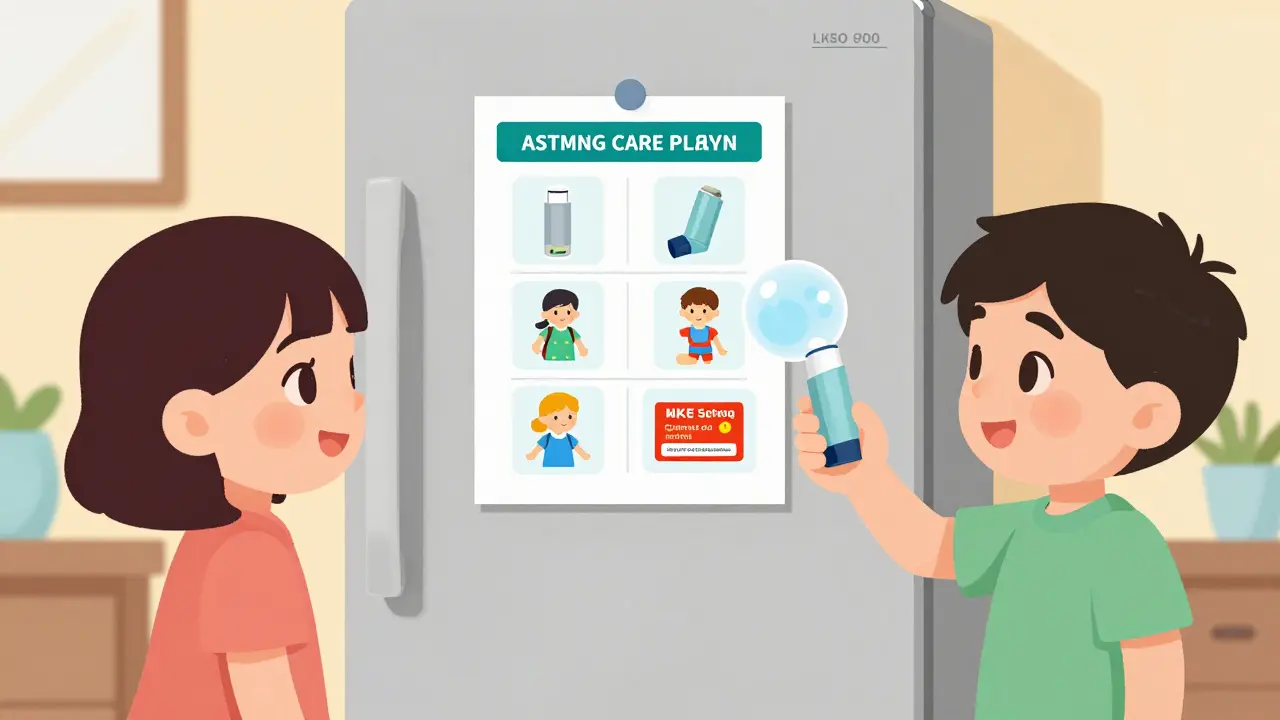
A care plan isn’t a form you fill out and forget. It’s a living document. It should include:- Which medications your child uses daily and as needed
- How to use the spacer correctly - step by step
- When to call the doctor or go to the ER
- Triggers to avoid (allergens, cold air, exercise)
- Who at school has a copy - and who’s trained to help
The National Asthma Education and Prevention Program (NAEPP) says every child with asthma should have one. And schools should keep a copy on file. But here’s what most parents don’t realize: the care plan isn’t just for the nurse. It’s for the teacher, the bus driver, the PE coach. Everyone who spends time with your child.
And don’t assume your child will tell someone if they’re struggling. Many kids hide symptoms. They don’t want to be pulled out of class. They don’t want to be seen as weak. A clear plan means adults can spot the signs before it turns into a crisis.
Fixing the Technique Problem
Here’s the hard truth: even if you have the best spacer in the world, it won’t help if no one knows how to use it. And the older the child, the worse the technique gets.Younger kids - ages 4 to 8 - do surprisingly well. Their mean age for proper use? 8.9 years. But teens? The odds of using it right drop by 80%. Why? Peer pressure. Embarrassment. Overconfidence. They think they’ve got it figured out. They don’t.
One parent on Reddit shared: “My 4-year-old went from 2 ER visits a month to zero after we started using the spacer right.” But that same family had a hard time getting their 15-year-old to use it at all. The teen said, “I don’t need it. I’m fine.” Two weeks later, he had a severe attack.
Technique checks need to happen every 3 to 6 months - not just once. The Royal Children’s Hospital recommends a simple 9-step process:
- Have your child sit upright.
- Attach the inhaler to the spacer.
- Shake the inhaler.
- Press the inhaler once to release the medicine.
- Have your child breathe in and out slowly four times.
- Wait 30 seconds if a second puff is needed.
- Repeat step 4 if another dose is prescribed.
- Keep the spacer level during use.
- Wash the spacer weekly with dish soap - no rinsing.
And if your child uses a mask? Make sure it fits snugly. A loose seal means half the medicine escapes. Masks are best for kids under six. After that, mouthpieces are better - but only if they breathe through their mouth, not their nose.
What’s Changing in 2026
The good news? Things are improving. In January 2024, the American Academy of Pediatrics pushed schools to train teachers and staff in spacer use. The CDC’s 2023-2025 National Asthma Control Program now funds spacer distribution in underserved districts. And researchers are testing smartphone apps that can monitor spacer technique in real time - a $2.5 million NIH study is running right now in school settings.These aren’t just tech gimmicks. They’re solutions to real problems. Imagine a teacher getting a gentle alert on their phone: “Your student’s spacer technique was off today.” Or a parent seeing a weekly report: “Your child used their spacer correctly 9 out of 10 times this week.” That’s the future. And it’s coming fast.
For now, the tools are simple. The rules are clear. The evidence is solid. Spacers work. Schools must be ready. And every child with asthma deserves a plan - not just a pill.
Do all children with asthma need a spacer?
Yes. The American Academy of Pediatrics and Global Initiative for Asthma (GINA) recommend that every child using a metered-dose inhaler (MDI) should use a spacer - no exceptions. Even older kids and teens benefit. Spacers improve lung delivery, reduce side effects like hoarseness or thrush, and cut emergency visits. If your child’s inhaler doesn’t come with one, ask for it. It’s part of standard care.
Can my child use the inhaler without a spacer if they’re older?
Technically, yes - but it’s not recommended. Even teens with perfect technique lose 50-70% of the medicine to their throat when using an inhaler alone. Spacers eliminate the timing problem. They’re not optional for kids. If your child says they don’t need it, check their technique. Often, they’re not using it right - and they don’t realize it. A quick demo with the school nurse can change everything.
What should schools do if a child has an asthma attack?
Schools should have a written asthma action plan for every student with asthma. If a child has symptoms, staff should immediately give their prescribed rescue inhaler with spacer. They should sit the child upright, help them use the spacer correctly (one puff, four breaths), and wait 5 minutes. If symptoms don’t improve, call emergency services. Never wait to see if it gets worse. Every minute counts.
How often should spacers be cleaned?
Wash the spacer once a week with warm water and a drop of dish soap. Do not rinse it after washing - just shake off excess water and let it air-dry. Rinsing leaves behind water, which can cause static and trap medicine. If the spacer gets wet and your child needs medicine right away, use the inhaler without the spacer. A wet spacer doesn’t work properly.
Why do some kids refuse to use their spacer at school?
Mostly because they feel different. Teens, especially, don’t want to stand out. A bulky spacer can look like a medical device - and they don’t want to be labeled. Schools can help by normalizing asthma care. Keep spacers in a common location, like the nurse’s office, and make sure staff respond calmly and matter-of-factly. When kids see others using them without drama, they’re more likely to use them too.
Are there different types of spacers for different ages?
Yes. For kids under six, a spacer with a facial mask is best - it fits over the nose and mouth, so they don’t need to coordinate breathing. For older kids and teens, a mouthpiece is better because it encourages mouth breathing, which delivers more medicine to the lungs. Some spacers come with interchangeable parts. Always choose the right size for your child’s age and comfort.


Post A Comment