
Side Effect Timeline Calculator
Enter your medication details to see when side effects might typically appear based on the latest medical research.
Side Effect Timeline
MildWhat to Do Next
Critical Warning: This could indicate a serious reaction. Seek medical attention immediately.
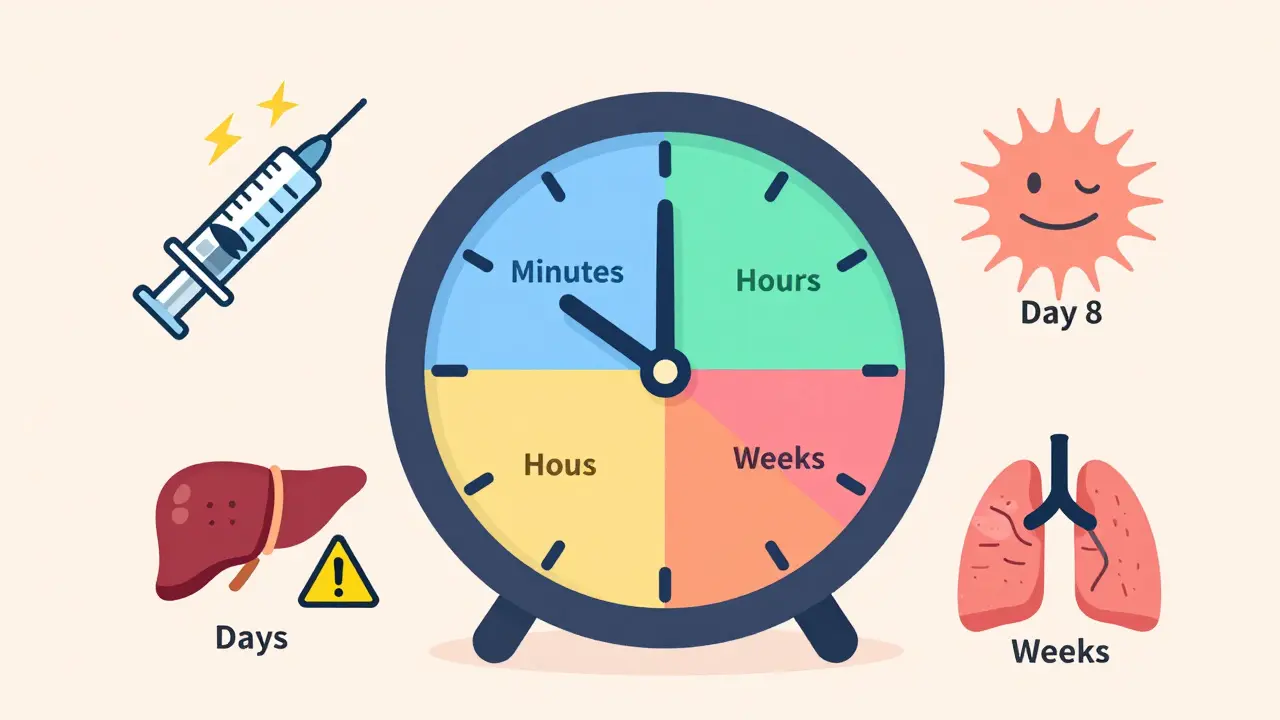
When you start a new medication, you might wonder: when will the side effects show up? Will it be right away, or weeks later? The truth is, there’s no single answer. Side effects don’t follow a clock-they follow patterns shaped by the drug, your body, and even your genes. Knowing when to expect trouble can save you from panic, hospital visits, or worse.
Immediate Reactions: Minutes to One Hour
Some side effects hit fast. If you feel your throat closing, your skin breaking out in hives, or your chest tightening within minutes of swallowing a pill, this isn’t normal discomfort-it’s an emergency. These are immediate hypersensitivity reactions, mostly Type I allergies. Anaphylaxis, the most dangerous of these, occurs in 98.7% of cases within one hour, and in two out of three cases, it starts within 15 minutes. Penicillin is a classic example. Studies show 73% of allergic reactions to penicillin happen within 15 minutes of the first dose. If you’ve ever had a bad reaction to antibiotics before, this is why doctors make you wait in the clinic after your first shot. Other immediate reactions include sudden wheezing, rapid heartbeat, or a drop in blood pressure. These aren’t "bad luck"-they’re your immune system going into overdrive. If you’re on a new medication, especially an injection or IV, stay put for at least 30 minutes. Don’t assume you’re fine just because you feel okay after five minutes. The clock starts ticking the moment the drug enters your body.Early Delayed Reactions: 1 to 72 Hours
If you don’t react right away, don’t relax too soon. Many side effects show up between one and three days after taking the drug. This window covers a lot of common but often misunderstood reactions. Think of a rash that pops up the day after you start an antibiotic, or nausea that hits you on day two. These aren’t "just a stomach bug"-they’re your body’s way of signaling a drug reaction. Vinmec Medical Center’s analysis of over 12,000 reported cases found that 89% of mild allergic symptoms-like itching, mild swelling, or low-grade fever-appear within this 72-hour window. Drug-induced liver injury often shows up here too, with rising liver enzymes detected in blood tests by day three. Even some antidepressants, like SSRIs, can trigger early agitation, insomnia, or GI upset in this timeframe. If you notice something new after day one, write it down. Timing matters. A symptom that appears on day two is very different from one that shows up on day ten.Delayed Reactions: 4 Days to 8 Weeks
This is where things get tricky. Most people assume side effects come quickly. But the most serious ones often take weeks. A maculopapular rash-the most common skin reaction to antibiotics like amoxicillin-typically shows up between days 4 and 14, with a median of day 8. It looks like flat red spots or small bumps, often starting on the chest or back. It’s not always itchy, so you might ignore it. But if you keep taking the drug, it can turn into something worse. Even more dangerous are reactions like DRESS (Drug Reaction with Eosinophilia and Systemic Symptoms). This rare but life-threatening condition can take 2 to 8 weeks to develop. The median onset? Day 28. It starts with a fever and rash, then can lead to liver failure, kidney damage, or swollen lymph nodes. It’s most common with anticonvulsants like carbamazepine or phenytoin. If you’ve been on these drugs for three weeks and suddenly feel exhausted, have a fever, or notice your lymph nodes swelling, don’t wait. Get checked immediately. Drug-induced lupus is another delayed player. It can take months, but symptoms like joint pain, fatigue, and sun sensitivity often begin between 6 and 12 weeks after starting medications like hydralazine or procainamide. These aren’t "normal aging" symptoms. They’re your immune system attacking your own tissues because of the drug.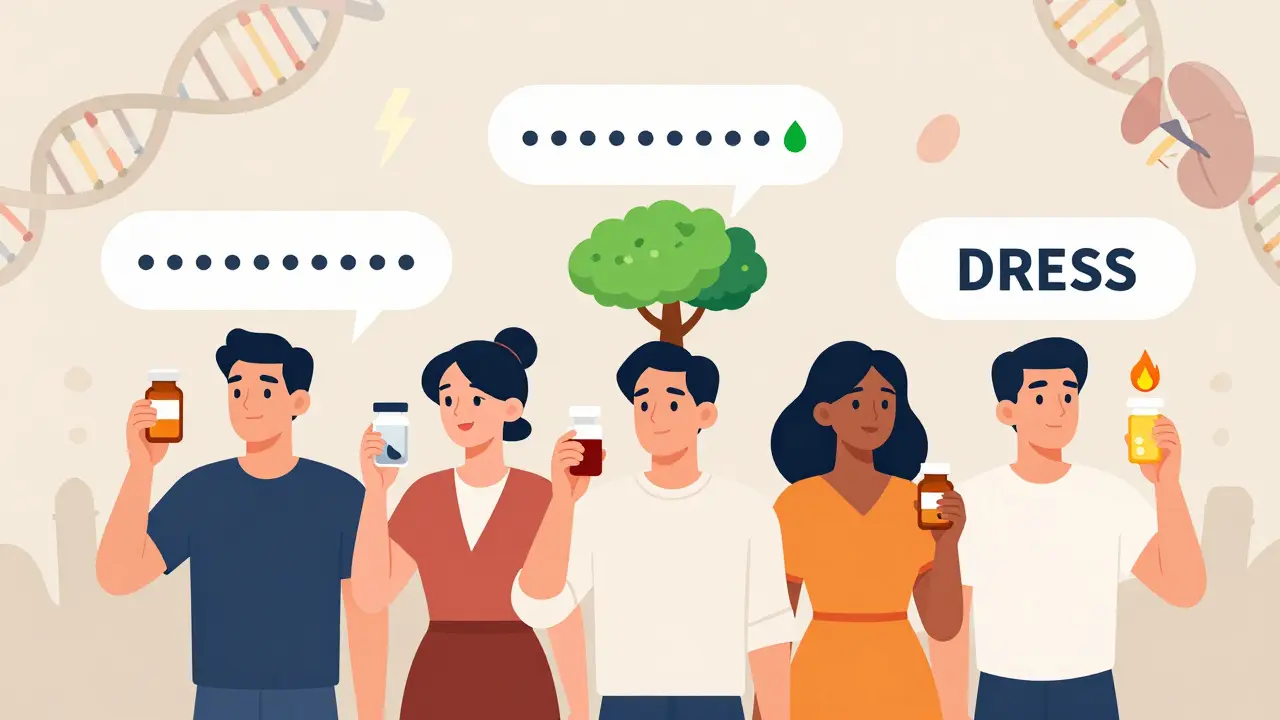
Chronic Reactions: Beyond 8 Weeks
Some side effects don’t just show up late-they build up slowly, like rust on metal. Statins, for example, can cause muscle pain or weakness as early as day 7, but the real risk comes with long-term use. Interstitial lung disease from amiodarone-a heart medication-often appears after 6 to 12 months. You might just feel a little winded during walks. You think you’re getting out of shape. But it’s the drug slowly scarring your lungs. Thyroid dysfunction from lithium or amiodarone can take months to show. Blood tests might reveal changes before you feel anything. That’s why regular monitoring is non-negotiable if you’re on long-term meds. Your doctor isn’t being paranoid-they’re following the timeline. The same goes for certain blood pressure drugs that can cause gum overgrowth or skin discoloration after a year or more.What Makes the Timeline Different for You?
Not everyone reacts the same way. Your timeline isn’t just about the drug-it’s about you. Age matters. People over 65 tend to experience side effects 2.3 days later than younger adults because their bodies process drugs more slowly. Kidney or liver problems can delay clearance, pushing side effects out by 30-50%. If you’re on multiple medications, interactions can change how fast or slow a drug hits your system. Genetics play a huge role. If you carry the HLA-B*57:01 gene, taking abacavir (an HIV drug) will likely trigger a severe reaction within 48 hours-no exceptions. That’s why genetic testing is now standard before prescribing it. Other genes affect how quickly your liver breaks down drugs like clopidogrel or SSRIs. A variant in CYP2C19 can make side effects appear 2.7 days earlier than average. Even your diet and other health conditions matter. People with autoimmune diseases report side effects 37% faster than others. Switching from a brand-name drug to a generic? 23% of patients notice a difference in when side effects start-likely due to different fillers or how quickly the pill dissolves.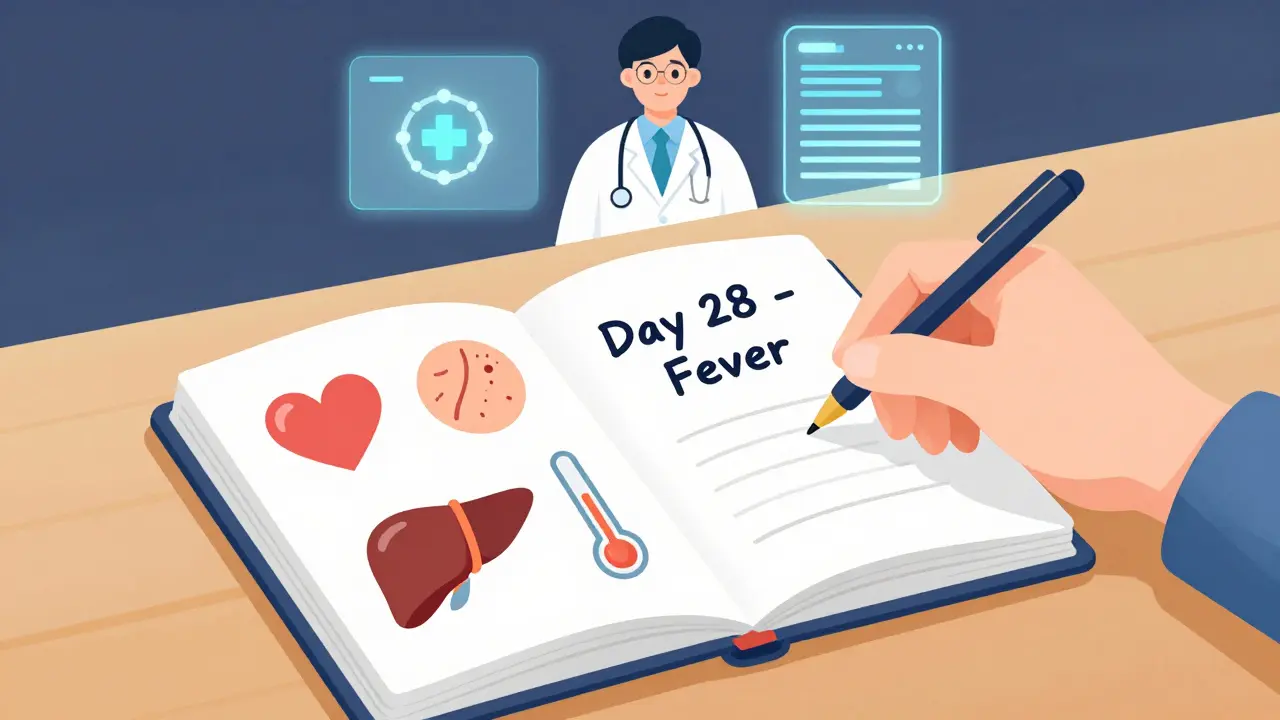
What Should You Do?
Knowing when side effects usually appear isn’t just academic-it’s practical. Here’s what to do:- First hour: Stay near a phone or someone who can help if you’re getting a new IV or injection.
- First week: Check your body daily. Note any new rashes, nausea, dizziness, or mood changes. Write down the time and what you were doing.
- Days 4-14: Be extra alert if you’re on antibiotics, anticonvulsants, or antidepressants. This is the most common window for rashes and organ stress.
- Weeks 3-8: If you’re on long-term meds like lithium, carbamazepine, or statins, watch for fever, swelling, fatigue, or unexplained pain. Don’t dismiss it as "just stress."
- After 8 weeks: Keep up with blood tests and check-ins. Chronic reactions don’t scream-they whisper.
Use a simple journal. Write the date, time, symptom, and what you took. A 2021 study found that patients who tracked symptoms this way were 63% more likely to correctly identify whether a symptom was drug-related. That’s huge. Many people blame their meds for something unrelated-like a cold or stress-and miss the real problem. Others ignore a real reaction because it "doesn’t seem serious." Tracking gives you clarity.
When to Call Your Doctor
Not every side effect needs an ER visit. But some do.- Call 911 or go to the ER: Trouble breathing, swelling of the face or tongue, chest pain, sudden dizziness, or loss of consciousness. These are signs of anaphylaxis or severe reaction.
- Call your doctor within 24 hours: A rash that spreads, unexplained fever, yellowing skin, dark urine, severe muscle pain, or new confusion. These could mean liver, kidney, or muscle damage.
- Call during regular hours: Mild nausea, headache, or fatigue that lasts more than 5 days. Many of these fade as your body adjusts. But if they don’t, your doctor might tweak your dose or switch you.
For reactions like DRESS or AGEP (a rare pustular rash), treatment needs to start within 48 hours. Delaying corticosteroids can raise the death risk from 10% to over 20%. Timing isn’t just about comfort-it’s about survival.
The Future: Predicting Your Timeline
The future of side effect management isn’t guesswork-it’s prediction. Mayo Clinic’s Personalized Medicine Program now uses 12 factors-genetics, age, kidney function, meds you’re on-to forecast your personal side effect timeline with 84% accuracy. AI tools like IBM Watson can scan millions of past cases to predict how you’ll react, based on your profile. Some apps now track medication timing and symptoms together. Patients using them report 32% fewer emergency visits for drug reactions. That’s not magic-it’s data. When you know what’s normal for you, you catch problems early.Medications are powerful. They save lives. But they also carry invisible clocks. The sooner you learn your body’s rhythm, the safer you’ll be. Don’t wait for a crisis to learn when your side effects appear. Start tracking today.
How soon after taking a pill can side effects start?
Side effects can start as quickly as minutes after taking a pill, especially with injections or IV drugs. For oral medications, immediate reactions like allergic responses usually appear within 15 to 60 minutes. Most common side effects like nausea or dizziness show up within 1 to 4 hours. But some reactions, especially rashes or organ-related issues, can take days or even weeks to appear.
Can side effects appear weeks after stopping a medication?
Yes. Some reactions, particularly those involving the immune system, can appear after you’ve stopped the drug. This is called a "delayed hypersensitivity" reaction. For example, DRESS syndrome can start up to 8 weeks after starting a medication, and symptoms may linger or even worsen after you stop taking it. Drug-induced lupus can also flare weeks after discontinuation. Always tell your doctor about any new symptoms-even if you think you’re no longer on the drug.
Are generic drugs more likely to cause side effects than brand-name ones?
The active ingredient in generics is the same, but the fillers, binders, and coating can differ. These inactive ingredients can affect how quickly the drug is absorbed, which may change when side effects start. About 23% of patients report different side effect timing when switching from brand to generic. If you notice a change, document it and talk to your doctor. It’s not always the drug-it’s the delivery.
Why do some people get side effects and others don’t?
Genetics, age, liver and kidney function, other medications, and even diet can change how your body handles drugs. For example, people with a specific gene variant (HLA-B*57:01) have a near 100% chance of a severe reaction to abacavir, while others won’t react at all. Older adults process drugs slower, so side effects may appear later and last longer. Your body’s unique chemistry makes your timeline personal.
Should I stop taking my medication if I get a side effect?
Don’t stop without talking to your doctor. Some side effects, like mild nausea or drowsiness, fade after a few days as your body adjusts. Stopping suddenly can be dangerous-especially with antidepressants, blood pressure meds, or seizure drugs. But if you have trouble breathing, swelling, a spreading rash, or severe pain, stop the drug and seek help immediately. Your doctor can help you decide whether to stop, switch, or adjust the dose.
How long do medication side effects usually last?
It depends on the reaction. Mild side effects like headache or upset stomach often resolve within 3 to 5 days, even if you keep taking the drug. Skin rashes from antibiotics usually clear up in 1 to 2 weeks after stopping. But serious reactions like DRESS or liver damage can take weeks or months to heal, even after stopping the drug. Some effects, like nerve damage from certain chemo drugs, can be permanent. The key is early detection-catching it early means faster recovery.
Can I prevent medication side effects?
You can’t always prevent them, but you can reduce your risk. Tell your doctor about all your medications, supplements, and health conditions. Ask if genetic testing is recommended. Start with the lowest effective dose. Track your symptoms daily. Avoid alcohol or grapefruit if your drug warns against it. And never ignore a new symptom-especially if it’s unusual for you. Prevention isn’t about avoiding meds-it’s about using them wisely.


Post A Comment