
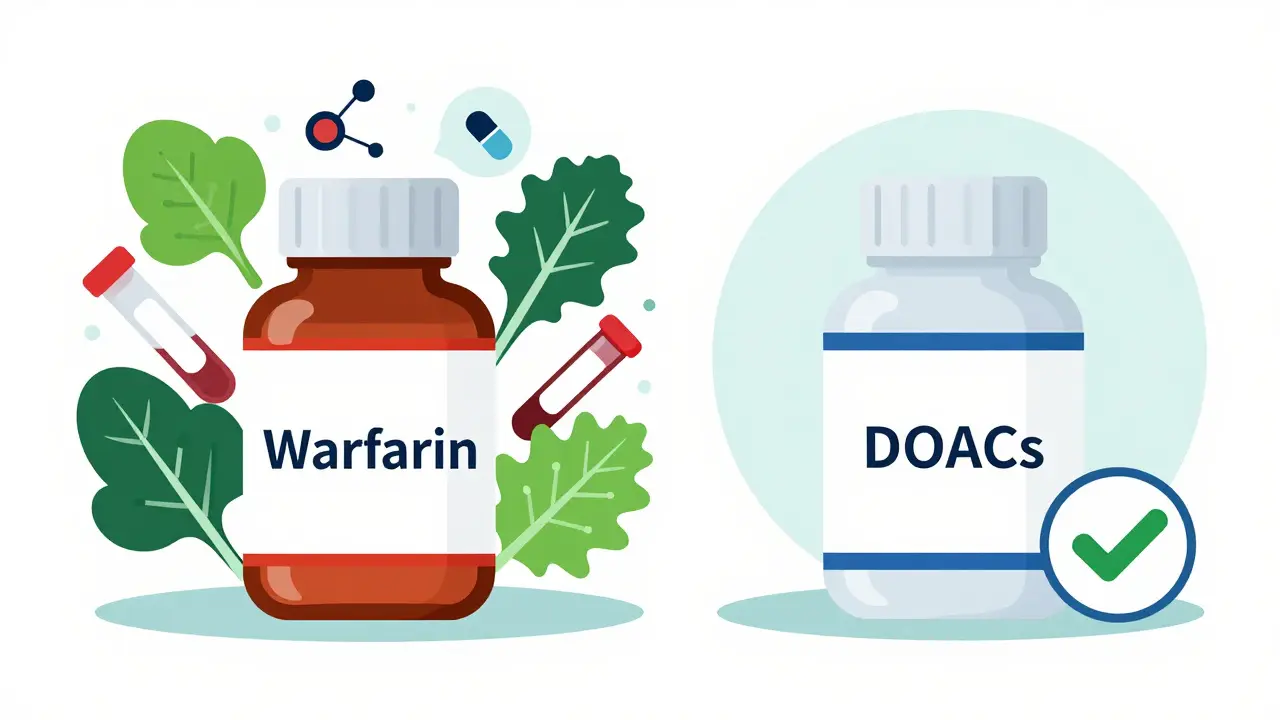
Choosing the right blood thinner isn’t just about preventing clots-it’s about balancing safety, lifestyle, and real-world risks. Two main types dominate modern treatment: warfarin, the old-school staple, and direct oral anticoagulants (DOACs), the newer alternatives. While both work to stop dangerous clots, their safety profiles couldn’t be more different. And for millions of people taking these drugs daily, that difference affects everything-from how often they visit the doctor to whether they can eat spinach at dinner.
How Warfarin Works (and Why It’s Tricky)
Warfarin has been around since the 1950s. It blocks vitamin K, which your body needs to make clotting proteins. Sounds simple, right? But here’s the catch: your body’s response to warfarin varies wildly from person to person. One person might need 5 mg a day; another might need 10 mg just to stay in the safe zone. That’s why regular blood tests-called INR checks-are mandatory. The goal? Keep your INR between 2.0 and 3.0. Go below that, and you’re at risk for clots. Go above, and you could bleed internally without warning.
But it’s not just about dosage. Over 300 medications interact with warfarin. Antibiotics, painkillers, even some herbal supplements can throw your INR off. And food? Vitamin K-rich foods like kale, broccoli, and spinach can lower warfarin’s effect. Eat more one week, less the next, and suddenly your INR spikes or crashes. A 2023 study found that only 65% of warfarin users consistently hit their target INR range. That means more than one in three people are either underprotected or over-anticoagulated.
DOACs: The New Standard (With Caveats)
DOACs-drugs like apixaban (Eliquis), rivaroxaban (Xarelto), dabigatran (Pradaxa), and edoxaban (Savaysa)-changed the game. They don’t need INR checks. They don’t interact with vitamin K. They have fixed doses, so you take the same amount every day. And they’re safer in most cases.
A 2024 study in the American Heart Association Journal showed DOACs cut stroke risk by 30% and major bleeding by 28% compared to warfarin in people with atrial fibrillation. For extended treatment of deep vein thrombosis (DVT), DOACs reduced recurrent clots by 34%. The data is clear: for most people, DOACs are simply better.
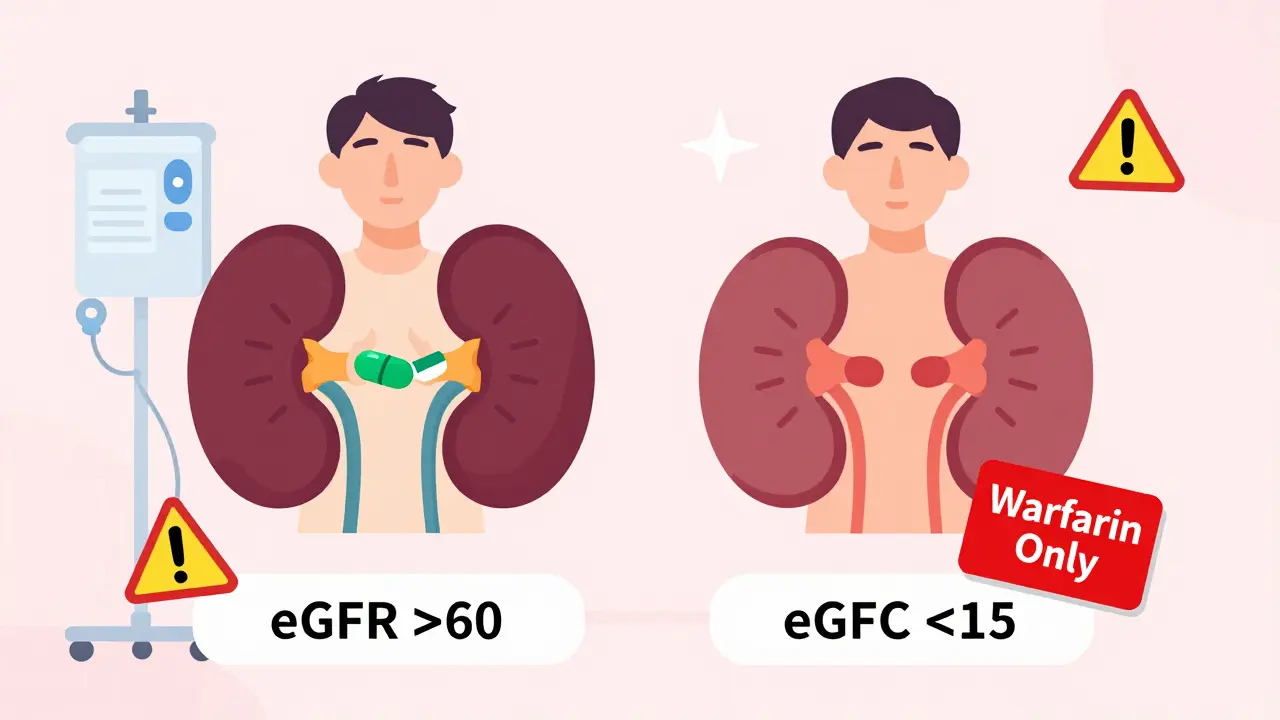
But they aren’t perfect. Each DOAC works differently. Dabigatran blocks thrombin (factor IIa). The others block factor Xa. That means their side effects and how they’re cleared from your body vary. Apixaban and edoxaban are mostly removed by the liver. Dabigatran? 80% leaves through your kidneys. So if you have kidney problems, dabigatran might not be safe. A 2023 study found that DOACs became riskier than warfarin in patients with eGFR below 60 mL/min/1.73 m²-especially for long-term use. And if your kidneys are failing (eGFR below 15), DOACs aren’t even approved.
Which DOAC Is Safest?
Not all DOACs are created equal. A 2022 study in Blood Advances compared bleeding risks head-to-head. Apixaban had the lowest rate of severe bleeding-30% lower than rivaroxaban. It also showed better results in cancer patients, cutting bleeding risk by 42% compared to warfarin. Rivaroxaban? It didn’t show a significant bleeding advantage over warfarin in that same group.
Dabigatran stood out for preventing recurrent clots. In one trial, it had 25% fewer VTE recurrences than rivaroxaban. But it also had higher rates of stomach irritation. And if you’re on dialysis? The data is too thin to recommend any DOAC confidently.
Here’s what the numbers say:
| Drug | Primary Target | Renal Clearance | Major Bleeding Risk vs Warfarin | Stroke Prevention Advantage |
|---|---|---|---|---|
| Apixaban (Eliquis) | Factor Xa | 27% | Lower by 28% | Yes, 30% reduction |
| Rivaroxaban (Xarelto) | Factor Xa | 33% | Similar | Yes, 25% reduction |
| Dabigatran (Pradaxa) | Thrombin (IIa) | 80% | Lower by 22% | Yes, 34% reduction |
| Edoxaban (Savaysa) | Factor Xa | 50% | Lower by 20% | Yes, 20% reduction |
| Warfarin | Vitamin K | N/A | Baseline | Baseline |
When Warfarin Still Wins
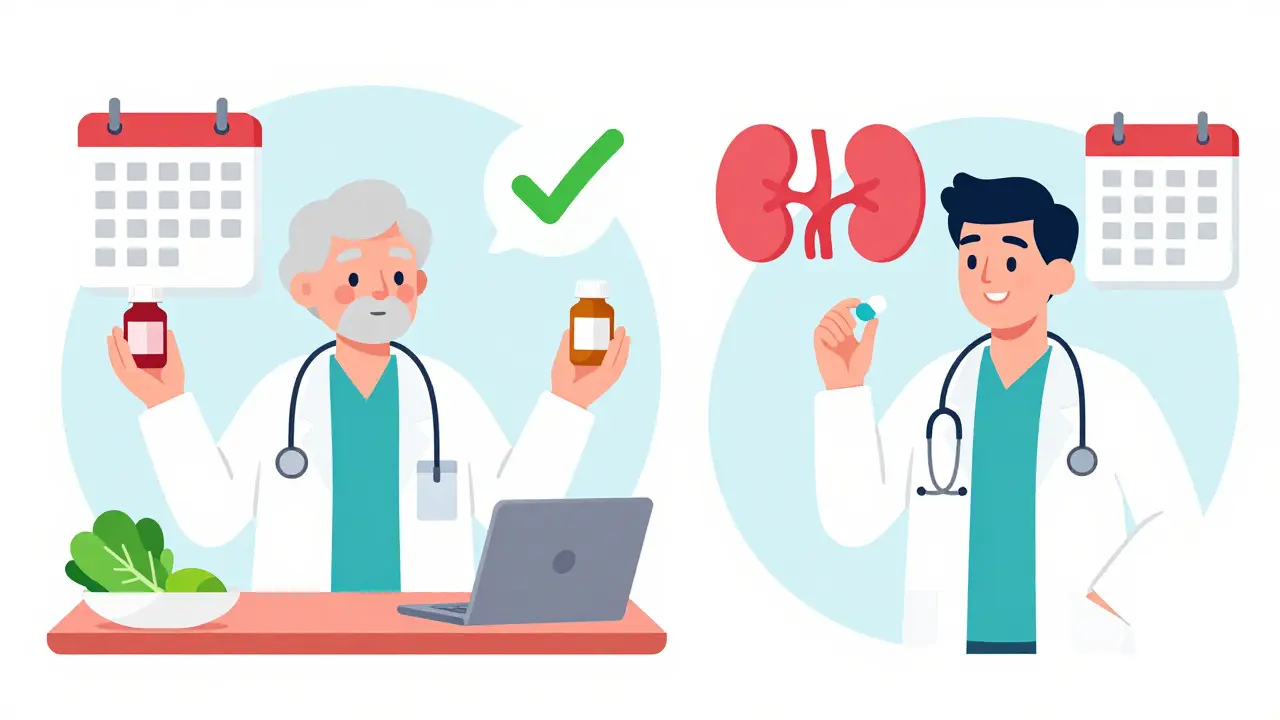
Despite the data, warfarin isn’t obsolete. In fact, it’s still the only option for certain high-risk patients. If you have a mechanical heart valve-like a metal one replacing your aortic or mitral valve-DOACs are dangerous. Studies show they increase the risk of valve clots and stroke in these patients. The same goes for people with severe mitral stenosis. For them, warfarin remains the gold standard.
And if your kidneys are failing? If your eGFR is below 15 mL/min/1.73 m², DOACs aren’t cleared properly. That means they build up in your blood and increase bleeding risk. In dialysis patients, warfarin is still the go-to, even though it’s not perfect. A 2023 study in the Clinical Kidney Journal found DOACs reduced bleeding by 29% in advanced kidney disease-but only if the patient wasn’t on dialysis. For dialysis patients? No clear winner yet.
Cost and Adherence: The Hidden Factors
Let’s talk money. Warfarin costs about $4.27 for a 30-day supply. Apixaban? $587. Rivaroxaban? $523. Even with insurance, copays for DOACs can hit $50-$100 a month. That’s why some patients stop taking them-even when they’re safer.
But here’s the twist: DOAC users are more likely to stick with their medication. A 2023 study in the American Journal of Managed Care found DOAC users had 32% higher adherence than warfarin users. Why? No weekly blood draws. No dietary restrictions. No drug interactions to track. For a 30-year-old with atrial fibrillation, that means one pill a day, no hassle. For a 70-year-old on warfarin? A monthly trip to the lab, constant food checks, and a dozen pill bottles to sort through.
And adherence matters. Missing just one dose of a DOAC can leave you unprotected for 12-24 hours. Warfarin’s effects last longer, so skipping a day doesn’t always mean disaster. But consistently missing warfarin? That’s how strokes happen.
What About Reversing Bleeding?
If you start bleeding badly, how do you stop it? With warfarin, you give vitamin K and fresh frozen plasma. It takes hours to work. With DOACs, you have specific reversal agents-but only for some.
Idarucizumab (Praxbind) reverses dabigatran. Andexanet alfa (Andexxa) reverses apixaban and rivaroxaban. Edoxaban? No approved reversal agent yet. And these drugs cost over $3,000 per dose. Emergency rooms don’t always keep them on hand. So while reversal options exist, they’re not always practical.
What Should You Do?
There’s no one-size-fits-all answer. But here’s how to think about it:
- If you have atrial fibrillation and no mechanical valve → DOACs are almost always better.
- If you have severe kidney disease (eGFR <60) → Talk to your doctor. Apixaban or edoxaban may still be safe. Dabigatran? Probably not.
- If you have a mechanical heart valve → Warfarin is your only option.
- If you’re on a tight budget → Warfarin is cheaper, but only if you can stick to the monitoring schedule.
- If you hate blood tests and hate counting vitamin K → DOACs win.
And if you’re unsure? Ask for a personalized risk assessment. Your doctor can use tools like CHA₂DS₂-VASc (for stroke risk) and HAS-BLED (for bleeding risk) to help decide. Don’t assume the newest drug is always best. Your body, your kidneys, your lifestyle-they all matter.
Are DOACs safer than warfarin for everyone?
No. DOACs are safer for most people with atrial fibrillation or deep vein thrombosis-but not for everyone. If you have a mechanical heart valve, severe kidney failure (eGFR <15), or advanced mitral stenosis, warfarin is still the only proven safe option. DOACs can be dangerous in these cases.
Can I switch from warfarin to a DOAC?
Yes, if you don’t have a mechanical heart valve or severe kidney disease. Your doctor will check your kidney function, current INR, and any other medications you take. They’ll typically stop warfarin, wait for your INR to drop below 2.0, then start the DOAC. Never switch on your own-timing matters to avoid clots or bleeding.
Do I need blood tests if I’m on a DOAC?
Routine blood tests aren’t needed for DOACs. But your doctor will still check your kidney function at least once a year-and more often if you’re older or have other health issues. In emergencies, like major bleeding or before surgery, they may use special tests to measure drug levels.
Which DOAC has the lowest bleeding risk?
Apixaban (Eliquis) has the lowest rate of major bleeding among DOACs, according to multiple large studies. It also has fewer drug interactions and works well in older adults and people with lower body weight. Rivaroxaban has a higher bleeding risk, especially in people over 75.
Why is warfarin still used if DOACs are better?
Warfarin is still used because it’s the only option for certain patients: those with mechanical heart valves, severe kidney failure, or specific clotting disorders. It’s also much cheaper. For people who can reliably get INR tests and manage diet and drug interactions, it remains effective. But for most, DOACs offer better safety and convenience.
Final Thoughts
The choice between warfarin and DOACs isn’t about which drug is stronger-it’s about which one fits your life. DOACs are safer, easier, and more predictable for most people. But if you’re one of the 5-10% with mechanical valves or failing kidneys, warfarin is still essential. And if cost is a barrier, talk to your doctor about patient assistance programs. Many manufacturers offer discounts or free samples for DOACs. Don’t skip your meds because you’re afraid of the price. A clot can kill you. A bleeding episode can be managed. But you have to take the right drug for your body.