
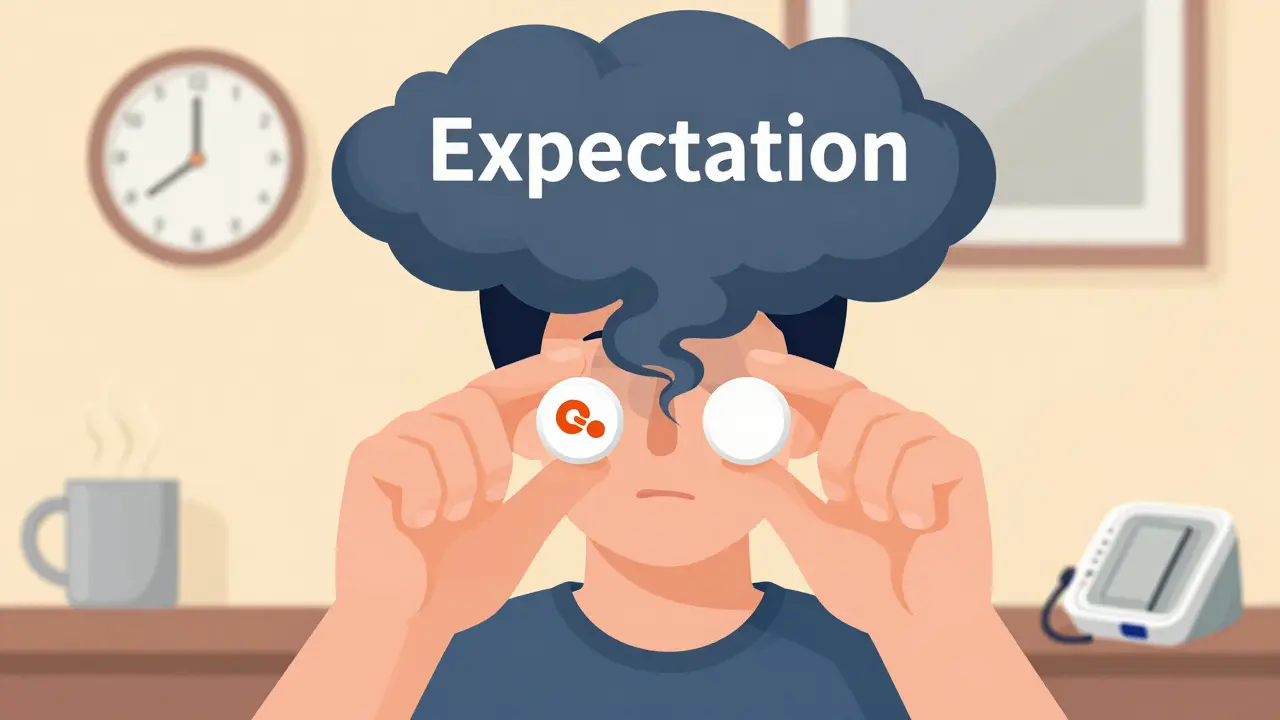
Imagine you switch from your brand-name blood pressure pill to a cheaper generic version. A week later, you start feeling dizzy, tired, and your head pounds. You blame the new pill. But here’s the twist: the generic has the exact same active ingredient, the same dose, the same manufacturer’s quality controls. The problem isn’t the drug - it’s your expectation.
What Exactly Is the Nocebo Effect?
The nocebo effect isn’t science fiction. It’s real, measurable, and happening right now in millions of homes. Coined in the 1960s from the Latin for “I shall harm,” it’s the flip side of the placebo effect. While placebo makes you feel better because you believe a treatment will help, nocebo makes you feel worse because you believe it will hurt. When it comes to generic medications, this isn’t just a psychological hiccup. It’s a physiological response. Studies show that when patients are told a generic drug might not work as well, or might have more side effects, their bodies react - even if the drug is chemically identical to the brand name. Their brain activates pain centers, increases stress hormones, and amplifies normal bodily sensations like fatigue or muscle twitches, turning them into “side effects.”Why Generics Trigger the Nocebo Effect
Generic drugs are cheaper because they don’t carry the cost of marketing, branding, or patent protection. But that’s also where the problem starts. Patients see a different color, a different shape, a different label - and their brain fills in the blanks. “If it looks different, it must be different.” Research from the University of Auckland found that nearly 1 in 5 people taking a sugar pill in clinical trials reported real side effects - nausea, headaches, dizziness - even though there was no active ingredient. When those same people were switched from a brand-name drug to a generic, and told the switch was “due to cost-saving measures,” the rate of reported side effects jumped by 30-40%. It’s not just patients. Doctors and pharmacists can unintentionally fuel the nocebo effect. If a provider says, “This generic might not be as strong,” or “Some patients have had trouble with it,” they’re planting a seed of doubt. A 2019 study in Frontiers in Pharmacology showed that simply using the word “generic” in a negative context increased adverse event reports by 65% compared to neutral phrasing like “This is an FDA-approved equivalent.”The Statin Example: Pain Without the Pill
One of the clearest examples comes from statins - the cholesterol-lowering drugs millions take daily. In double-blind studies, researchers gave one group real statins and another group sugar pills. The rate of muscle pain? Identical. Both groups reported muscle aches at nearly the same rate. Yet in real-world use, people blame statins for muscle pain. Why? Because they’ve heard it before. Media stories, online forums, even casual doctor comments have linked statins to muscle issues. So when someone switches to a generic statin - and hears, “This is the same medicine, just cheaper” - their brain interprets normal muscle fatigue as “the statins are working too hard.” A study published in GoodRx found that 45% of patients who reported muscle pain after switching to generic atorvastatin still had symptoms even after going back to the brand-name version. Their pain wasn’t caused by the drug. It was caused by their fear of the drug.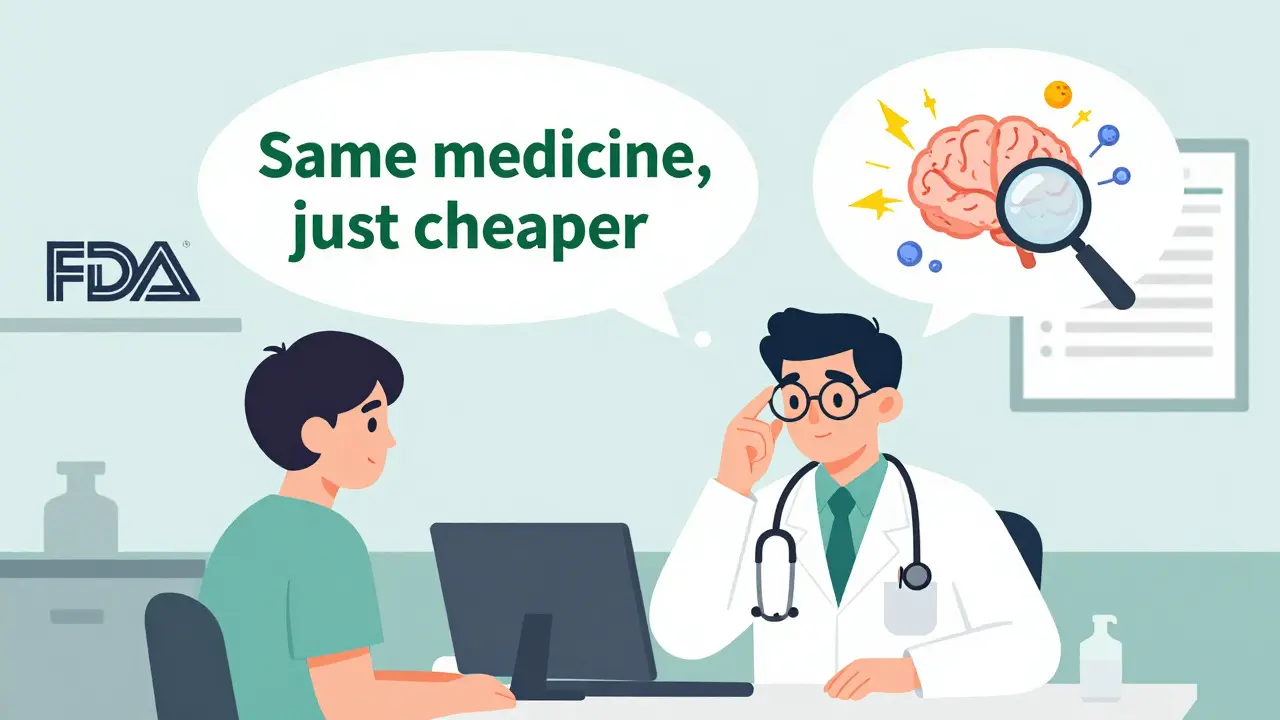
How Expectations Change Brain Chemistry
This isn’t “all in your head” in the dismissive sense. The nocebo effect has real biological pathways. Brain imaging studies show that negative expectations activate the same areas involved in pain perception and anxiety - the anterior cingulate cortex, the insula, and the amygdala. These regions trigger the release of stress chemicals like cortisol and cholecystokinin, which can lower pain thresholds and heighten sensitivity. In one landmark study, researchers gave patients remifentanil - a powerful painkiller - but told some it was a placebo. Those who believed they were getting a fake drug felt no pain relief at all. Others were told it was a strong analgesic - and their pain vanished. The drug was identical. The outcome? Totally different. The same thing happens with generics. If you believe a generic won’t work, your brain reduces the effectiveness of the drug - sometimes by up to 50%, according to findings in the American Journal of Medicine. That’s not a small drop. That’s the difference between your blood pressure being controlled and needing a higher dose - or switching back to a more expensive brand.Real Cases: When Media and Misinformation Fuel the Problem
In 2017, New Zealand switched patients from brand-name venlafaxine to a generic version. Initially, adverse event reports stayed flat. Then, news outlets ran stories titled “Generic Switch Raises Safety Concerns.” Within weeks, reports of dizziness, anxiety, and insomnia spiked - even though the drug hadn’t changed. Reddit threads like r/pharmacy and r/medicine are full of similar stories: “I switched to generic Lexapro and felt awful,” “My cholesterol went up after the switch,” “I had panic attacks - went back to brand, and I’m fine.” In many cases, when patients were switched back to the brand, symptoms disappeared - not because the generic was faulty, but because their belief in it was broken. These aren’t isolated anecdotes. A study in the Journal of Clinical Psychopharmacology found that 32% of patients reported new side effects after being switched to generic antidepressants without proper context. Only 12% of patients in the control group - who were told the generic was “just as effective” - had any issues.How to Fight the Nocebo Effect
The good news? The nocebo effect can be managed - and it starts with how we talk about generics.- Don’t say “generic.” Say “equivalent.” Instead of “This is a generic version,” say “This is the same medicine, just less expensive.”
- Emphasize equivalence. Mention that generics undergo the same FDA testing as brand names. They must match in absorption, effectiveness, and safety.
- Frame it positively. Research shows that telling patients “This will save you money and works just as well” reduces reported side effects by 37%.
- Address concerns before they arise. If a patient has had bad experiences with generics before, ask: “What happened last time?” Then correct misconceptions calmly.
The Hidden Cost of the Nocebo Effect
This isn’t just about discomfort. It’s about money. In the U.S., 90% of prescriptions filled are generics - but they make up only 24% of drug spending. Why? Because when people stop taking generics due to perceived side effects, they often switch back to expensive brand-name drugs - or stop treatment entirely. The JAMA Internal Medicine journal estimates that nocebo-related discontinuation of generics costs the U.S. healthcare system $1.2 billion each year. That’s $1.2 billion in unnecessary brand prescriptions, extra doctor visits, ER trips, and lab tests - all because of fear, not science. The World Health Organization found that negative perceptions about generics are a major barrier to medication adherence in 67% of countries. In places where generics are the backbone of public health, this isn’t just a financial issue - it’s a public health crisis.What’s Next? AI, Genetics, and Better Communication
Researchers are now tackling the nocebo effect head-on. A 2023 trial in The Lancet Digital Health tested an AI tool that tailors medication information to individual patients’ beliefs. If someone has a history of anxiety, the AI avoids triggering language. If someone is skeptical, it provides clear data. The result? A 41% drop in nocebo responses. Harvard Medical School is studying whether genetics play a role. Early findings suggest people with certain variants of the COMT gene - involved in dopamine regulation - may be more prone to nocebo effects. Regulatory agencies are catching up. The FDA’s 2022 guidance now requires generic drug leaflets to avoid phrases like “may cause” or “some users report.” Instead, they must state: “This medicine is identical to the brand-name version.” The European Medicines Agency has issued similar rules. By 2025, Deloitte predicts 75% of healthcare systems will have formal nocebo mitigation strategies in place. That’s not just progress - it’s a necessary shift.Bottom Line: Your Mind Is Part of the Medicine
Generics aren’t inferior. They’re not second-rate. They’re scientifically identical - and they save lives and money. But if you believe they’re less effective, your body will act like they are. The nocebo effect reminds us that medicine isn’t just chemistry. It’s communication. It’s trust. It’s the quiet conversation between a patient and their expectations. If you’re switching to a generic, ask your provider: “Is this the same as the brand?” If they say yes - believe them. Your body will thank you.Can the nocebo effect happen with any medication, or just generics?
The nocebo effect can happen with any medication - brand-name or generic. But it’s especially common with generics because of the stigma around them. People assume cheaper means weaker, even when science says otherwise. Studies show that when patients are told a drug is a generic, they report more side effects - even if the drug is identical to the brand. The effect is stronger when negative expectations are introduced by doctors, media, or online stories.
Are generic drugs really as effective as brand-name drugs?
Yes. The FDA requires generics to have the same active ingredient, strength, dosage form, and route of administration as the brand-name drug. They must also meet strict bioequivalence standards - meaning they’re absorbed into the bloodstream at the same rate and to the same extent. In over 90% of cases, generics perform identically to their brand-name counterparts. The only differences are inactive ingredients like color, shape, or filler - none of which affect how the drug works.
Why do some people feel worse after switching to a generic?
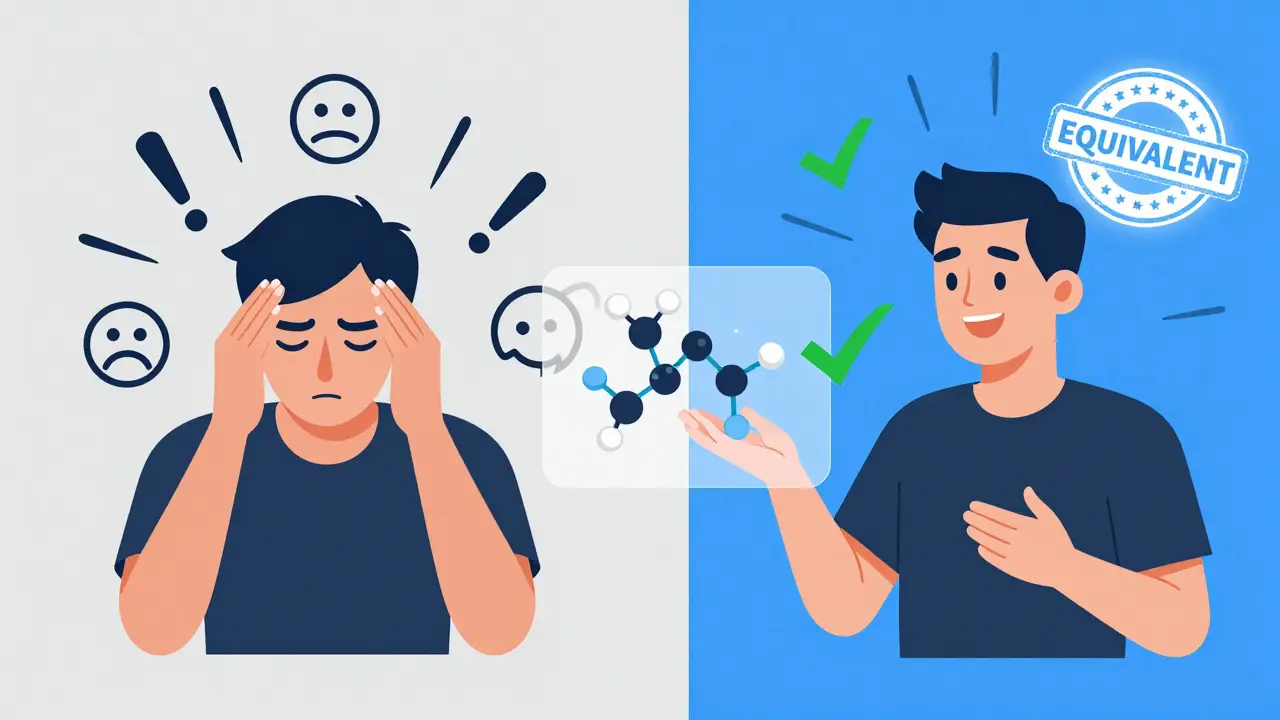
It’s rarely because the drug is different. More often, it’s because of the nocebo effect. When someone switches, they may hear stories, see a different pill, or get a vague warning like “some people have trouble with generics.” Their brain then starts noticing normal sensations - a headache, fatigue, stomach upset - and attributes them to the new pill. This creates a feedback loop: the more they focus on it, the worse they feel. Studies show these symptoms often disappear if they switch back to the brand - not because the generic was bad, but because their belief changed.
Can doctors prevent the nocebo effect?
Absolutely. Doctors who use positive, neutral language reduce nocebo responses. Instead of saying “This is a generic,” they say “This is the same medicine, just less expensive.” They explain that generics are tested to be identical. They avoid phrases like “some patients report side effects” unless asked. Training programs have shown that when providers learn how to communicate about generics, patient-reported side effects drop by nearly 30%. It’s not about the drug - it’s about the message.
Is there evidence that the nocebo effect is getting worse?
Yes. As more people rely on generics and online information grows, misinformation spreads faster. Social media, news headlines, and even well-meaning but poorly worded doctor notes can amplify fears. A 2023 study found that patients exposed to negative online reviews were 50% more likely to report side effects after switching to a generic. The rise of AI-powered personalized communication tools is helping to counter this - but awareness is still low. The nocebo effect isn’t getting stronger because drugs are changing - it’s getting stronger because our beliefs about them are.