
When you're taking warfarin, a blood thinner used to prevent dangerous clots in people with atrial fibrillation, deep vein thrombosis, or artificial heart valves. Also known as Coumadin, it works by blocking vitamin K, which your body needs to form clots. But alcohol doesn't just dull your senses—it can throw your INR levels into chaos, raising your risk of bleeding or clotting.
Warfarin has a narrow therapeutic window, meaning the difference between too little and too much is small. Even a single drink can interfere with how your liver processes it. Heavy drinking increases the chance of bleeding—especially in your stomach or brain—because alcohol thins your blood too. On the flip side, if you suddenly stop drinking after regular use, your body may start clotting faster, which could lead to a stroke or pulmonary embolism. This isn't theoretical: studies show people on warfarin who drink heavily have up to 3 times the risk of major bleeding compared to non-drinkers.
It’s not just about quantity—it’s about consistency. If you normally have one beer with dinner, keep doing that. But if you don’t drink, don’t start. Binge drinking or mixing alcohol with other meds like NSAIDs (think ibuprofen or aspirin) makes things even riskier. Your doctor checks your INR regularly for a reason: it tells them how well your blood is clotting. Alcohol can make those numbers swing unpredictably, forcing more blood tests, dose changes, and stress.
Some people think herbal supplements or "natural" remedies are safer than alcohol, but that’s not true. Things like green tea, garlic, or ginkgo can also interfere with warfarin. The real issue isn’t just alcohol—it’s anything that changes how your body handles this medication. That’s why communication matters. If you’re seeing multiple doctors, taking other pills, or changing your diet, your warfarin dose might need adjusting.
You’ll find posts here that dig into how warfarin compares to newer blood thinners, why some people react differently to generics, and how to avoid dangerous interactions with other drugs. These aren’t just theory—they’re real-world lessons from people managing this medication every day. Whether you’re new to warfarin or have been on it for years, the goal is the same: stay safe, stay informed, and make choices that protect your health—not put it at risk.
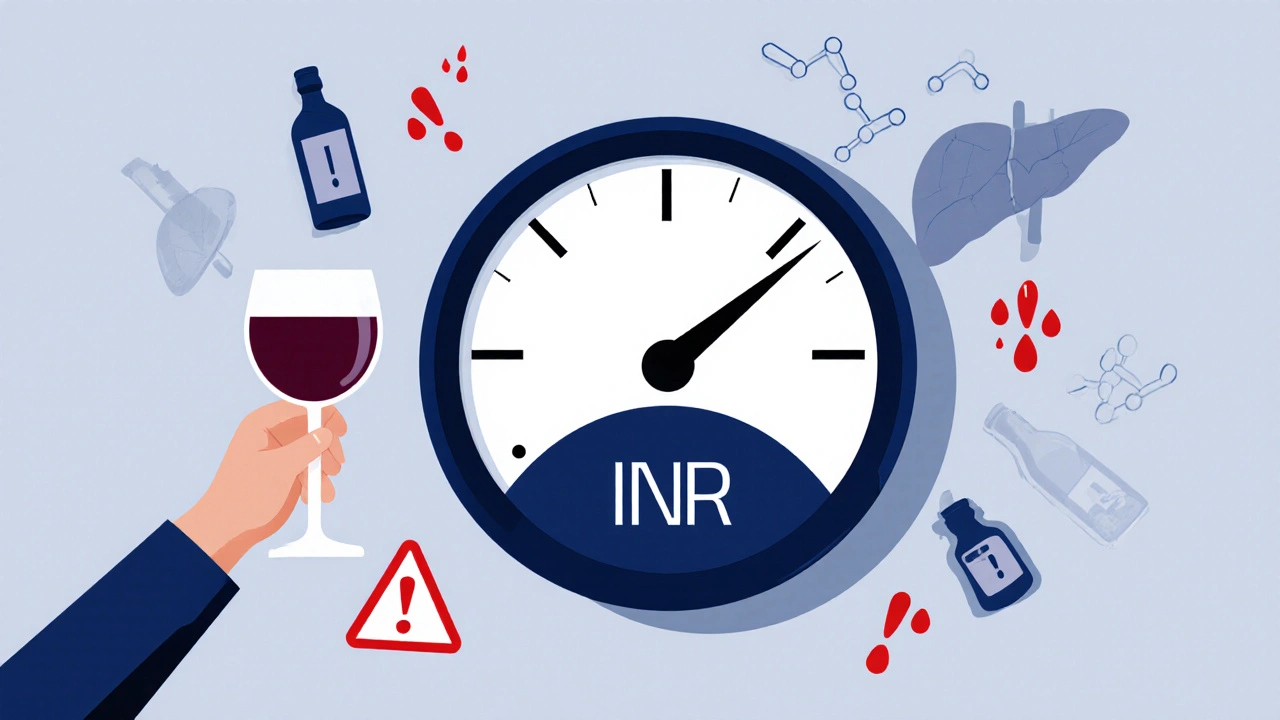
Alcohol can cause dangerous spikes in INR levels for people on warfarin, increasing bleeding risk significantly. Learn how drinking affects blood thinners, what limits are safe, and what symptoms to watch for.
Read More