
When you’re on a trip and run out of your prescription, a vacation override, a temporary exception to standard refill rules that lets you get extra medication while traveling. Also known as travel override, it’s a lifeline for people who rely on daily meds like blood pressure pills, thyroid hormones, or insulin. Most insurance plans limit how often you can refill a prescription—usually every 30 days. But if you’re heading out of town for two weeks or more, that rule doesn’t make sense. That’s where a vacation override comes in.
It’s not a free pass. You can’t use it to stockpile pills for future use. Pharmacies and insurers require proof you’re actually traveling—like a flight itinerary or hotel confirmation. Some plans only allow overrides for trips longer than seven days. Others require your doctor to call in a special request. The big issue? Not all insurers offer it, and even when they do, the rules vary wildly. One person might get a 90-day supply for a beach trip; another gets denied because their plan says "vacation" only applies to international travel.
Related to this are pharmacy benefits, the set of rules your insurance uses to control how and when you get medications. These rules include prior authorizations, step therapy, and quantity limits—all of which can clash with vacation plans. Then there’s insurance coverage, the actual scope of what your plan pays for, including exceptions like vacation overrides. If your plan doesn’t cover a drug at all, no override will help. And if your drug is on a high-cost tier, you might still owe a lot even with an override.
People on chronic meds—like those taking levothyroxine, metformin, or warfarin—are especially vulnerable. Missing a dose can cause serious problems. Yet, many don’t know they can ask for a vacation override until they’re stuck at a pharmacy with no refills left. It’s not a secret benefit—it’s buried in fine print. You have to call your insurer, ask specifically for a "vacation override," and sometimes push back if they say no.
Doctors can help. If your provider knows you’re traveling, they can write a longer prescription or send a special order to your pharmacy. But even then, the pharmacy’s system might block it unless the insurer approves. That’s why it’s smart to plan ahead: call your insurer at least two weeks before you leave. Ask if your drug qualifies, how much you can get, and if you need a form signed by your doctor.
And don’t assume your vacation override will work everywhere. If you’re flying across state lines, your insurance might not cover out-of-network pharmacies. Some plans only allow overrides at in-network locations. Others require you to mail-order your meds in advance. You might end up paying cash for your pills if you don’t check the rules.
What you’ll find below are real stories and practical guides from people who’ve navigated these exact problems. From how to get a vacation override for statins and antivert to why some insurers deny it for B12 supplements or thyroid meds—you’ll see the patterns. You’ll learn which drugs are most likely to be approved, what to say when the pharmacy says no, and how to avoid being caught without your meds on a weekend trip.
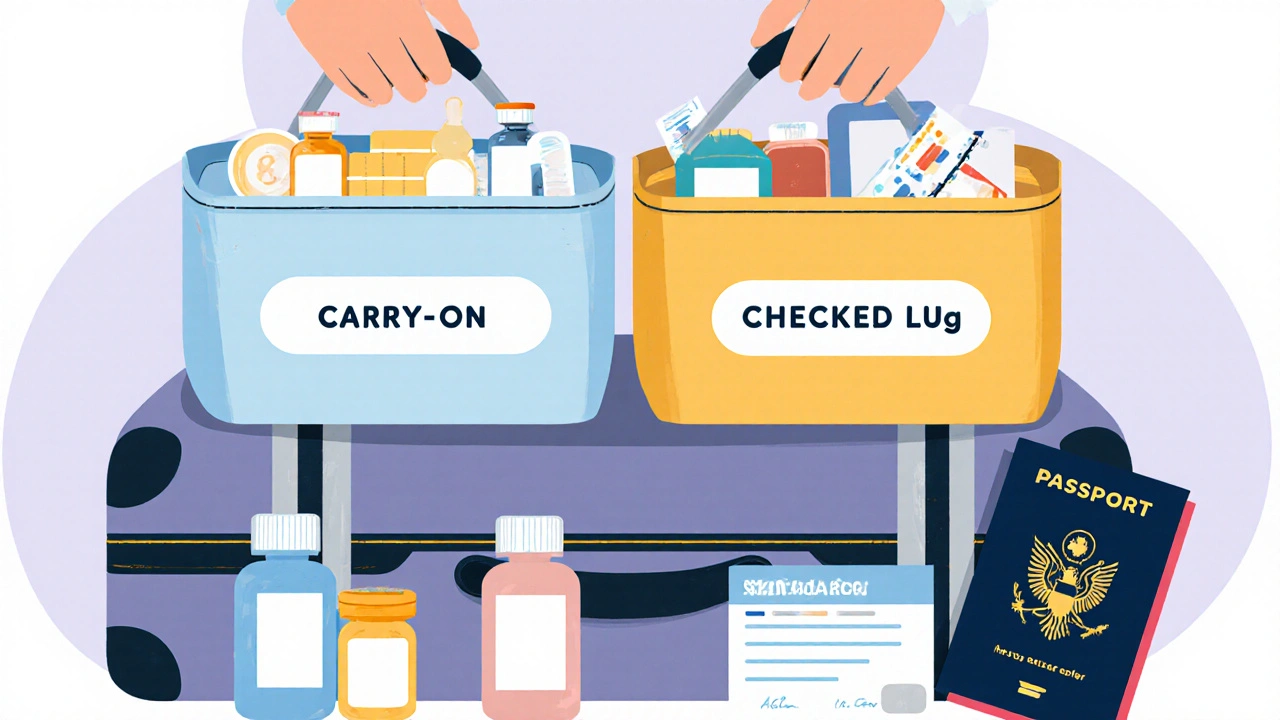
Learn how to avoid running out of medication while traveling. Get tips on early refills, international rules, packing strategies, and what to do if you lose your pills - all based on 2025 guidelines.
Read More