
When you’re juggling five, ten, or even twenty pills a day, you’re not just managing your health—you’re carrying a pill burden, the physical, mental, and financial weight of taking multiple medications at once. Also known as medication overload, it’s not just a buzzword—it’s a real danger that increases your risk of falls, confusion, hospital visits, and even death. This isn’t about being forgetful. It’s about systems that stack drugs on top of each other without asking if you really need them all.
Many people don’t realize that polypharmacy, the use of five or more medications simultaneously is common in older adults, but it’s not always necessary. Take drug interactions, when two or more medications react in harmful ways inside your body. For example, mixing blood thinners like warfarin with certain painkillers or herbal supplements can cause dangerous bleeding. Or consider how medication adherence, how consistently you take your drugs as prescribed drops the more pills you have to manage. One study found that people taking over seven medications daily are nearly twice as likely to miss doses—or take them wrong.
The problem isn’t just the pills themselves. It’s how they’re prescribed. Doctors often treat each condition in isolation—high blood pressure here, diabetes there, arthritis over there—without stepping back to see the full picture. You end up with a cocktail that might fix one thing but breaks another. Statins cause muscle pain, metformin steals your B12, and antihistamines make you foggy. Meanwhile, your pharmacist might not know what your cardiologist prescribed last month, and your primary care doc might not even know you’re taking that herbal sleep aid.
But it doesn’t have to be this way. Reducing pill burden isn’t about stopping meds cold—it’s about asking the right questions. Is this drug still needed? Can two pills be replaced with one? Is there a non-drug option? Some clinics now specialize in deprescribing—systematically reviewing every pill you take to cut the clutter. And it works. Patients report better sleep, fewer dizziness episodes, and even improved memory after trimming unnecessary drugs.
Below, you’ll find real stories and practical guides from people who’ve faced this exact problem. Whether you’re worried about bleeding risks from alcohol and blood thinners, confused by generic vs. brand-name differences, or just tired of swallowing a handful of pills every morning, these posts give you clear, no-fluff advice. You’ll learn how to talk to your providers, spot hidden dangers in supplements, and take back control—without giving up the treatments you actually need.
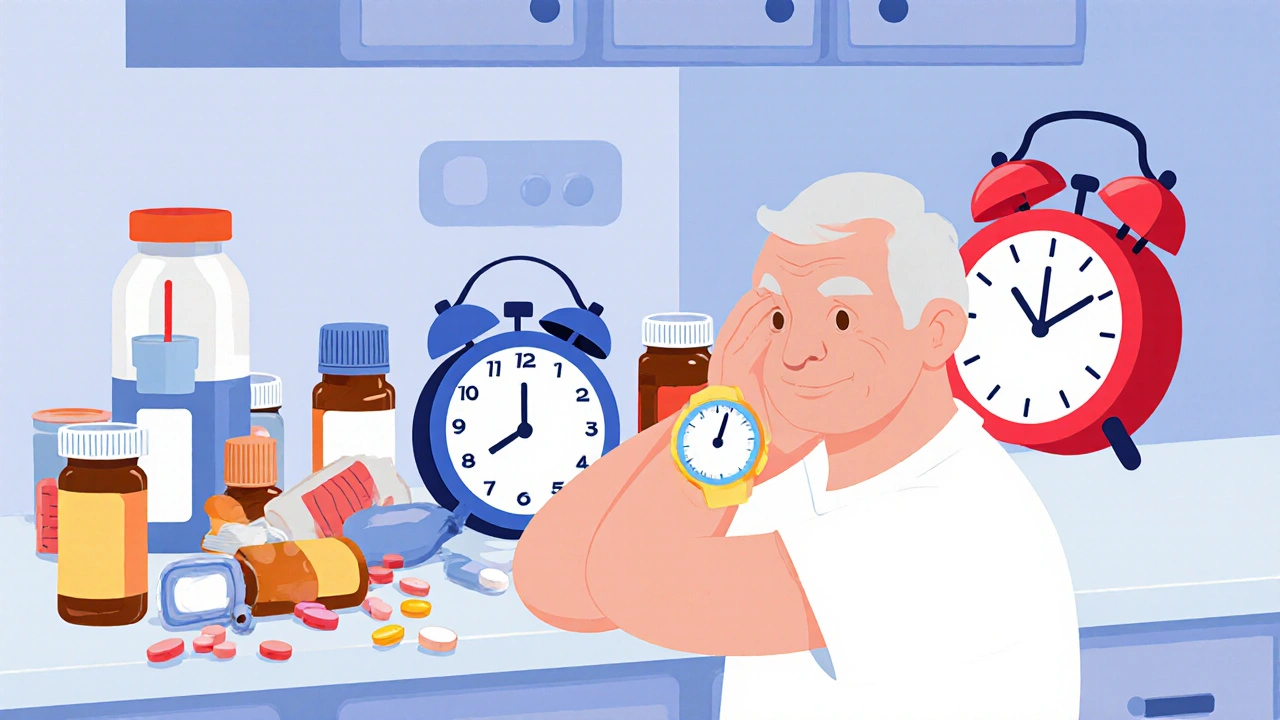
Simplify complex medication regimens by reducing daily doses with proven strategies like fixed-dose combinations, once-daily formulations, and compliance packaging. Boost adherence without compromising health.
Read More