
When you pick up a prescription, what you pay at the counter isn’t just the cost of the drug—it’s shaped by pharmacy margins, the difference between what a pharmacy pays for a drug and what it charges you. Also known as dispensing fees, these margins are how pharmacies stay open, especially when insurance pays less than the full price. Most people assume the price on your receipt is set by the drug maker, but in reality, it’s often negotiated between pharmacies, wholesalers, and pharmacy benefit managers (PBMs). That’s why two pharmacies down the street can charge $10 and $45 for the same generic pill.
Generic drugs, lower-cost versions of brand-name medications approved by the FDA. Also known as therapeutically equivalent drugs, it are supposed to save you money—but not always. Some generics have huge margins built in, especially if there’s little competition among manufacturers. And if your insurance plan uses a tiered system, you might pay more for a $5 generic than a $20 brand-name drug because the plan doesn’t cover the generic well. Pharmacy margins get even trickier with specialty meds, mail-order services, and cash-paying customers who don’t have insurance.
Drug pricing, the complex system that determines how much pharmacies, insurers, and patients pay for medications. Also known as pharmaceutical cost structure, it isn’t just about manufacturing—it’s about contracts, rebates, and hidden fees. PBMs negotiate discounts with drug makers but don’t always pass those savings to you. Some pharmacies make more profit on high-margin over-the-counter items or supplements than on prescriptions. That’s why you might see a $100 bottle of vitamin D next to your statin, even though the statin cost the pharmacy $2.
What you see on your receipt is just the tip of the iceberg. Pharmacy margins vary wildly depending on location, ownership (chain vs. independent), and whether you pay cash or use insurance. Independent pharmacies often rely on higher margins to survive, while big chains may lose money on prescriptions to draw in customers for other products. And if you’re on a fixed income, those small differences add up fast.
That’s why understanding pharmacy margins matters. It’s not just about saving a few dollars—it’s about knowing why your meds cost what they do, how to spot unfair pricing, and when to ask for alternatives. Below, you’ll find real-world examples of how drug pricing affects people every day: from why levothyroxine prices jump without warning, to how statin intolerance clinics help patients avoid costly side effects, to why some generic drugs still cost more than brand names despite being chemically identical. These aren’t theoretical debates—they’re daily struggles for people trying to manage chronic conditions on a budget.
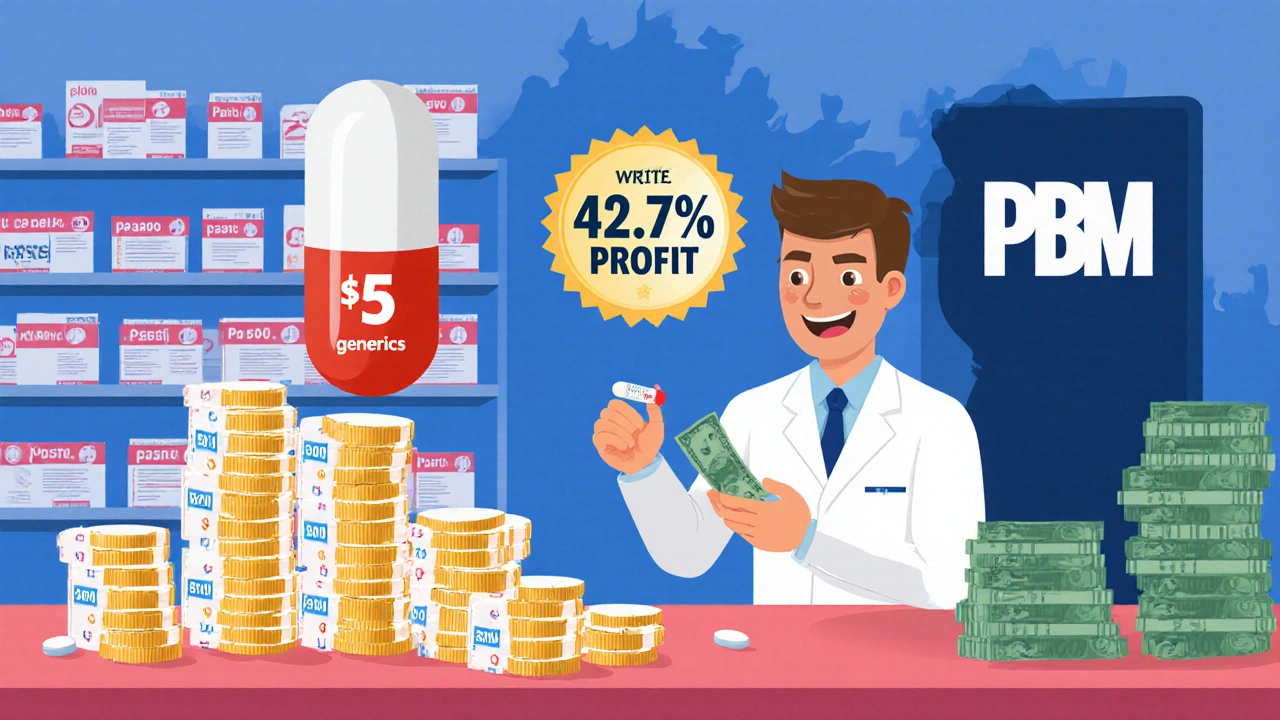
Generics make up 90% of prescriptions but only 25% of drug spending-yet they generate 96% of pharmacy profits. This is how the math works, why independent pharmacies are closing, and who really benefits.
Read More