
When you pick up a prescription, the price you pay isn’t set by your doctor, pharmacist, or even the drug maker—it’s often decided by a PBM reimbursement, a system where Pharmacy Benefit Managers negotiate drug prices and payments between insurers, pharmacies, and manufacturers. Also known as pharmacy benefit managers, these companies act as middlemen in the drug supply chain, and their decisions directly affect how much you pay out of pocket. Most people don’t realize that the $10 you pay for a generic pill might be the result of a secret deal between a PBM and a drug company, not the true cost of the medicine.
PBM reimbursement isn’t just about discounts—it’s a complex web of rebates, formularies, and spread pricing. When a pharmacy fills your script, the PBM tells them how much to charge you and how much they’ll get paid back. Sometimes, the pharmacy gets paid more than what you pay, and the difference—called "spread pricing"—goes straight to the PBM. Other times, the PBM takes a cut from the drug manufacturer in exchange for putting their drug on a preferred list. This is why two identical prescriptions can cost $5 at one pharmacy and $40 at another, even right down the street. The drug hasn’t changed. The PBM’s deal has.
These systems also influence which drugs your doctor can prescribe. If a PBM puts a drug on a high-tier formulary, your copay might jump from $10 to $100—even if the drug works just as well as a cheaper one. That’s why some patients end up switching medications not because their doctor recommends it, but because the PBM’s rebate structure makes one drug more profitable than another. It’s not about what’s best for you—it’s about what pays the PBM the most.
And it’s not just brand-name drugs. Even generics, which are supposed to be low-cost, are affected. A PBM might create a "preferred generic" list, pushing pharmacies to stock only the ones they’ve struck deals with. If your pharmacy doesn’t carry that specific generic, you might get charged more—or worse, be told your prescription can’t be filled until you switch. This isn’t rare. It’s standard practice.
What’s worse, many patients never see the full picture. Your insurance statement shows a copay, but not the hidden rebates or the true wholesale cost. You’re left thinking you’re getting a good deal, when in reality, you’re just one piece of a financial puzzle you didn’t even know existed. The system works fine for PBMs and insurers—but it’s designed to confuse patients.
That’s why understanding PBM reimbursement matters. It’s not just about saving money on your next script—it’s about knowing who controls your access to medicine. If you’re on long-term meds, managing chronic conditions, or just trying to stretch your budget, knowing how these deals work helps you ask the right questions. Ask your pharmacist: "Is this the lowest price available?" Ask your insurer: "What’s the PBM’s rebate on this drug?" You might be surprised what they won’t tell you.
The posts below dive into real-world cases where PBM reimbursement directly impacted patients—how it affects statin access, why generic levothyroxine prices vary wildly, how medication simplification gets blocked by formulary rules, and why some people react differently to generics because of PBM-driven substitution policies. You’ll see how drug interactions, refill delays, and even travel meds are all tangled up in this hidden system. This isn’t theory. It’s your wallet, your health, and your next prescription.
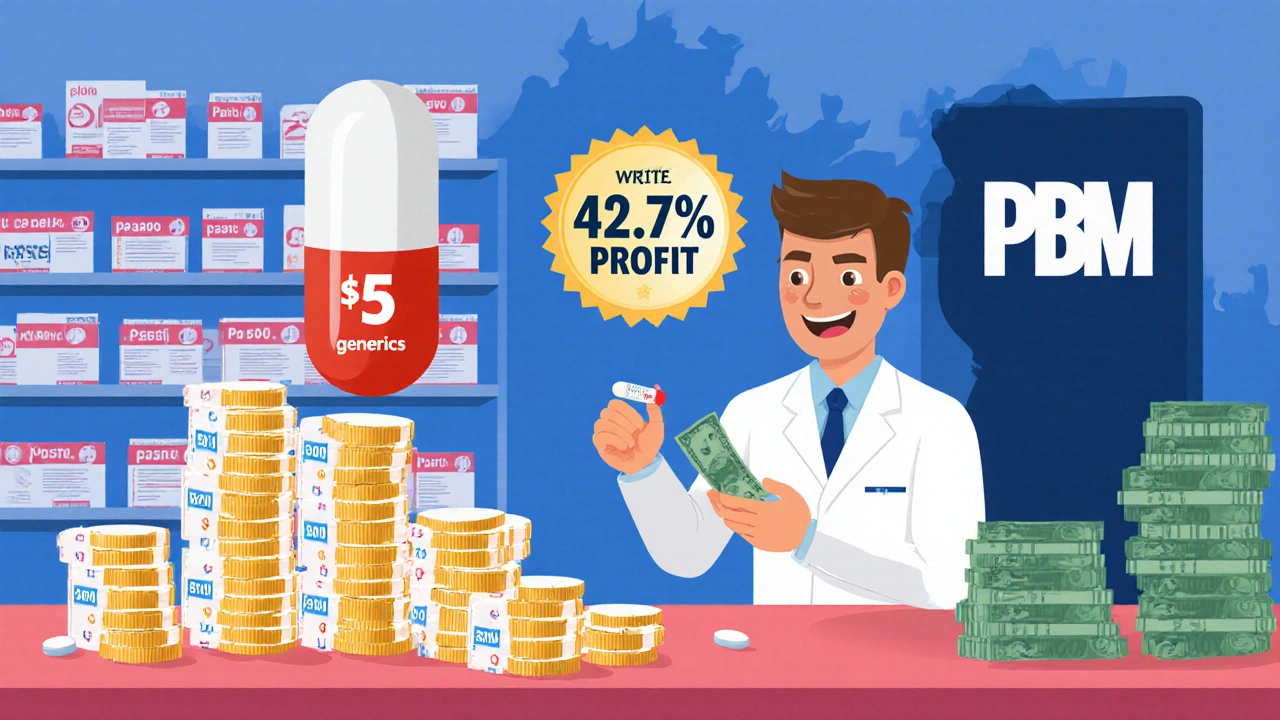
Generics make up 90% of prescriptions but only 25% of drug spending-yet they generate 96% of pharmacy profits. This is how the math works, why independent pharmacies are closing, and who really benefits.
Read More