
When you hear the word mononucleosis, a viral infection typically caused by the Epstein-Barr virus that affects lymphocytes and causes prolonged fatigue and sore throat. Also known as infectious mononucleosis, it’s not just a "strep throat with extra tiredness"—it’s a full-body response that can last weeks, not days. Most people get it as teens or young adults, often through saliva—sharing drinks, kissing, or even coughing. It’s not rare. In fact, up to 95% of adults have been exposed to the virus that causes it, even if they never had obvious symptoms.
What makes mononucleosis tricky is that it doesn’t respond to antibiotics. You can’t just take a pill and feel better in two days. The real treatment? Rest. Lots of it. Your body fights the Epstein-Barr virus, a herpesvirus that infects B cells and is the primary cause of infectious mononucleosis on its own. Doctors won’t prescribe antivirals unless there’s a complication—like severe swelling in the throat or spleen. That’s why so many people end up missing school, work, or sports for weeks. And yes, your spleen can swell. That’s why doctors tell you to avoid contact sports. A ruptured spleen is rare, but it’s serious enough to take seriously.
Recovery isn’t linear. You might feel okay after two weeks, then crash again. Fatigue can linger for months, even after the fever and sore throat are gone. That’s normal. There’s no magic supplement or quick fix. Some people try herbal remedies like echinacea or vitamin C, but there’s no strong evidence they shorten the illness. What does help? Hydration, gentle movement when you feel up to it, and avoiding alcohol—your liver is already working hard to clear the virus.
And while most cases are mild, it’s easy to mistake mononucleosis for the flu, strep, or even COVID-19. That’s why testing matters. A blood test can spot the abnormal white blood cells and antibodies that confirm it’s mono, not something else. If you’ve been exhausted for more than a week, with swollen glands and a sore throat that won’t quit, don’t just power through. Get checked.
What you’ll find below isn’t a list of miracle cures. It’s a collection of real, practical advice from people who’ve lived through it—and from experts who know how to manage the complications. You’ll read about how medications interact with mono recovery, why rest isn’t laziness, how to avoid spreading it to others, and what to watch for when symptoms don’t fade. This isn’t about hype. It’s about what actually works when your body is fighting a stubborn virus.
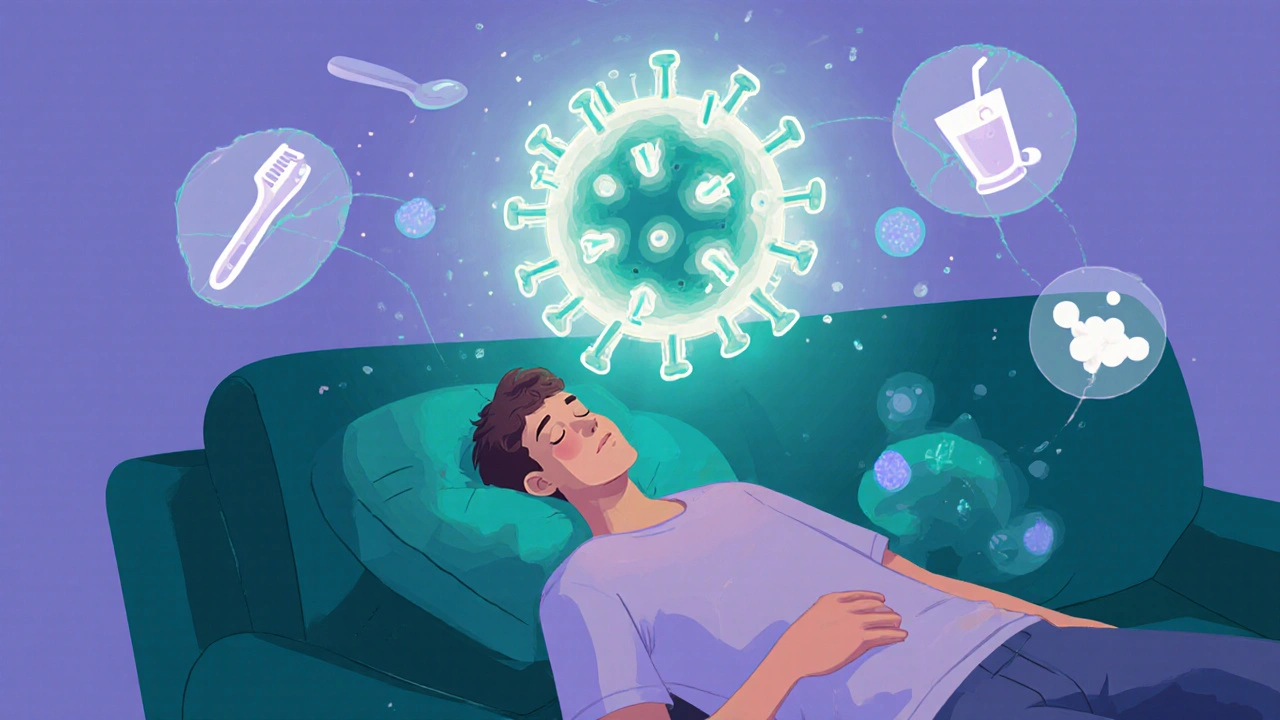
Mononucleosis, caused by the Epstein-Barr virus, leads to severe fatigue and prolonged recovery. Learn how it spreads, why rest matters more than medicine, and how to safely return to daily life without risking complications.
Read More