
When you're medication while traveling, the process of carrying and using prescription or over-the-counter drugs across borders or during trips. Also known as travel pills, it isn't just about tossing a bottle in your bag—it's about knowing what’s legal, safe, and practical in different countries and airports. You might think your daily pills are harmless to carry, but customs officers in some countries treat certain medications like controlled substances—even if they’re legal at home. A common painkiller or sleep aid in the U.S. could get you questioned, fined, or worse abroad.
That’s why drug interactions, when two or more medications react in a way that changes their effect, sometimes dangerously. Also known as medication clashes, it's something you can't ignore when you're juggling pills for anxiety, blood pressure, or diabetes while on the move. A supplement you took for jet lag might mess with your blood thinner. A new antibiotic for a stomach bug could cancel out your birth control. And if you're flying, your carry-on might get flagged because you didn’t bring the original prescription bottle. The FDA doesn’t control what happens overseas, and neither do most airlines.
Then there’s the passport medication, the practice of carrying medical documentation and prescriptions in a way that satisfies international travel requirements. Also known as travel medical papers, it’s not optional if you’re taking controlled substances like opioids, stimulants, or strong antidepressants. Some countries require a letter from your doctor, translated into their language, explaining why you need the drug. Others ban certain drugs entirely—even if they’re OTC in your country. You can’t rely on Google Translate or a pharmacy receipt. You need official paperwork.
And don’t forget TSA medication rules, the specific guidelines set by the U.S. Transportation Security Administration for bringing medications through airport security. Also known as air travel drugs policy, they’re simpler than most think: liquids over 3.4 oz are allowed if declared, and you don’t need to put pills in a clear bag—but you better have the original container. No one’s asking for your whole medical history, but if your bottle says "hydrocodone" and has no label, you’ll be pulled aside. Same goes for unmarked capsules or unlabeled vials. Keep it simple. Keep it labeled. Keep it real.
Below, you’ll find real advice from people who’ve had to navigate these exact problems—whether it was figuring out if their thyroid meds were allowed in Japan, how to store insulin on a 14-hour flight, or why their anxiety pills got confiscated in Dubai. No fluff. No theory. Just what works when you’re stuck in a foreign airport with your meds in your bag and no time to waste.
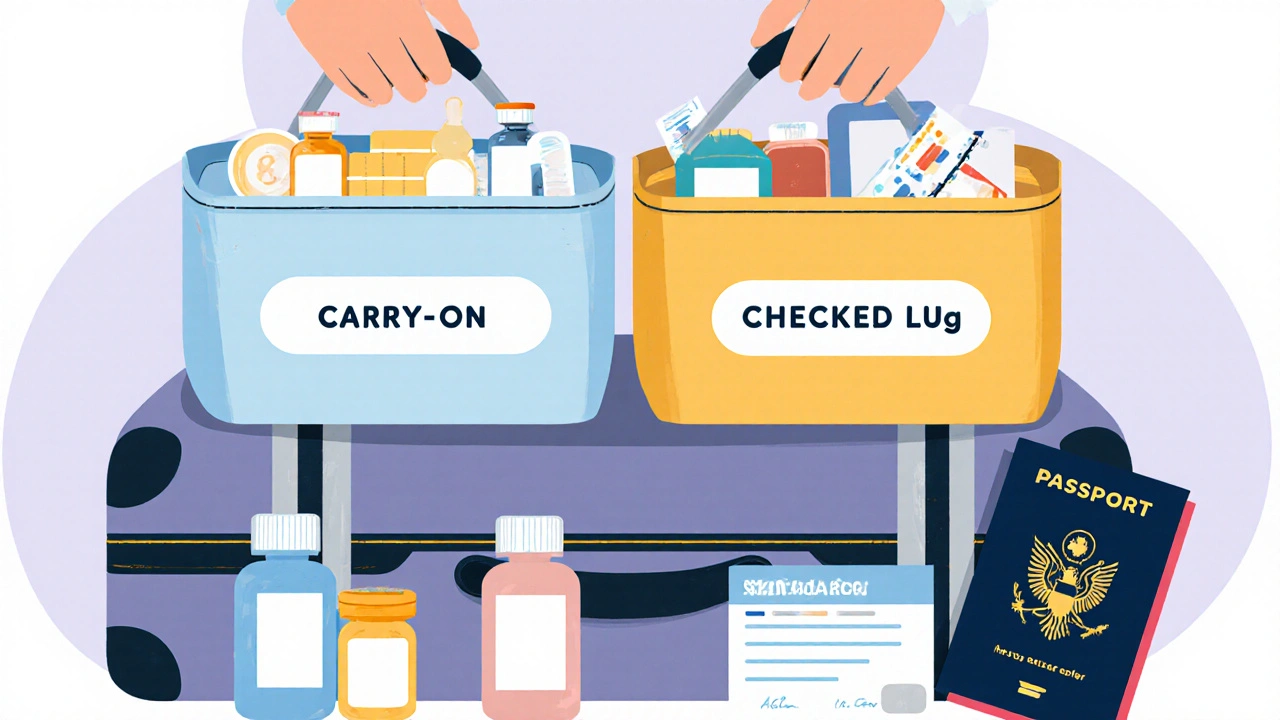
Learn how to avoid running out of medication while traveling. Get tips on early refills, international rules, packing strategies, and what to do if you lose your pills - all based on 2025 guidelines.
Read More