
When you’re taking five, ten, or even more medications a day, it’s not just inconvenient—it’s risky. Medication simplification, the process of reducing the number of pills and doses without losing therapeutic benefit. Also known as deprescribing, it’s not about stopping meds—it’s about streamlining them so your body isn’t overwhelmed. Too many drugs can lead to confusion, missed doses, and dangerous interactions. A 2023 study in the Journal of the American Geriatrics Society found that nearly 40% of older adults on five or more medications had at least one potentially harmful interaction. You don’t need to take everything your doctor prescribes if it doesn’t truly help you.
Drug interactions, when two or more medications affect each other’s performance or safety. Also known as pharmacological interactions, it isn’t just about mixing pills—it’s about timing, food, and even supplements. Alcohol with blood thinners? That’s a red flag. Fiber blocking thyroid meds? That’s a common mistake. Medication simplification means looking at your whole list—not just one drug at a time. It’s asking: Is this still necessary? Can this be taken less often? Is there a safer alternative? The goal isn’t fewer pills for the sake of it—it’s fewer pills that actually matter.
Pill burden, the physical and mental load of managing multiple daily medications. Also known as medication complexity, it affects everyone, not just seniors. If you’re juggling statins, blood pressure pills, a diabetes drug, and a vitamin, you’re not alone. But you don’t have to live with that chaos. Simple changes—like switching to combination pills, adjusting timing, or eliminating duplicates—can cut your daily routine in half. And it’s not just about remembering to take them. It’s about knowing why you’re taking each one. If you can’t explain the purpose of a pill to your pharmacist, it’s time to ask your doctor.
Medication simplification isn’t magic. It’s methodical. It starts with a full list—every prescription, OTC drug, and supplement. Then comes the hard part: questioning each one. Is this still helping? Could it be causing more harm than good? Are there cheaper, safer, or simpler options? The posts below show real examples: how statin intolerance clinics help people get back on therapy without side effects, how to avoid bleeding risks with alcohol and warfarin, how to manage refills while traveling, and why some people react differently to generics. You’ll see how communication with doctors, checking the FDA Orange Book, and understanding B12 loss from metformin all tie into one bigger goal: making your medication work for you, not against you.
There’s no single right way to simplify your meds. But there’s a wrong way: ignoring the problem until something goes wrong. The next step isn’t complicated. It’s just clear. Gather your pills. Write down what they’re for. Ask one question: Could this be easier?
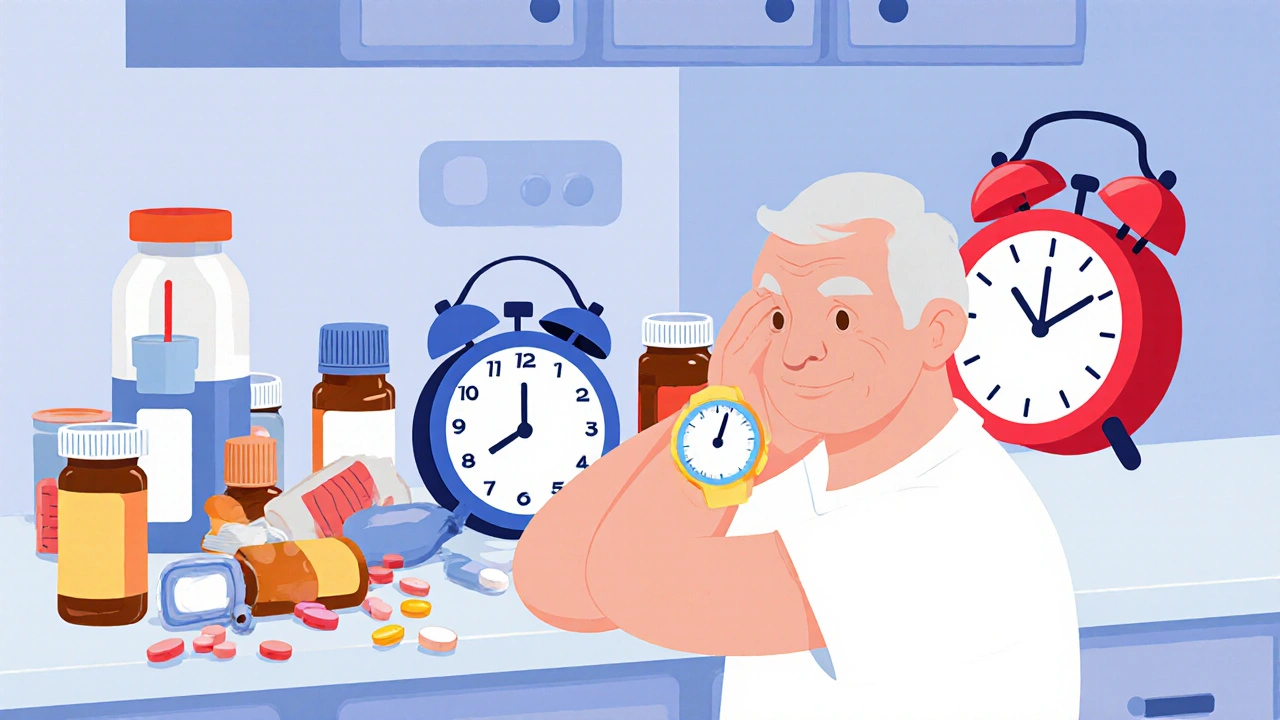
Simplify complex medication regimens by reducing daily doses with proven strategies like fixed-dose combinations, once-daily formulations, and compliance packaging. Boost adherence without compromising health.
Read More