
When you take a medication, the most important conversation often happens medication communication, the exchange of clear, honest information between patients and healthcare providers about drug use, side effects, and concerns. It's not just about getting a prescription—it's about making sure you understand what you're taking, why, and what to watch for. Too many people leave the doctor’s office with a bag of pills and no real idea how they work, what to do if something goes wrong, or whether their symptoms are normal or dangerous. This gap in communication is why so many stop taking meds they need—or end up in the ER from avoidable interactions.
drug side effects, unwanted reactions to medications that range from mild to life-threatening are rarely discussed in detail unless you bring them up. Statin muscle pain? That’s not just "normal aging." Warfarin bleeding risk after a drink? That’s not something you should guess about. Generic levothyroxine causing weird symptoms? It might be the filler, not the active ingredient. These aren’t rare edge cases—they show up over and over in the posts below, from statin intolerance clinics to vegan medication ingredients. And every single one of them starts with someone not speaking up—or not being heard.
Good doctor-patient dialogue, a two-way exchange where patients ask questions and providers listen without judgment changes outcomes. It’s why people on metformin end up getting their B12 checked before nerve damage sets in. It’s why travelers refill prescriptions early instead of running out abroad. It’s why someone switching from Coumadin to a newer blood thinner knows exactly what to expect. This isn’t about being "difficult"—it’s about being informed. And the people who do it right? They’re the ones who avoid hospital visits, keep their health stable, and feel in control.
You don’t need to be a medical expert to have great medication communication. You just need to know what to ask, when to push back, and how to describe what you’re feeling. The posts below cover real stories: patients who switched statins after muscle pain, vegans who found gelatin in their pills, diabetics who missed B12 deficiency for years, and travelers who nearly lost their meds overseas. Each one proves that clear talk saves health. What you’ll find here isn’t theory—it’s what people actually did, what worked, and what they wish they’d known sooner.
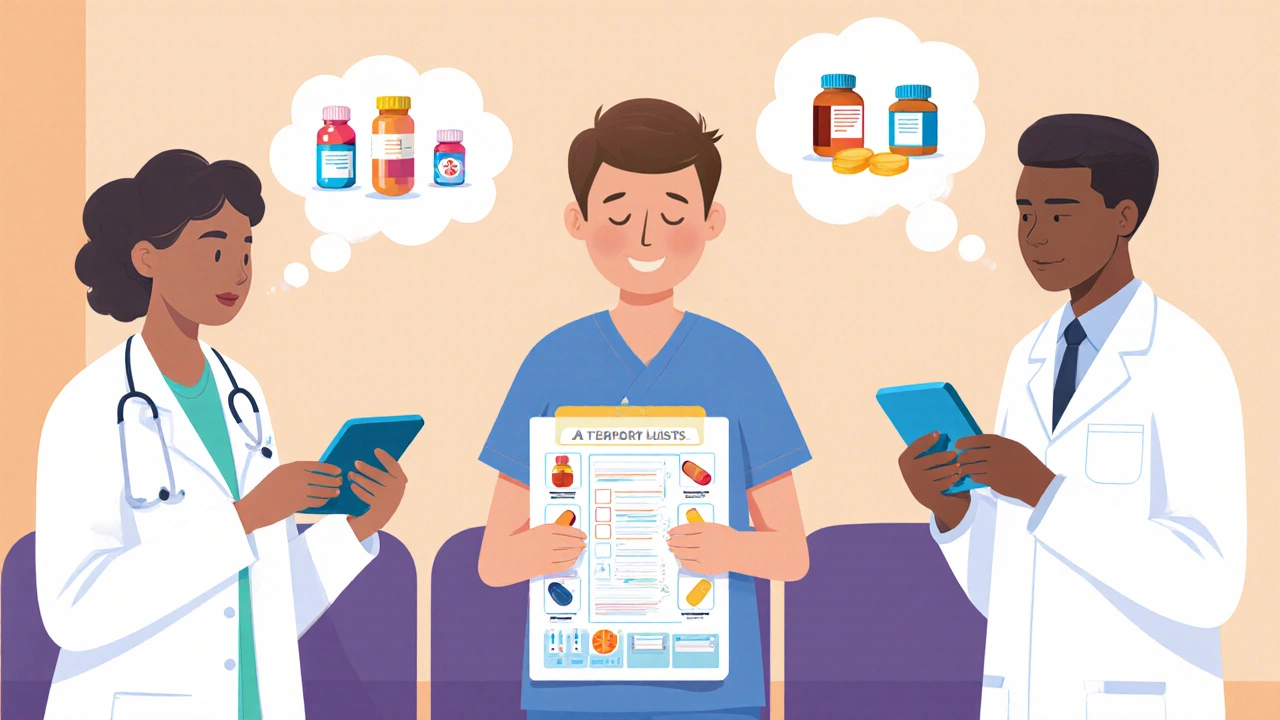
Learn how to prevent dangerous drug interactions by communicating clearly with multiple healthcare providers. Get practical steps to organize your meds, ask the right questions, and get your team on the same page.
Read More