
When you’re on a blood thinner like warfarin, a vitamin K antagonist used to prevent dangerous blood clots. Also known as Coumadin, it requires regular INR testing to make sure your blood clots at the right speed. The INR—International Normalized Ratio—is a simple number that tells your doctor how long it takes your blood to clot. Too low, and you’re at risk for stroke or clotting. Too high, and you could bleed internally from a minor bump. INR changes don’t happen randomly—they’re tied to what you eat, what other drugs you take, and even how your body processes the medicine over time.
Many people don’t realize that even small shifts in diet can swing your INR. Foods high in vitamin K—like kale, spinach, broccoli, and Brussels sprouts—can make warfarin less effective. On the flip side, alcohol, certain antibiotics, and even herbal supplements like garlic or ginseng can push your INR up. Your body’s ability to break down warfarin also changes with age, liver function, or if you start or stop another medication. That’s why INR changes, a common concern for patients on long-term anticoagulation therapy are tracked so closely. It’s not just about taking your pill—it’s about understanding how your whole life affects that one number.
Some patients notice symptoms when their INR is off: unusual bruising, nosebleeds, dark stools, or sudden headaches. Others feel nothing at all. That’s why regular blood tests aren’t optional—they’re your early warning system. If your INR jumps suddenly, your doctor might adjust your dose, delay your next pill, or check for interactions you didn’t know about. And if you’re switching from warfarin to a newer blood thinner like apixaban or rivaroxaban, your INR monitoring stops because those drugs don’t rely on it. But until then, knowing why your INR changes matters more than the number itself.
Below, you’ll find real-world guides from patients and doctors who’ve navigated these shifts. Whether you’re dealing with warfarin side effects, trying to balance diet and meds, or wondering why your INR spiked after a vacation or illness, the posts here give you the practical, no-fluff answers you need. No theory. No jargon. Just what works.
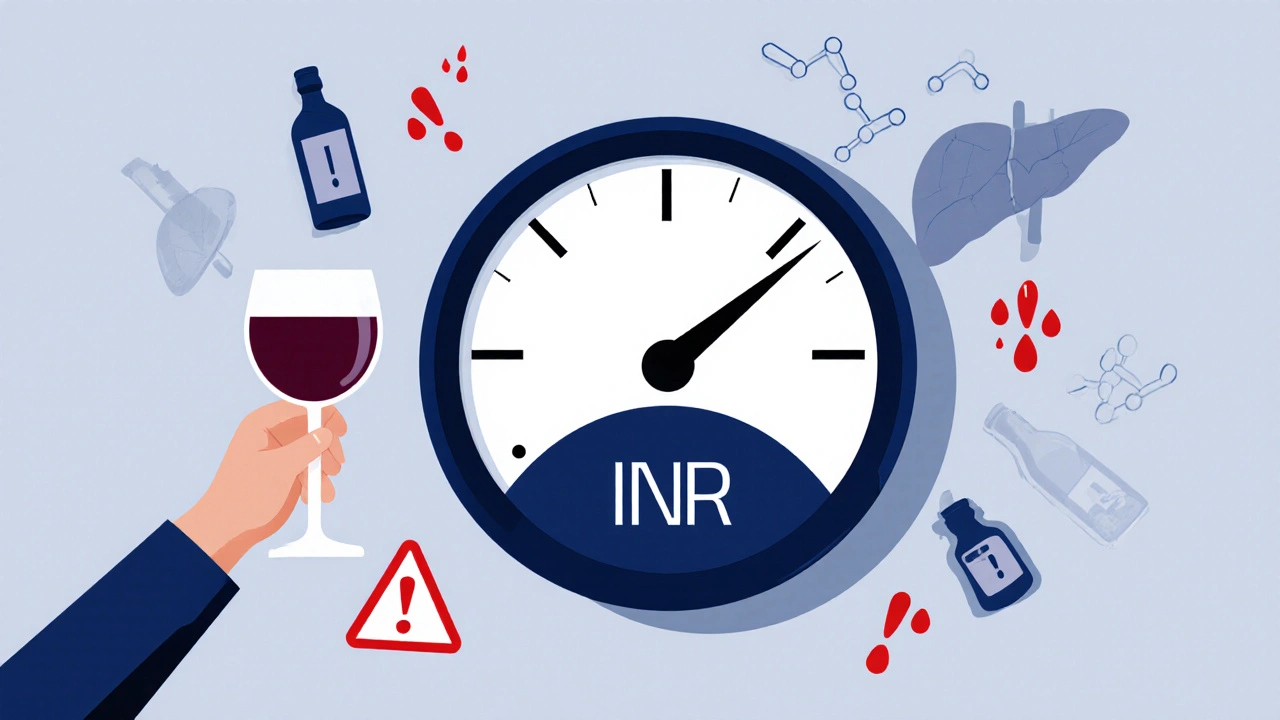
Alcohol can cause dangerous spikes in INR levels for people on warfarin, increasing bleeding risk significantly. Learn how drinking affects blood thinners, what limits are safe, and what symptoms to watch for.
Read More