
When you pick up a generic pill at the pharmacy, it might cost $4 instead of $40 for the brand name—but that doesn’t mean the company making it isn’t making money. Generic profit margins, the difference between what it costs to produce a generic drug and what it sells for. Also known as generic drug markup, these margins are often misunderstood. Unlike brand drugs protected by patents, generics aren’t built on research costs—they’re built on scale, efficiency, and timing. The real question isn’t whether they’re profitable, but how much and who benefits.
Generic manufacturers don’t need to run expensive clinical trials. Instead, they rely on the original brand’s data to prove safety and effectiveness. That cuts their upfront costs dramatically. But here’s the catch: drug manufacturing costs, the actual expenses of sourcing active ingredients, packaging, and meeting FDA standards vary wildly depending on where the drug is made. A pill produced in India or China can cost pennies to make, while the same pill made in the U.S. might cost ten times more due to labor and compliance rules. Meanwhile, pharmaceutical pricing, how much pharmacies and insurers pay for generics isn’t set by the maker alone—it’s shaped by competition, bulk contracts, and even how many companies are making the same drug. When only two or three makers exist, prices stay higher. When twenty companies jump in, prices crash.
That’s why some generics are dirt cheap while others suddenly spike in price. It’s not about quality—it’s about market dynamics. A drug like levothyroxine, used by millions for thyroid issues, has seen price spikes because fewer manufacturers can meet the strict absorption standards. Even though it’s a generic, its generic drugs, medications legally approved as equivalent to brand-name versions must still meet tight bioequivalence rules, which limits who can make them. That’s why the FDA Orange Book matters—it tells you which generics are truly interchangeable. And when a drug has a narrow therapeutic index, like warfarin or phenytoin, even tiny differences in inactive ingredients can cause real problems for patients, which is why some doctors stick to one brand of generic.
What you’ll find in the posts below isn’t just theory—it’s real-world insight. From how pediatric exclusivity delays generic entry, to why some people react differently to generics because of fillers and coatings, to how manufacturers squeeze profit from low-cost production while keeping prices high in crowded markets. You’ll see how profit margins aren’t hidden—they’re built into the system, and understanding them helps you ask better questions when your prescription costs more than expected.
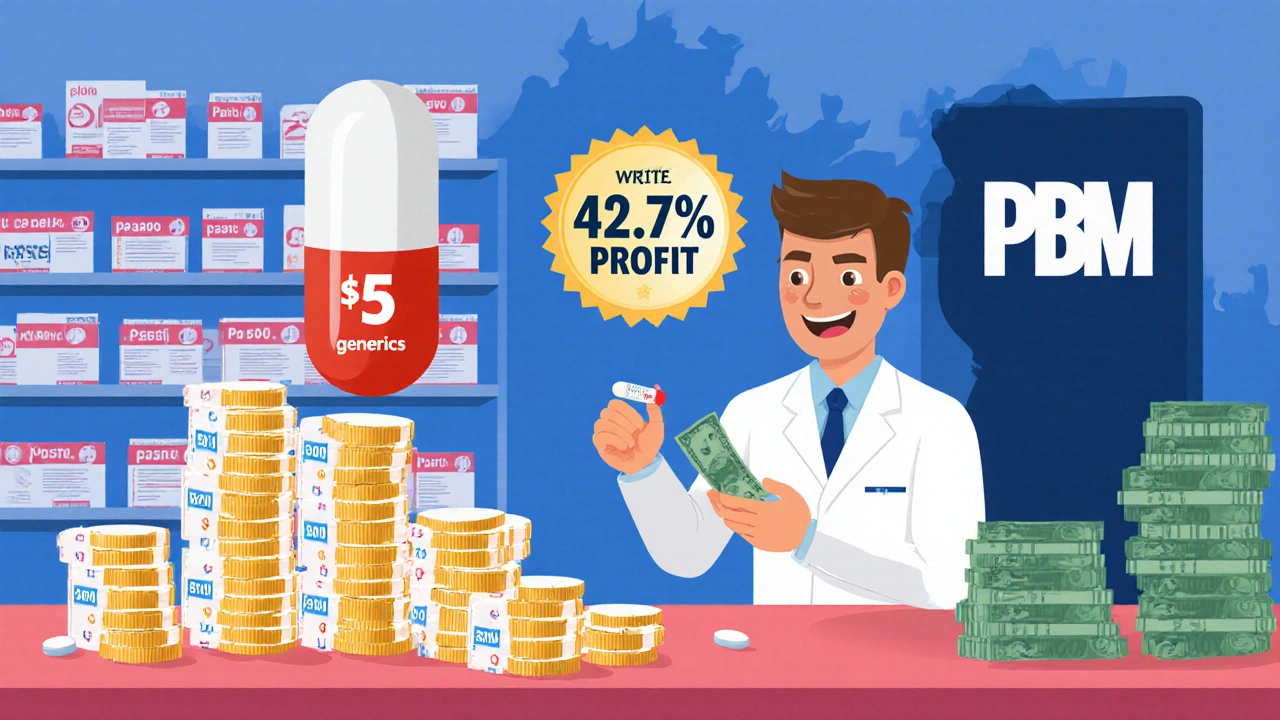
Generics make up 90% of prescriptions but only 25% of drug spending-yet they generate 96% of pharmacy profits. This is how the math works, why independent pharmacies are closing, and who really benefits.
Read More