
When you buy a FDA supplement safety, the oversight system that governs dietary supplements in the U.S., distinct from how prescription drugs are reviewed. Also known as dietary supplement regulation, it's a system built on post-market enforcement, not pre-approval. That means the government doesn't check if a supplement works or is safe before it hits store shelves. Instead, the FDA steps in only after someone gets hurt—or when a product is clearly dangerous. This is a big deal because millions of people take supplements daily, assuming they're as tightly controlled as medicine. They're not.
Supplements fall under the Dietary Supplement Health and Education Act (DSHEA) of 1994, which lets companies sell products without proving they're effective or safe. The burden is on the FDA to prove harm after the fact. That’s why you see recalls for supplements laced with hidden prescription drugs—like erectile dysfunction pills or weight-loss stimulants—often years after they’ve been sold. The dietary supplements, products taken orally that contain vitamins, minerals, herbs, or other substances intended to supplement the diet. Also known as vitamin and herbal products, they aren’t tested for purity, potency, or contamination. A 2020 study by ConsumerLab found that nearly 1 in 4 supplements didn’t contain what their label claimed—and some had dangerous additives.
The dietary ingredient, any substance intended to be ingested to supplement the diet, including vitamins, minerals, herbs, amino acids, or extracts. Also known as herbal extracts or botanicals, it can be anything from turmeric to Jamaican Dogwood to melatonin. But just because something is "natural" doesn’t mean it’s safe. Some herbs interact with blood thinners, raise blood pressure, or damage the liver. And if you’re taking prescription meds—like levothyroxine, warfarin, or metformin—you’re at higher risk. The FDA doesn’t require warning labels for these interactions, so you’re left guessing.
What’s worse? Many supplement brands use vague claims like "supports immune health" or "promotes wellness"—phrases that skirt the line of legality. The FDA can’t shut them down unless they explicitly say the product cures, treats, or prevents disease. That’s why you’ll see supplements marketed for "joint comfort" instead of "arthritis treatment." It’s a loophole, and it’s everywhere.
So how do you protect yourself? Look for third-party testing seals like USP, NSF, or ConsumerLab. Check the FDA’s warning list for recalled products. Talk to your doctor before starting anything new—especially if you have a chronic condition. And remember: if it sounds too good to be true, it probably is. The supplement industry is a $50 billion market, and not all players have your health in mind.
Below, you’ll find real-world examples of what can go wrong—and what actually works. From hidden drug interactions in herbal remedies to how generic meds can affect your supplement use, these posts give you the facts you won’t find on a bottle label. No fluff. Just what you need to stay safe.
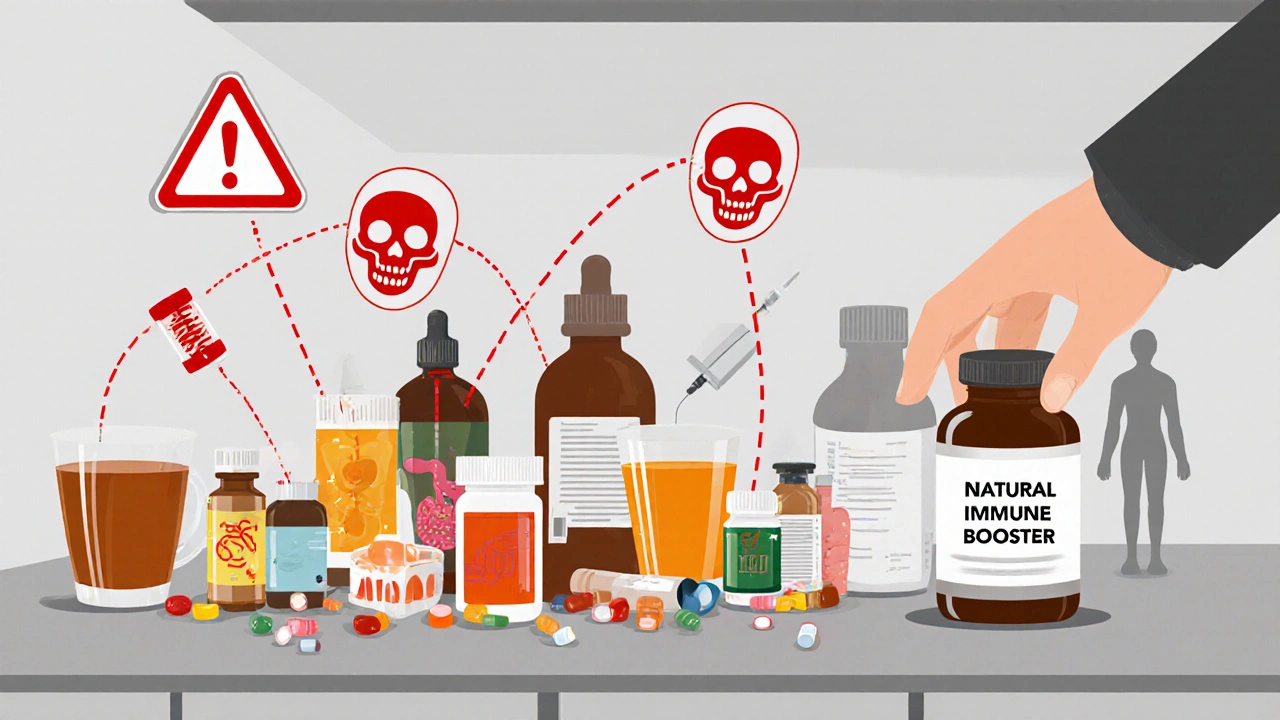
Dietary supplements and medications carry hidden risks that many people ignore. From dangerous drug interactions to toxic overdoses, the belief that 'natural' means safe can lead to serious harm. Learn what supplements really do to your body and how to protect yourself.
Read More