
When you pick up a prescription, you might get a brand-name drug—or a cheaper generic. But how do you know if that generic actually works the same? That’s where the FDA Orange Book, a public database maintained by the U.S. Food and Drug Administration that lists approved drug products with therapeutic equivalence evaluations. Also known as Approved Drug Products with Therapeutic Equivalence Evaluations, it’s the official source that tells pharmacists and doctors which generics can safely replace brand-name drugs. It’s not just a list—it’s a safety net for millions of people who rely on affordable medication.
The FDA Orange Book doesn’t just say "this generic is approved." It goes deeper. It tells you if a generic has the same active ingredient, strength, dosage form, and route of administration as the brand. But here’s the catch: it also flags drugs with a narrow therapeutic index—like levothyroxine or warfarin—where tiny differences in absorption can cause real problems. That’s why some people react differently to generics, even when they’re labeled "bioequivalent." The Orange Book helps explain why. It also shows patent and exclusivity dates, which is why some generics don’t hit the market until years after a brand-name drug launches. This isn’t just paperwork—it affects your health, your wallet, and your treatment choices.
Related to this are key concepts like bioequivalence, a measure showing that a generic drug performs the same way in the body as the brand-name version. The FDA requires generics to meet strict bioequivalence standards, but that doesn’t mean every inactive ingredient is the same. Gelatin capsules, dyes, fillers—these can affect how a drug is absorbed, especially in people with sensitivities or conditions like celiac disease. And then there’s therapeutic equivalence, the FDA’s rating system that tells you whether a generic can be substituted without clinical concern. Drugs rated "AB" are considered interchangeable. "BX" means no substitution—often because the data isn’t solid enough. This is why your pharmacist might ask if you’re okay with switching brands.
What you’ll find in the posts below are real-world stories and guides that connect directly to the FDA Orange Book’s impact. From why levothyroxine needs careful monitoring to how drug interactions with bupropion or warfarin can change based on generic switches, these articles don’t just talk theory—they show you what happens when the system touches your life. Whether you’re managing blood pressure, thyroid health, or just trying to save money on prescriptions, understanding the Orange Book helps you ask the right questions—and make smarter choices.
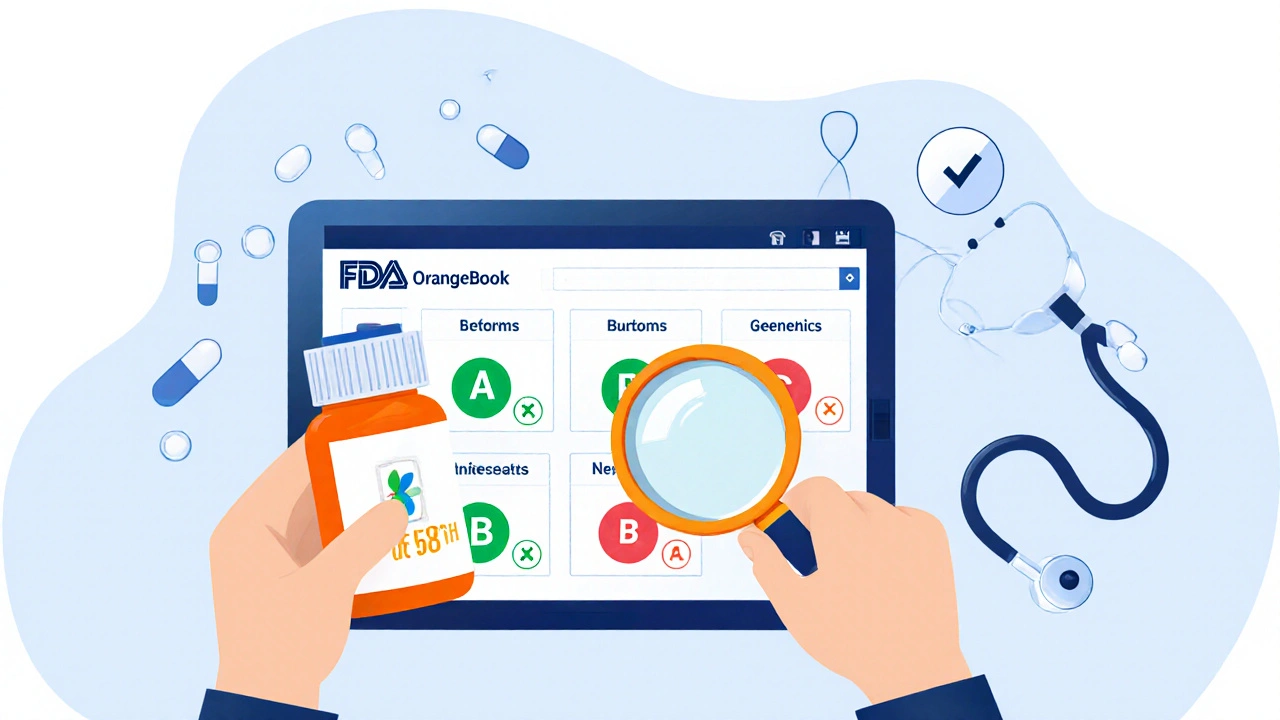
Learn how to use the FDA Orange Book to verify if a generic drug is truly equivalent to its brand-name version. Understand TE codes, AB ratings, and common mistakes to avoid unsafe substitutions.
Read More