
When your ear hurts, ear infection drops, medicated solutions applied directly into the ear canal to treat infections and relieve pain. Also known as otic drops, they’re one of the most common treatments for outer ear infections and some middle ear cases—especially in children. But not all ear drops are the same. Some kill bacteria, others just numb the pain, and a few do nothing at all. Knowing the difference can save you time, money, and unnecessary discomfort.
Most antibiotic ear drops, prescription solutions containing drugs like ciprofloxacin or ofloxacin that target bacterial infections in the ear canal are used for swimmer’s ear, or otitis externa. These aren’t for inner ear infections unless a doctor says so. For kids with earaches, parents often assume oral antibiotics are the answer—but if the eardrum is intact, topical drops can work faster and with fewer side effects. On the flip side, ear pain relief drops, over-the-counter solutions with numbing agents like benzocaine or antipyrine give temporary comfort but won’t fix the root problem. Using them without knowing if it’s bacterial or viral can delay real treatment.
Some people try home remedies—olive oil, garlic, or alcohol mixes—but these aren’t backed by science and can make things worse if the eardrum is damaged. Even if you’ve used ear drops before, don’t reuse old bottles. Bacteria grow in them fast, especially if they’ve been left open. And never use drops meant for one ear in the other unless your doctor says so. Kids are especially sensitive to ingredients like neomycin, which can cause hearing damage if used too long.
What you’ll find in the posts below are real, practical guides on how to choose the right drops, when to skip them entirely, and how to use them safely—especially for children. You’ll see how certain drops work better for swimmer’s ear versus middle ear infections, why some brands are preferred in pediatrics, and what hidden ingredients to watch out for. There’s also info on what to do if drops don’t help after a few days, and when it’s time to see a doctor instead of reaching for the medicine cabinet.
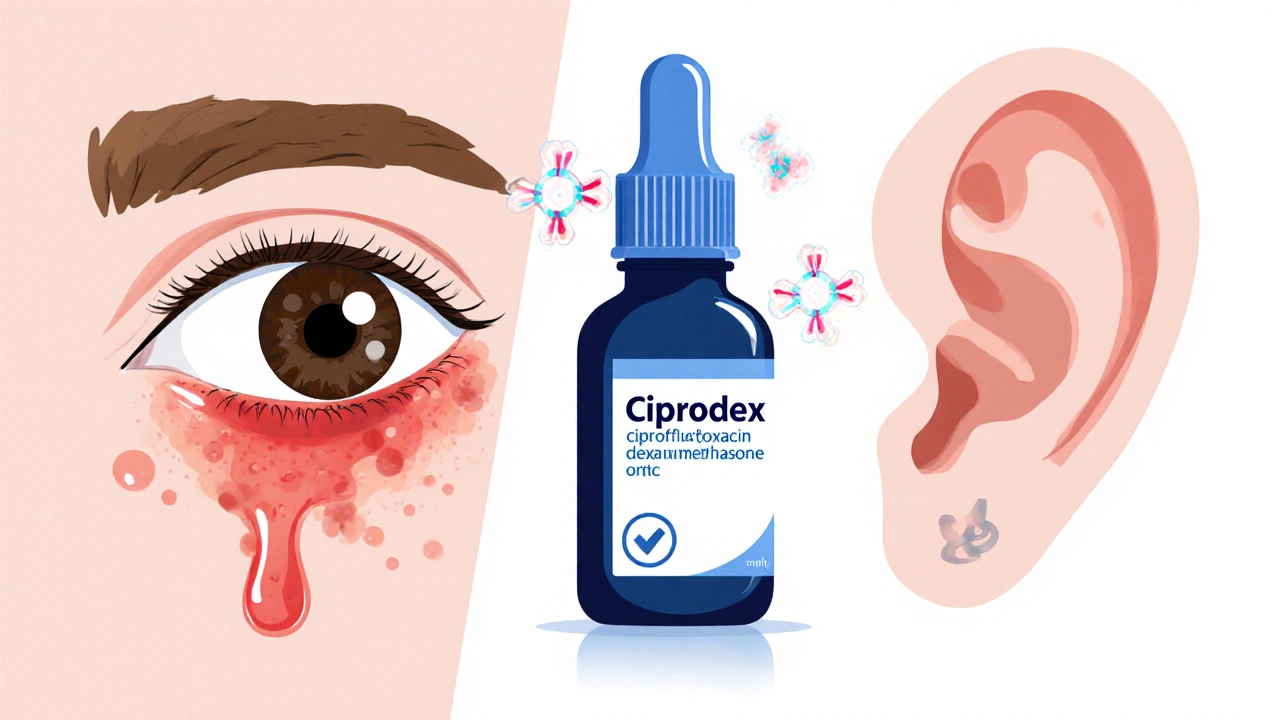
Ciprodex combines an antibiotic and steroid to treat ear and eye infections, but cheaper, safer alternatives exist. Learn which options work best based on your condition, cost, and medical history.
Read More