
When you hear daily doses, the regular schedule of taking medication as prescribed to manage a health condition. Also known as medication routines, it's not just about swallowing pills—it's about keeping your body stable, preventing complications, and avoiding dangerous mix-ups. Many people think if they take their pill every day, they’re doing it right. But timing, food, other meds, and even your sleep schedule can make or break how well it works.
Take levothyroxine, a thyroid hormone replacement that requires strict timing for proper absorption. If you take it with coffee, calcium, or iron, your body might not absorb enough—leading to fatigue, weight gain, or worse. Same goes for warfarin, a blood thinner where even small changes in diet or alcohol can spike bleeding risk. One glass of wine might not seem like much, but for someone on warfarin, it can throw off INR levels fast. And then there’s metformin, a common diabetes drug that can quietly drain your vitamin B12 over time, causing nerve damage that feels like diabetic neuropathy. If you’ve been on it for years and feel numbness or tingling, it’s not just your diabetes—it could be a missing nutrient.
It’s not just about what you take, but how you manage it. If you’re seeing multiple doctors, your medication communication, the process of sharing your full drug list with every provider to prevent harmful interactions might be broken. One doc prescribes a new painkiller, another adds an antidepressant, and no one talks. That’s how dangerous drug interactions happen. Even generic medications, cheaper versions of brand-name drugs that are supposed to be identical can behave differently in your body if you switch brands often—especially with narrow-window drugs like levothyroxine or warfarin. The fillers, coatings, and absorption rates aren’t always the same, and your body notices.
And let’s not forget travel. Running out of pills on vacation isn’t just annoying—it’s risky. International rules vary, refills aren’t always allowed, and TSA doesn’t care if your meds are in a pill organizer labeled "Vitamins." You need a plan: early refills, backup copies of prescriptions, and knowing what to do if you lose your bottle. It’s not paranoia—it’s preparation.
Some daily doses are simple. Others? They’re a balancing act. Statins might cause muscle pain, so rechallenge or switching types could help. Antihistamines might make you drowsy, but second-gen ones like cetirizine won’t. Supplements like Jamaican Dogwood might seem harmless, but they can interfere with blood thinners or sedatives. Even your diet matters—fiber can help with diarrhea, but too much can block absorption of your meds. There’s no one-size-fits-all. Your daily doses are personal, and they need to be treated that way.
Below, you’ll find real, practical guides on exactly how to handle your daily doses safely—from timing your thyroid pill right to avoiding alcohol with blood thinners, from checking if your generic is truly equivalent to knowing what hidden animal ingredients might be in your pills. No fluff. Just what works.
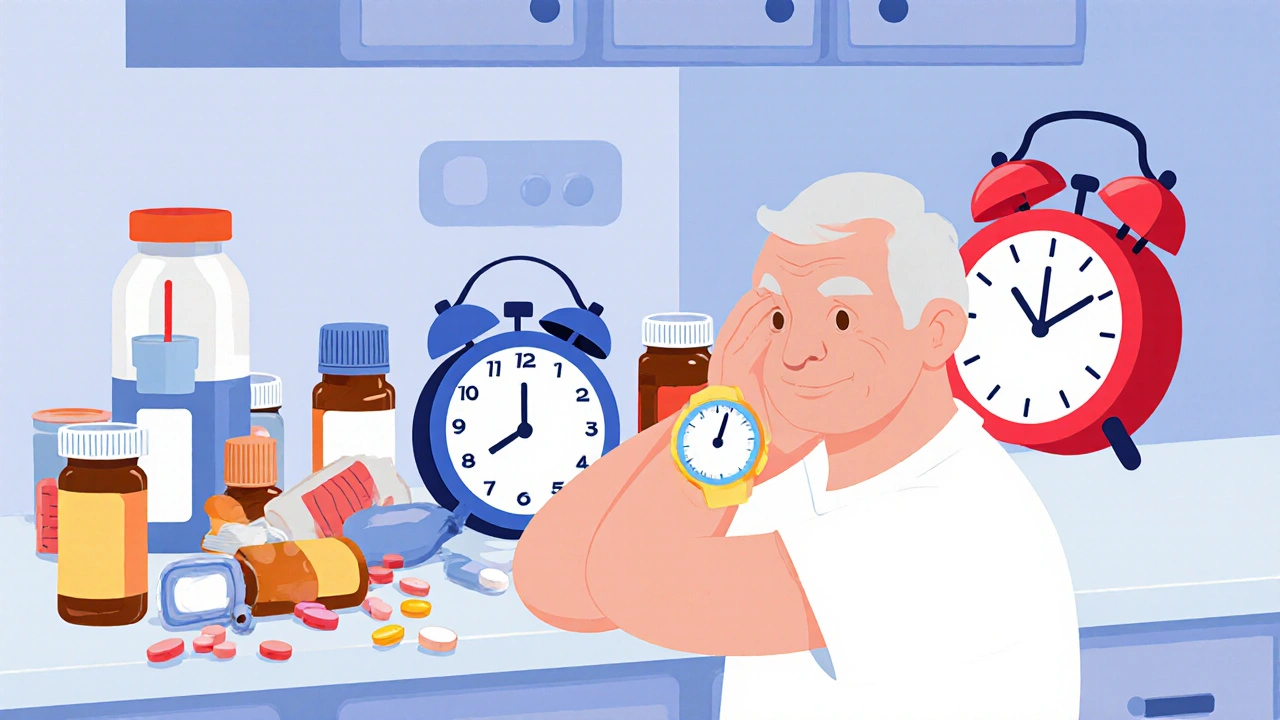
Simplify complex medication regimens by reducing daily doses with proven strategies like fixed-dose combinations, once-daily formulations, and compliance packaging. Boost adherence without compromising health.
Read More