
When you hear ciprofloxacin dexamethasone, a combination ear drop medication that pairs a fluoroquinolone antibiotic with a corticosteroid. Also known as Ciprodex, it's not just another antibiotic—it's a targeted treatment designed to fight infection and calm inflammation at the same time. This combo isn’t used for sore throats or urinary infections. It’s made for one specific problem: outer ear infections, often called swimmer’s ear. The ciprofloxacin kills the bacteria, while the dexamethasone reduces the swelling, itching, and pain that come with it.
Think of it like this: ciprofloxacin is the cleanup crew, attacking the germs. Dexamethasone is the peacekeeper, stopping the body’s overreaction that makes your ear feel like it’s on fire. You won’t find this combo in pill form—it’s only available as ear drops because it’s meant to work right where the problem is. It’s often prescribed when over-the-counter remedies fail, or when the infection is severe enough to need both antibacterial and anti-inflammatory power. People with ear tubes, recent ear surgery, or chronic outer ear issues are common candidates. But it’s not for inner ear infections or if your eardrum is ruptured unless a doctor says it’s safe.
It’s not just about the drugs themselves—it’s about how they fit into real-life care. You’ll see this combo show up in posts about otitis externa, an infection of the ear canal often triggered by moisture, scratching, or skin conditions, or when comparing treatments for fluoroquinolone antibiotics, a class of antibiotics that includes ciprofloxacin, levofloxacin, and moxifloxacin, known for broad bacterial coverage. You might also find advice on how to use the drops correctly—how many drops, how long to lie still, why you shouldn’t rinse your ear afterward. Some people wonder if it’s safe for kids, or if it interacts with other meds. Others ask if it’s worth the cost compared to single-agent drops. The posts below cover those exact questions, from real patient experiences to clinical guidelines.
What you won’t find here is generic advice. You’ll get specific insights: why some people still get infections after using it, how long it takes to feel better, what to do if the drops sting, and when to call your doctor instead of waiting it out. This isn’t a list of drug facts—it’s a collection of real-world guidance from people who’ve been there, and experts who’ve seen the patterns. Whether you’re using this for the first time or you’ve had it prescribed before, the posts below will help you understand what’s normal, what’s not, and how to get the most out of your treatment.
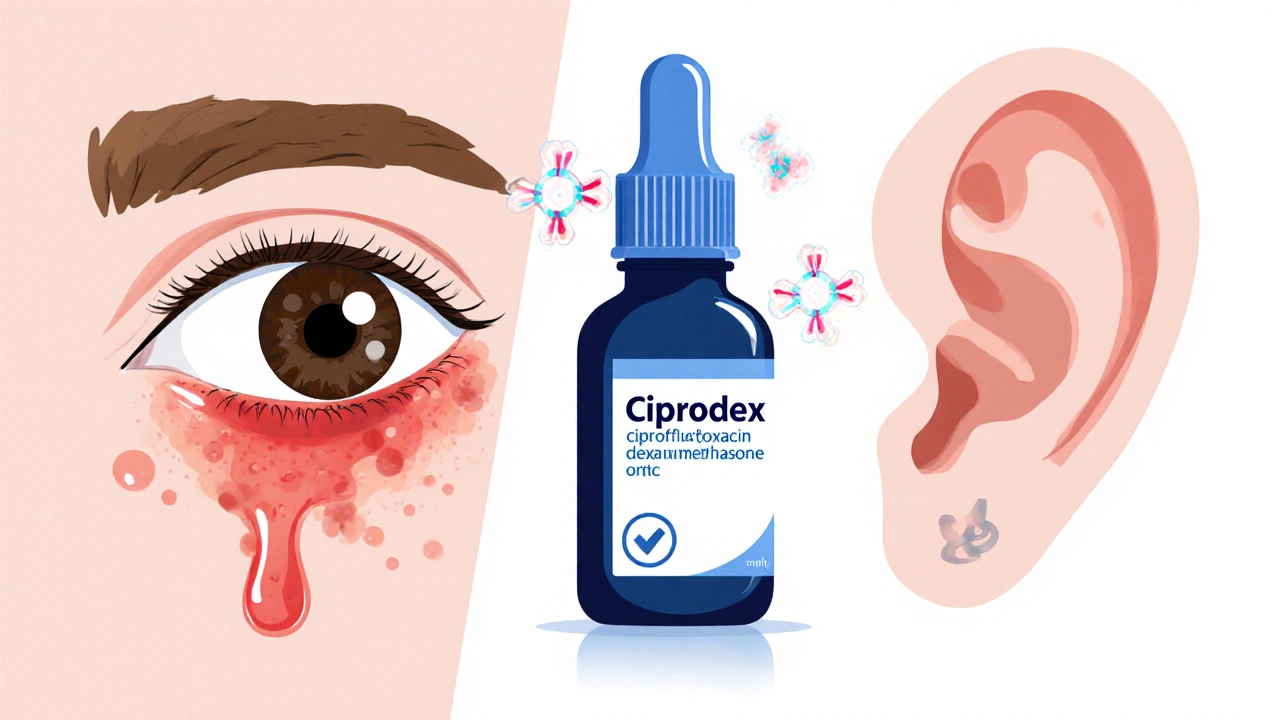
Ciprodex combines an antibiotic and steroid to treat ear and eye infections, but cheaper, safer alternatives exist. Learn which options work best based on your condition, cost, and medical history.
Read More