
When you’re dealing with a painful ear infection, Ciprodex, a combination ear drop containing ciprofloxacin and dexamethasone used to treat bacterial ear infections in adults and children. Also known as ciprofloxacin/dexamethasone otic, it’s one of the most prescribed treatments for middle ear infections with a ruptured eardrum and outer ear infections like swimmer’s ear. Unlike plain antibiotics, Ciprodex doesn’t just kill bacteria—it also reduces swelling and itching, which is why so many people get faster relief.
The two parts of Ciprodex work together: ciprofloxacin, a fluoroquinolone antibiotic that stops bacteria from multiplying attacks the infection, while dexamethasone, a corticosteroid that reduces inflammation and itching calms down the redness and discomfort. This combo is especially useful when the ear canal is swollen shut or when pain lingers even after the infection starts to clear. It’s not for viral infections or unruptured eardrums—your doctor needs to confirm the diagnosis first.
People often ask if Ciprodex is the same as other ear drops like Cipro HC or Ofloxacin. It’s not. Cipro HC has the same ingredients but different brand names and sometimes different concentrations. Ofloxacin is just an antibiotic without the steroid, so it won’t help with itching as much. Ciprodex is also different from oral antibiotics like amoxicillin—you can’t swap them. Ear drops work locally, where the problem is. Pills go everywhere, which means more side effects and less targeted action.
Some users report a mild burning sensation when first using Ciprodex. That’s normal for the first few seconds. But if your ear gets more swollen, you develop a rash, or your hearing gets worse, stop using it and call your doctor. It’s also not meant for long-term use. Most courses last 7 to 10 days. Using it longer than prescribed can lead to resistant bacteria or fungal overgrowth.
Parents often worry about giving Ciprodex to kids. The FDA approved it for children as young as six months for middle ear infections with a ruptured eardrum. For swimmer’s ear, it’s cleared for kids one year and older. The dosing is based on weight and age, so never guess—follow your provider’s instructions exactly. Also, don’t use it if your child has a known allergy to quinolone antibiotics like ciprofloxacin or to corticosteroids.
What you won’t find in the box? Instructions on how to properly administer the drops. Tilt the head, pull the earlobe back and up (for adults), or down and back (for kids), hold the dropper without touching the ear, and stay lying down for a few minutes after. This helps the medicine reach deep into the ear canal. Skipping this step means the drops might not work as well.
There are no major drug interactions with Ciprodex when used as ear drops, but if you’re taking other meds—especially steroids by mouth or immune suppressants—tell your doctor. Your body’s response can change if you’re already on a heavy treatment plan.
Below, you’ll find real-world advice from people who’ve used Ciprodex and similar treatments. You’ll see how it compares to other ear infection options, what side effects actually happen, how to handle missed doses, and what to do if it doesn’t work. These aren’t generic summaries—they’re practical insights from people who’ve been there.
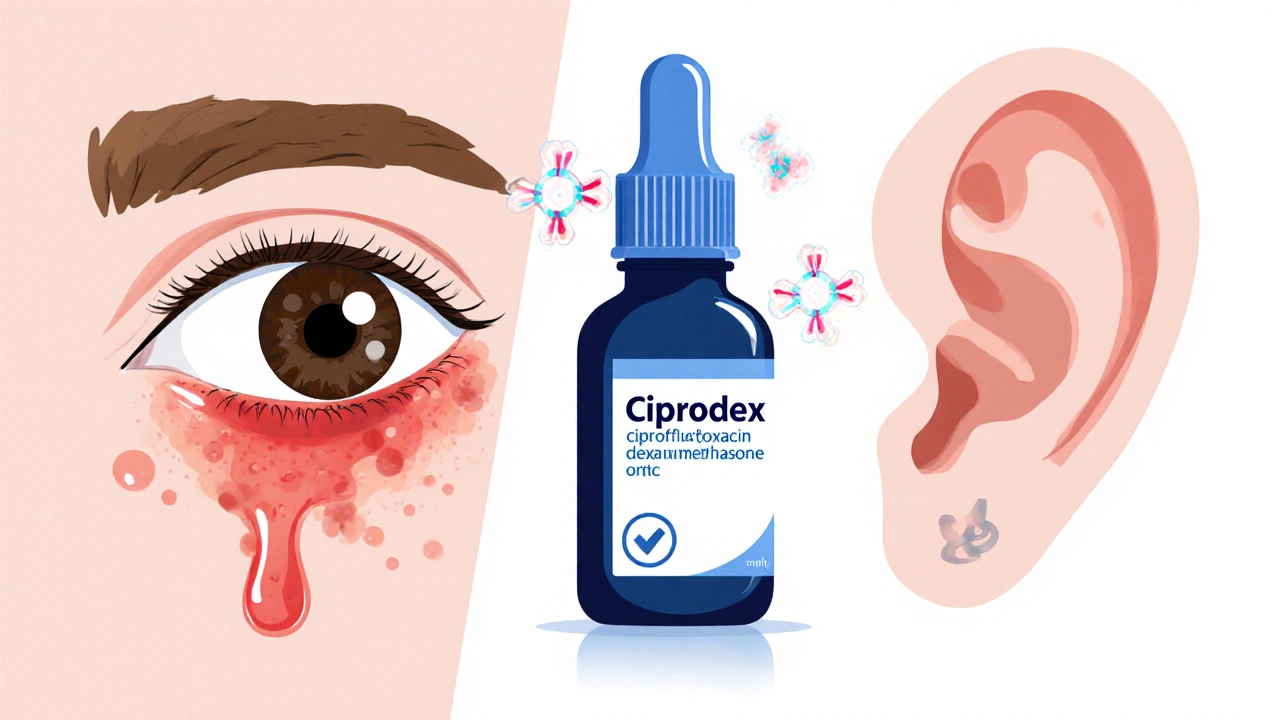
Ciprodex combines an antibiotic and steroid to treat ear and eye infections, but cheaper, safer alternatives exist. Learn which options work best based on your condition, cost, and medical history.
Read More