
When your blood clots too easily, it can lead to strokes, heart attacks, or pulmonary embolisms. That’s where blood thinners, medications that reduce the risk of dangerous clots by slowing down the clotting process. Also known as anticoagulants, they don’t actually make your blood thinner—they just keep it from clotting too fast. These drugs are life-saving for people with atrial fibrillation, deep vein thrombosis, or artificial heart valves, but they’re not harmless. Even small mistakes—like skipping a dose or mixing them with certain supplements—can lead to serious bleeding or clotting events.
There are two main types: older drugs like warfarin, a vitamin K antagonist that requires regular blood tests to monitor effectiveness, and newer ones called NOACs, direct oral anticoagulants that work faster and don’t need frequent monitoring. Warfarin is cheap and well-studied, but it reacts with food, alcohol, and other meds—like antibiotics or even St. John’s wort. NOACs like apixaban or rivaroxaban are simpler to use, but they’re pricier and harder to reverse if you bleed. Neither is better for everyone. Your age, kidney function, diet, and other meds all play a role in which one fits you.
Many people don’t realize how easily blood thinners can interact with other drugs. For example, taking ibuprofen with warfarin can increase bleeding risk. Even some herbal supplements, like garlic or ginkgo, can interfere. That’s why clear communication with your doctors is critical—something we cover in detail in posts about medication communication and drug interactions. And if you’ve ever wondered why switching from brand to generic warfarin made you feel off, it’s not just in your head. Small differences in absorption matter most with drugs that have a narrow therapeutic index, like warfarin and levothyroxine.
Managing blood thinners isn’t just about popping pills. It’s about knowing when to call your doctor—like if you fall hard, notice unusual bruising, or start bleeding for no reason. It’s about understanding why your doctor might switch you from Coumadin to a newer option. And it’s about realizing that "natural" doesn’t mean safe when you’re on these drugs. The posts below give you real, practical advice: how to travel with them, what to do if you miss a dose, how to compare options, and how to spot hidden risks in other meds you’re taking. You won’t find fluff here—just what you need to stay safe and in control.
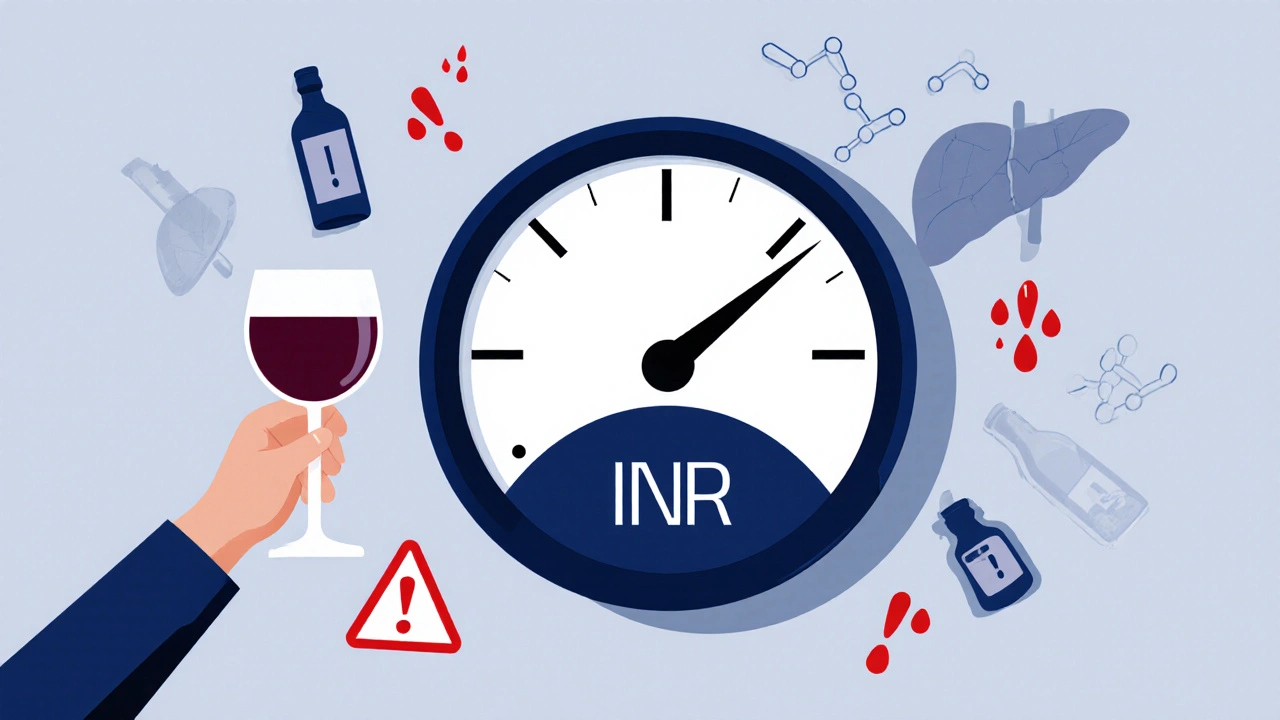
Alcohol can cause dangerous spikes in INR levels for people on warfarin, increasing bleeding risk significantly. Learn how drinking affects blood thinners, what limits are safe, and what symptoms to watch for.
Read More